The Venice issue
San Polo, Venice: the neighbourhood guide
A stop-by-stop guide to Venice's smallest sestiere — the Rialto bacari in the order you should drink them, fifty Tintorettos at the quiet end, and honest notes on which addresses take a group.

By Kim SolheimTimed walking routes and the quieter half of the city
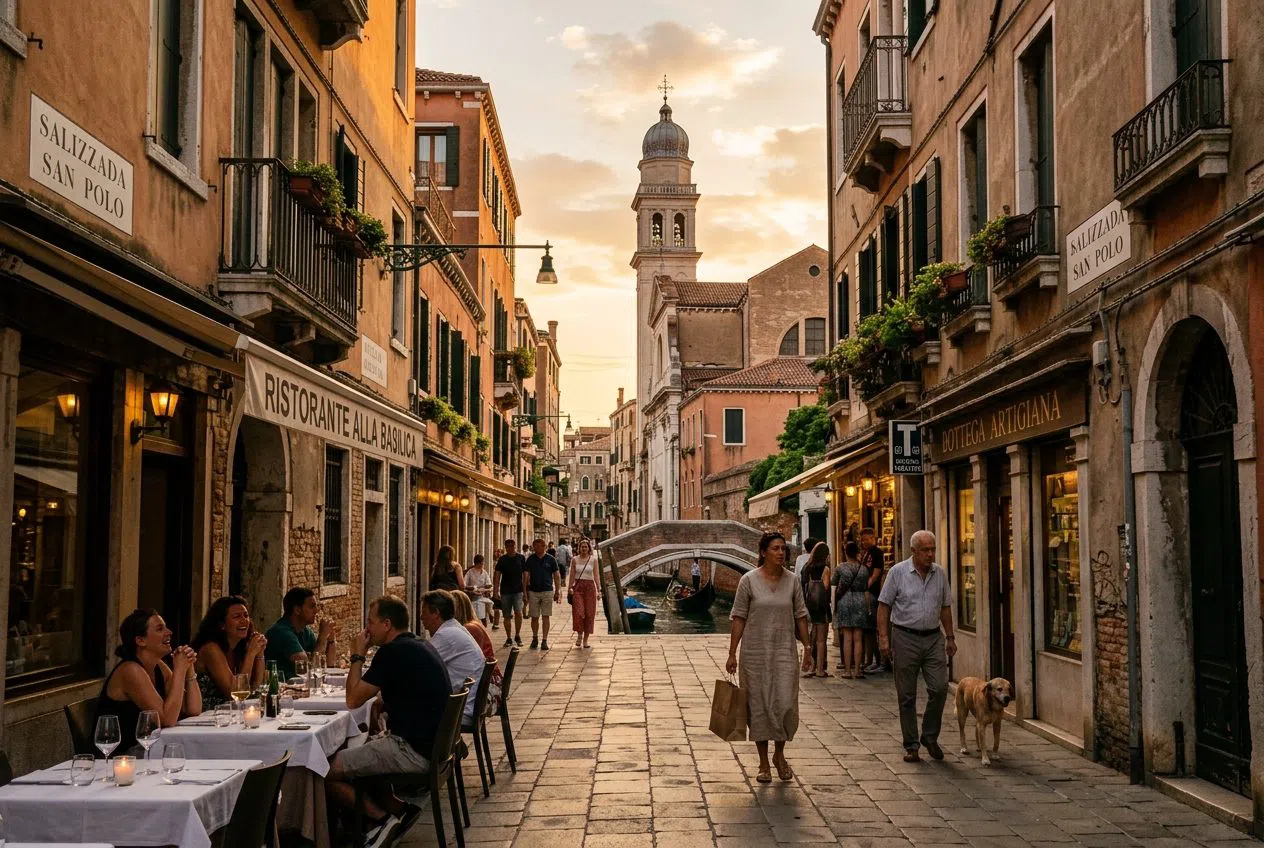
San Polo is the smallest of Venice's six sestieri, and the one most people walk through rather than into. The Rialto bridge tips a steady stream onto its eastern edge every morning, and most of that stream turns back within two hundred metres of the water. Walk ten minutes west instead and you are standing under fifty Tintorettos in a room where you can hear your own footsteps. This guide runs stop by stop, with the walk, the cost and the timing between each one.
Getting your bearings
San Polo stretches from the western foot of the Rialto bridge to the Frari church, and you can cross it end to end in about fifteen minutes at Venetian pace — which is to say, slower than you expect, because the lanes fork and the bridges have steps.
Think of it as two poles with a square in the middle. The eastern pole is the Rialto market end: loud, mercantile, busiest between eight and one, and where nearly all the drinking and standing-up eating happens. The western pole is the Frari and San Rocco end: residential, hushed, and where the art is. Campo San Polo sits between them, roughly six minutes' walk from either, and functions as the sestiere's living room — children with footballs, dogs, a bench in the shade.
For arrivals, San Silvestro (line 1) is the Grand Canal stop for the market end and sits 200m from most of the addresses below. San Tomà (lines 1 and 2) is the stop for the Frari end. Santa Lucia station is about a ten to fifteen-minute walk depending on which end you are staying at, which makes San Polo one of the easier sestieri to reach on foot with a bag.
Plan your Venice trip
Live prices from our booking partners.
Free cancellation on many rooms. We may earn a commission when you book.
Morning: the market and a coffee taken standing
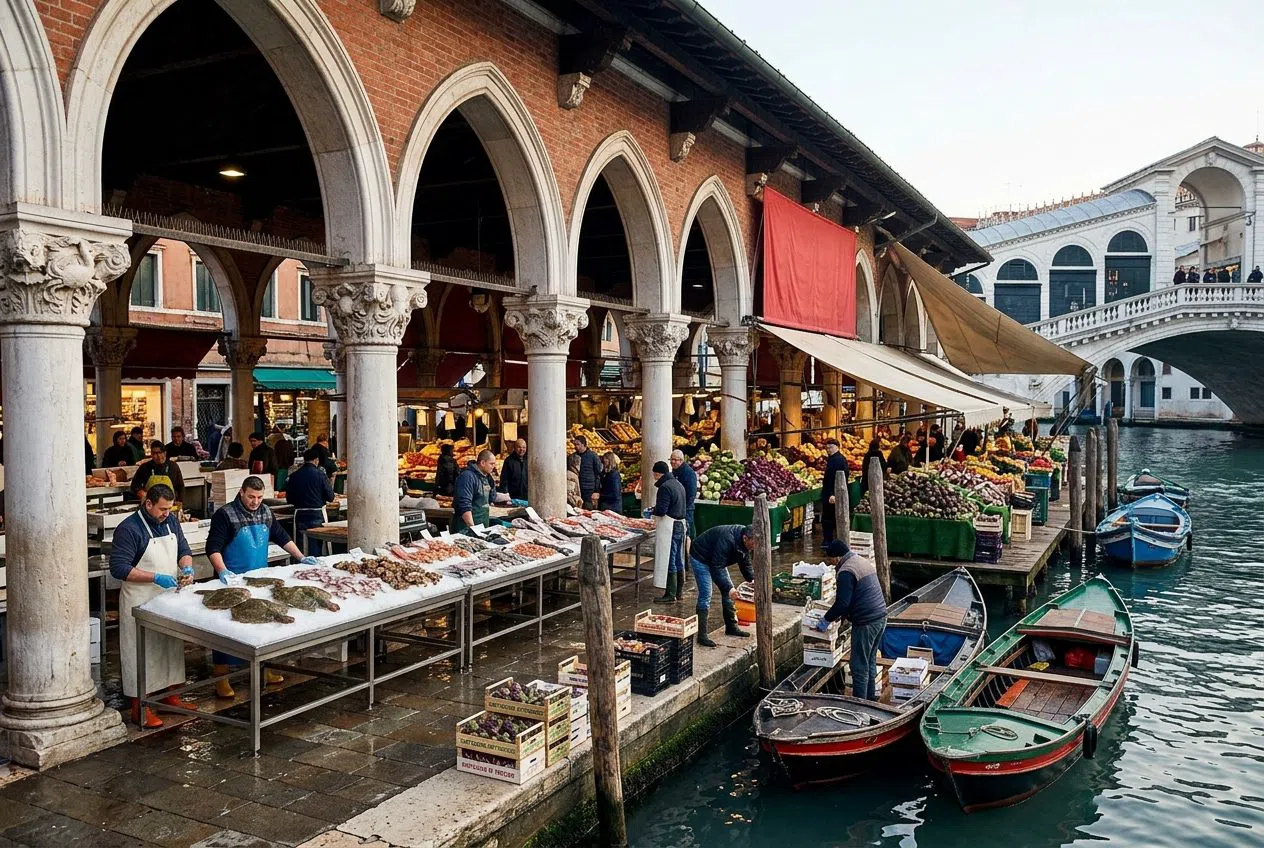
Rialto Market (Erbaria and Pescheria) — Rialto, ninety seconds from the western foot of the bridge — is the reason to base yourself here, and the thing first-timers most often get wrong. It is free, outdoors and walkable in any size of group, which is why it is the standard meeting point for guided cicchetti crawls and market cooking classes. The catch is the calendar: the Pescheria, the fish market under the loggia, runs Tuesday to Saturday mornings only, shuts by about one, and is entirely dead on Sunday and Monday. Arrive between eight and nine and you get the trade still happening rather than the tail end of it. Allow forty minutes to walk both halves properly.
If your trip lands on a Sunday or Monday, do not spend the morning trying to salvage this. Reverse the day instead: go to the Frari end first, when the churches are at their emptiest, and come back to the Rialto lanes in the afternoon.
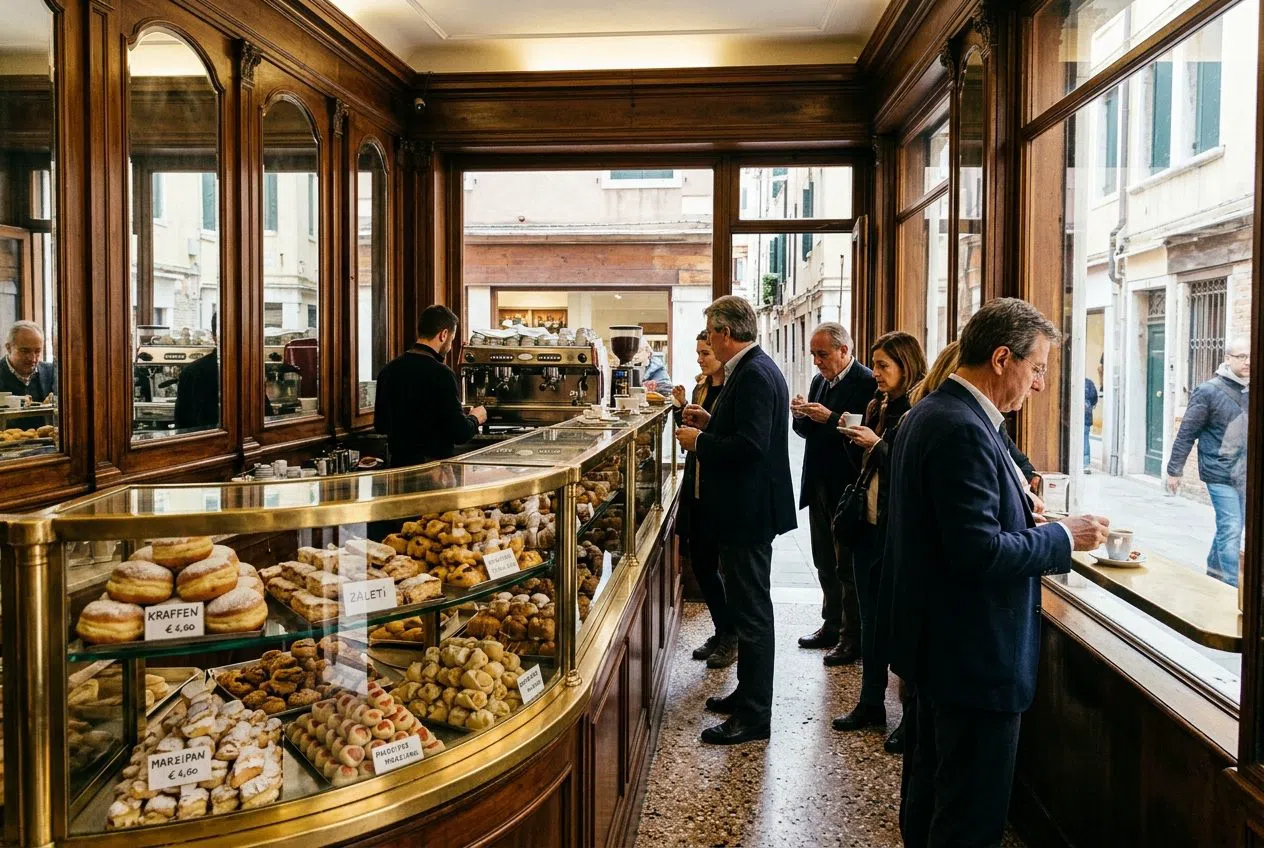
About four minutes south-west of the loggia, through the lanes towards Campiello dei Meloni, is Pasticceria Rizzardini — Campiello dei Meloni, San Polo. It has been baking since 1742 and is still where people who live here take their morning coffee, standing at the counter, in the time it takes to read a headline. Pastry and an espresso comes to €3–4. There is no seating at all, so treat it as a five-minute stop rather than a sit-down, and check the day before you make a detour: it closes one weekday and reports differ over whether that is Tuesday or Wednesday.
The bacaro crawl, in the order it works
A bacaro is a wine bar that serves cicchetti — small plates eaten off the counter, usually standing. An ombra is a small glass of wine, and it costs less than a coffee does in most of Europe. The crawl below covers about 400 metres in total, and the walks between stops are two or three minutes each. Two rounds at each of the first three will run you €20–25 a head, which is the honest reason Venetians do it this way rather than sitting down.
The crucial thing is the clock. Most of these places are aperitivo and lunch operations, not evening ones. If you start at seven you will find half of them closing.
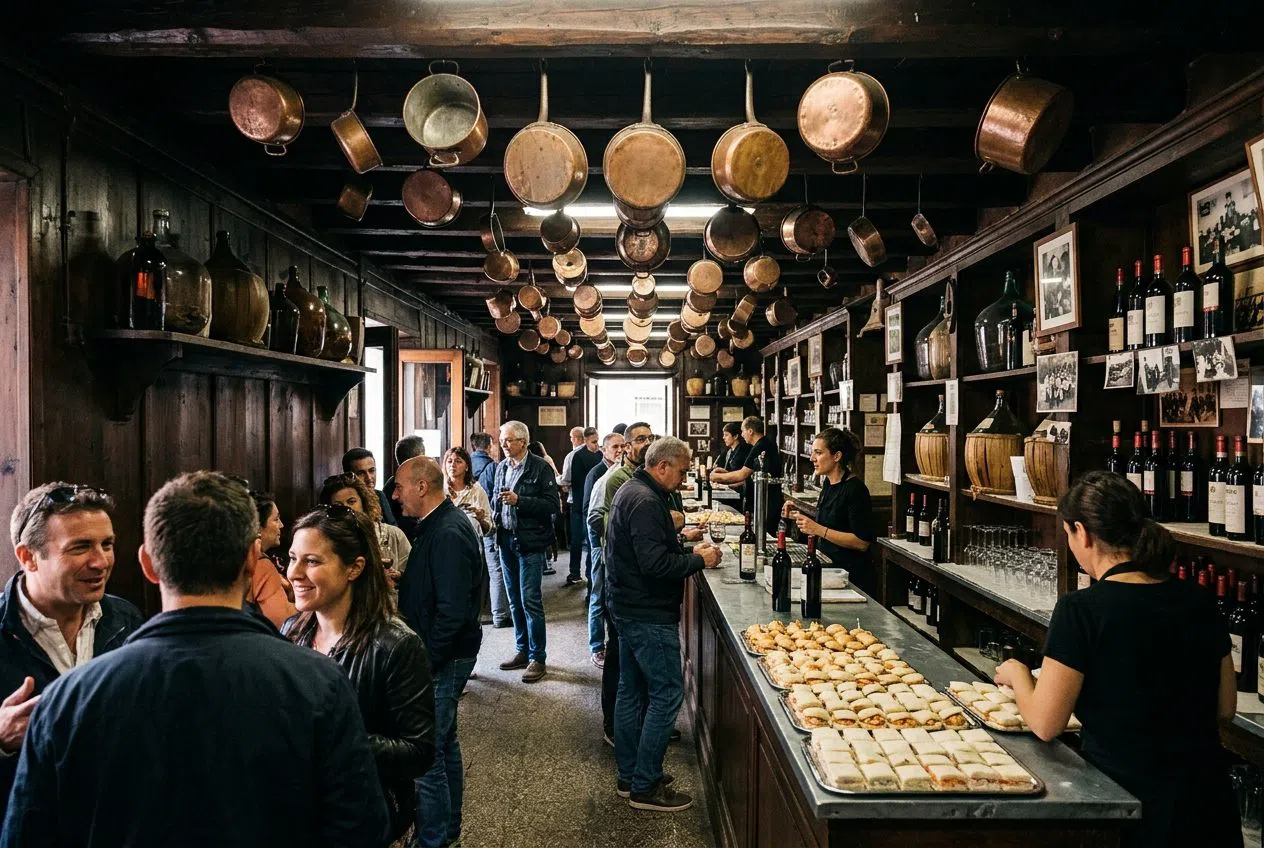
Cantina Do Mori — Calle dei Do Mori, two minutes from the Erbaria — has been trading since 1462 and is the conventional first stop. It is standing room only and genuinely tiny: a low, dark room hung with copper pans, fine for three or four, and a group of eight or more will simply block it for everyone else. There are no bookings and no door policy — you turn up and squeeze in. Cicchetti are €1.50–3 each and an ombra €1.50–4. Note the early close: around 7.30pm on weekdays, 3pm on Saturdays, shut Sunday. Give it twenty minutes and move on.
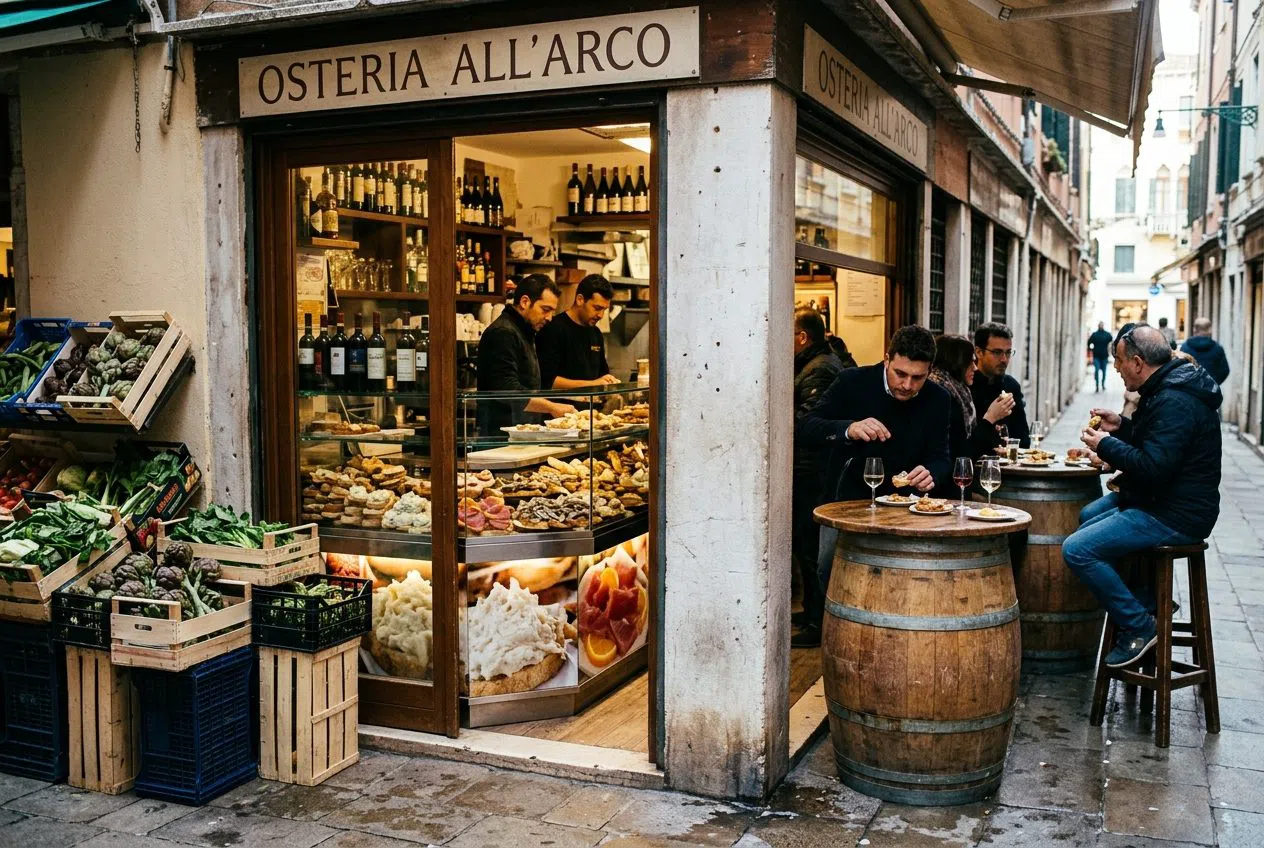
A minute away, All'Arco — Calle dell'Occhialer, off Ruga Rialto — is the father-and-son bar a lot of Venetians rate above Do Mori for the food itself, on the grounds that it is built from whatever came off the stalls that morning. Counter service, a handful of outdoor perches, six people the practical ceiling, no reservations. Cicchetti €2–4, wine by the glass from about €2. It is lunchtime only: it shuts around 2.30pm and all day Sunday, so this is an 11.30am or a 1.45pm stop, not an evening one.
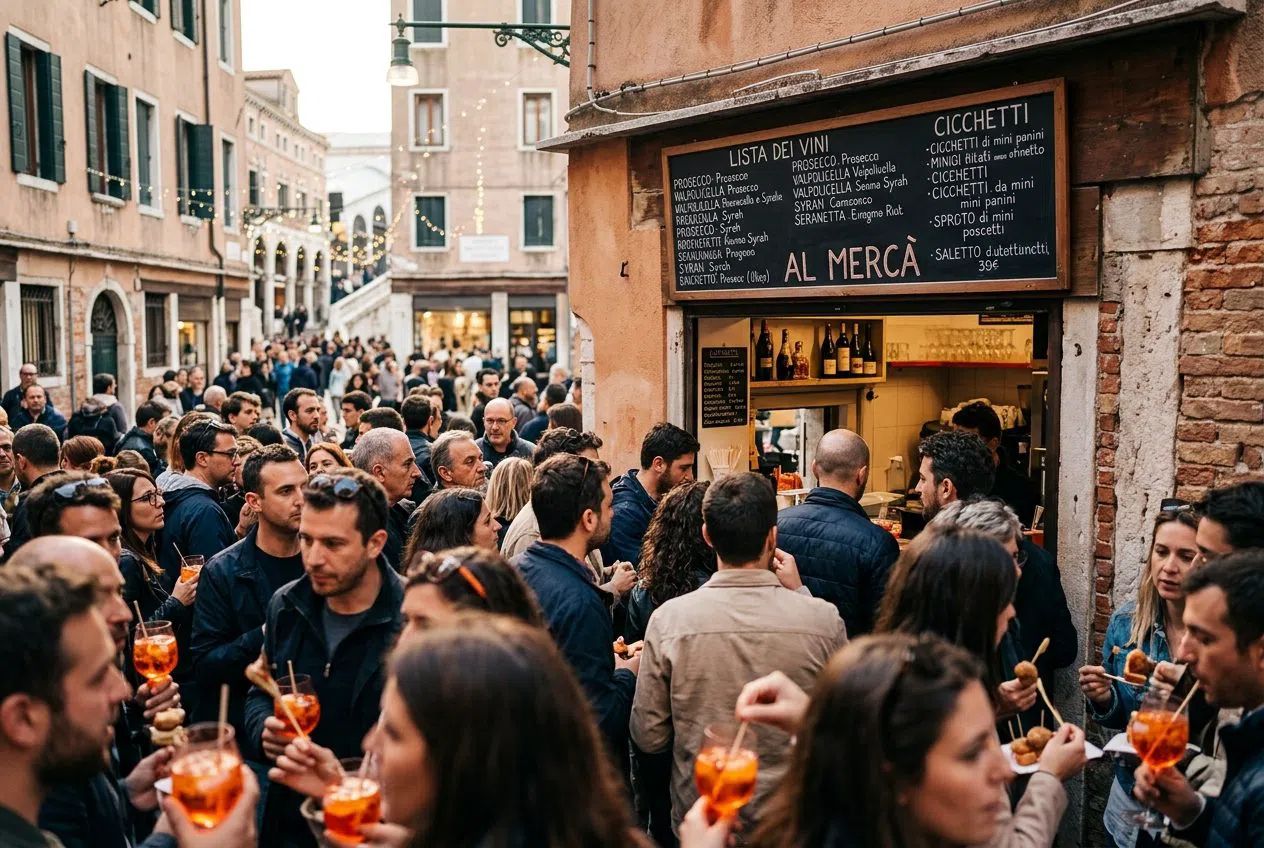
Three minutes back towards the water, Al Mercà — Campo Cesare Battisti, beside the Grand Canal — has been serving marketgoers since 1918 and is essentially a window with a campo attached. Wine starts at around €2 a glass, spritz €3–4, panini €1.50–2. Nobody is turned away, which makes it the easiest stop of the four for a larger group, but there is literally nowhere to sit — everyone spills onto the paving and drinks standing. It is closed Sundays and winds down in the early evening, so it belongs before dinner rather than after.
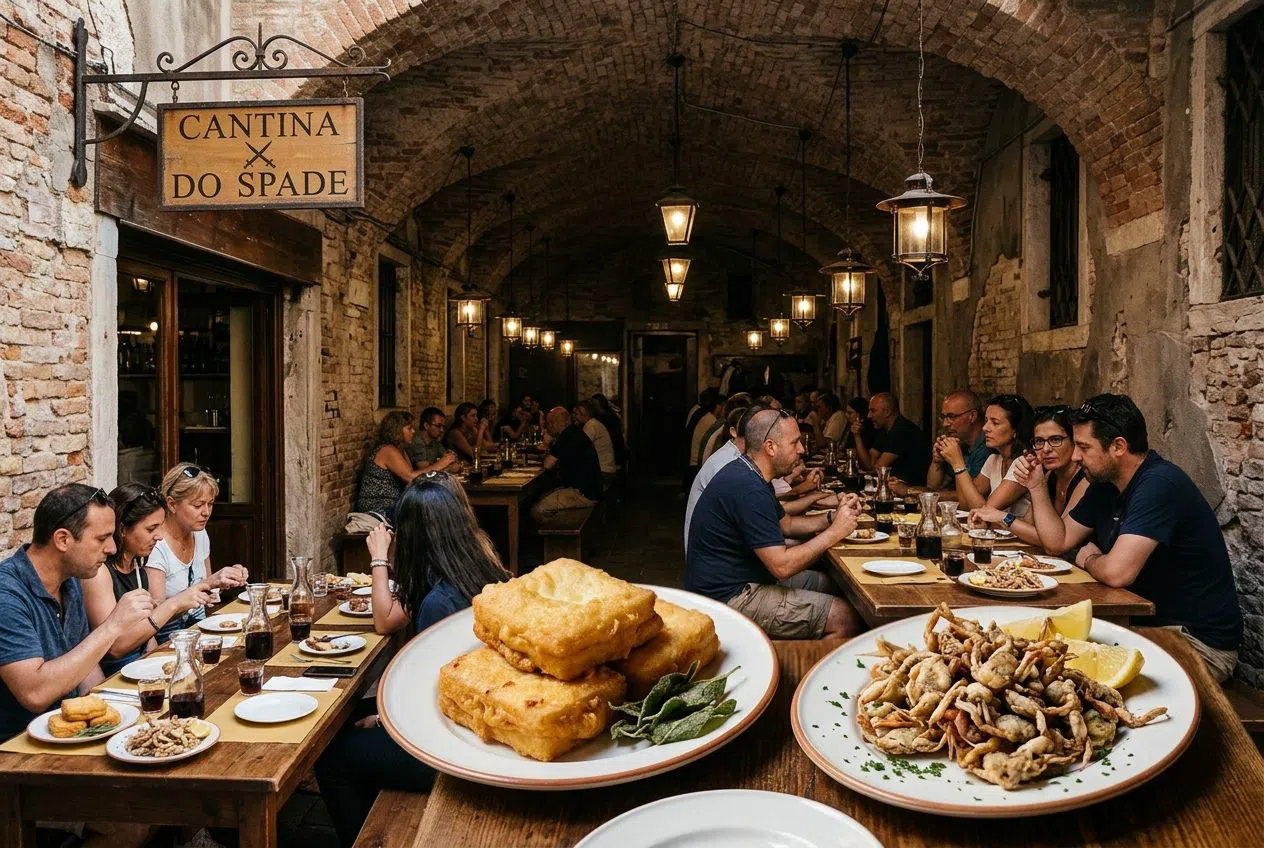
Two minutes north, Cantina Do Spade — Calle delle Do Spade — is the one to end on if you want to stop standing. A 16th-century bacaro with Casanova mythology attached, it has actual tables and will seat a group of six to ten if you book ahead; walk-ins are fine at the bar. Cicchetti run €2–4 and plates €12–18, and it opens for both lunch and dinner, daily — a rarity round here.
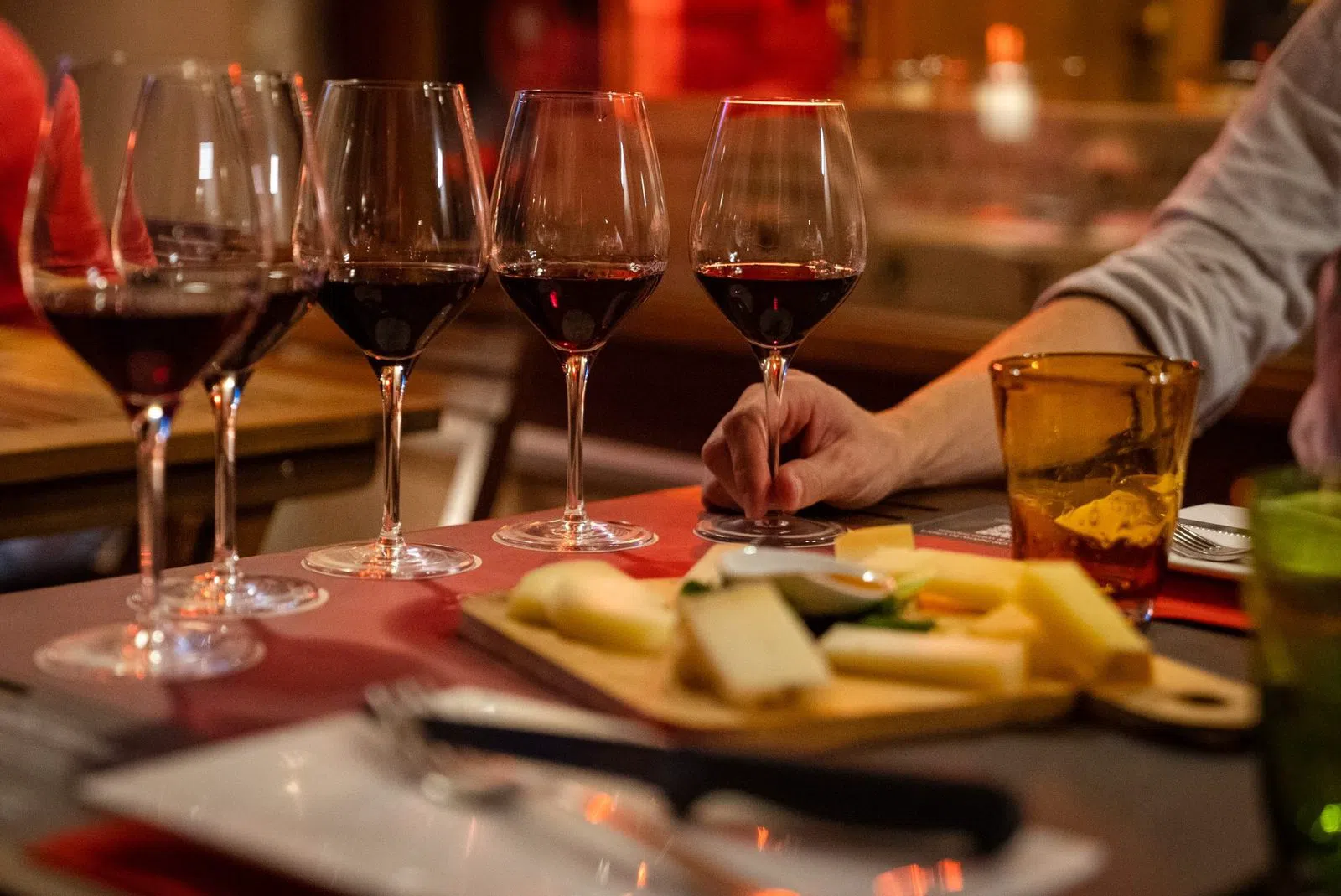
The quiet alternative to the whole standing circuit sits two minutes away: Vineria all'Amarone — Calle dei Sbianchesini, near Campo San Silvestro. It runs structured Valpolicella and Amarone flights and tasting boards, seated, at a table, with someone explaining what is in the glass. Flights are €20–35 a head and boards €15–25. Reserve for anything over four, allow ninety minutes, and note it is closed both Sunday and Monday. If one of your party finds bacari overwhelming — the noise, the crush, the not-knowing-what-to-order — this is where you take them instead.
The Grand Canal seat
Osteria Bancogiro — Campo San Giacomo di Rialto, one minute from Al Mercà — occupies the arcade directly on the water, and the terrace tables look straight across the Grand Canal at the Fondaco dei Tedeschi. It runs 9am to midnight and is closed Mondays. A spritz is €5–7 and mains €22–30, which is roughly double the bacaro rate and entirely a rent-for-the-view charge — the difference here is that the kitchen holds up, which is not true of every canalside terrace in this stretch.
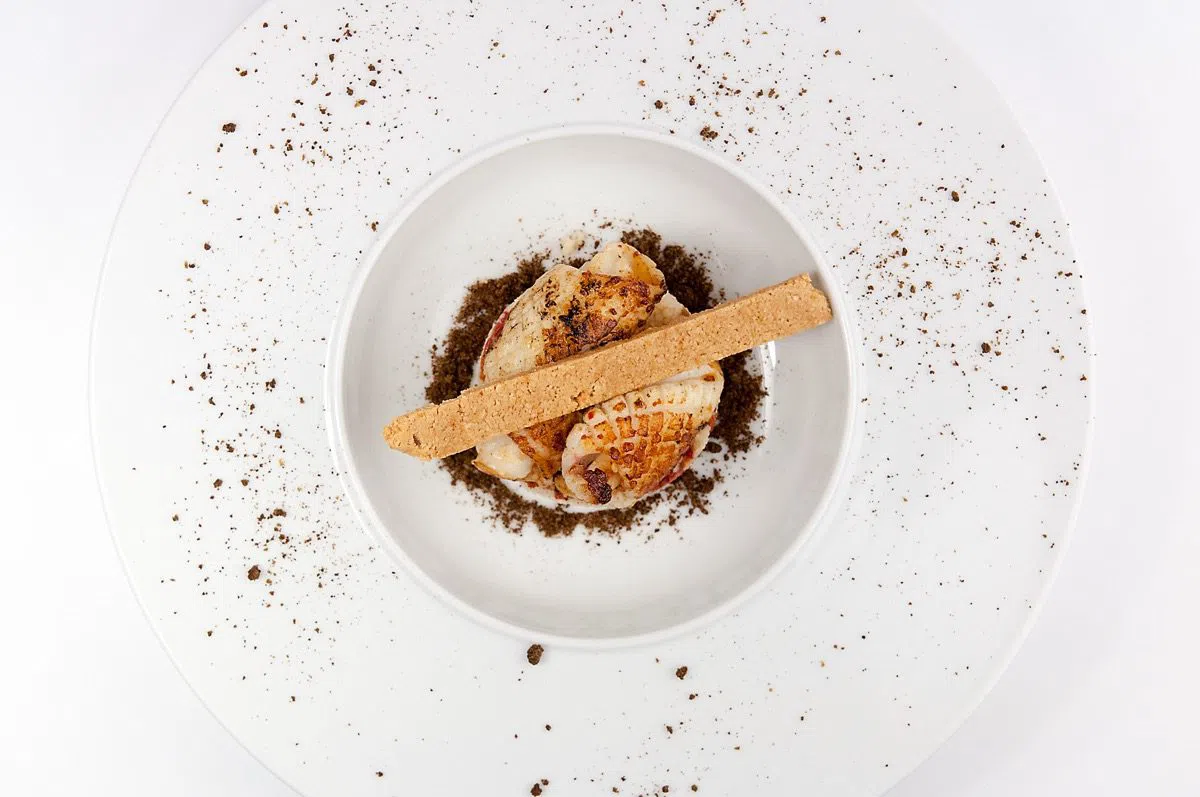
Book the canalside tables specifically, or you will be seated inside looking at a wall. And be honest with yourself about the forecast: the terrace is the whole proposition, so in rain or a cold snap this is not worth the money. Aim for about an hour before sunset.
Sitting down properly
Antiche Carampane — Rio Terà delle Carampane, about five minutes north-west of the market through the lanes behind San Cassiano — has been going since 1983, cooks fish bought at the Rialto, and is famously difficult to find. The awkwardness is deliberate and half the charm; the anti-tourist stance is not an act. There are only around ten tables, six is realistically the largest party they can take, and it is not a walk-in place — book weeks out in high season. Mains land around €30 and you should expect €70–90 a head with wine. Closed Sunday and Monday.
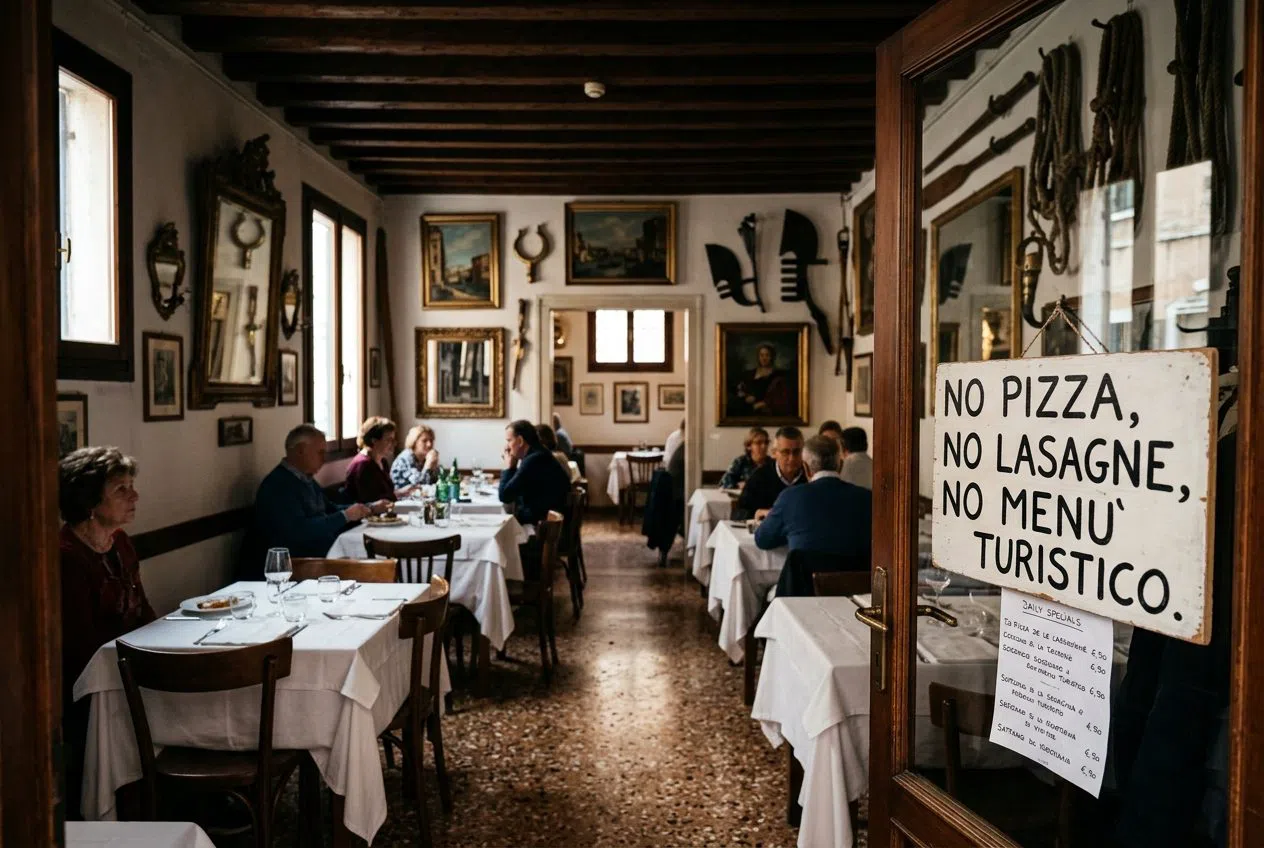
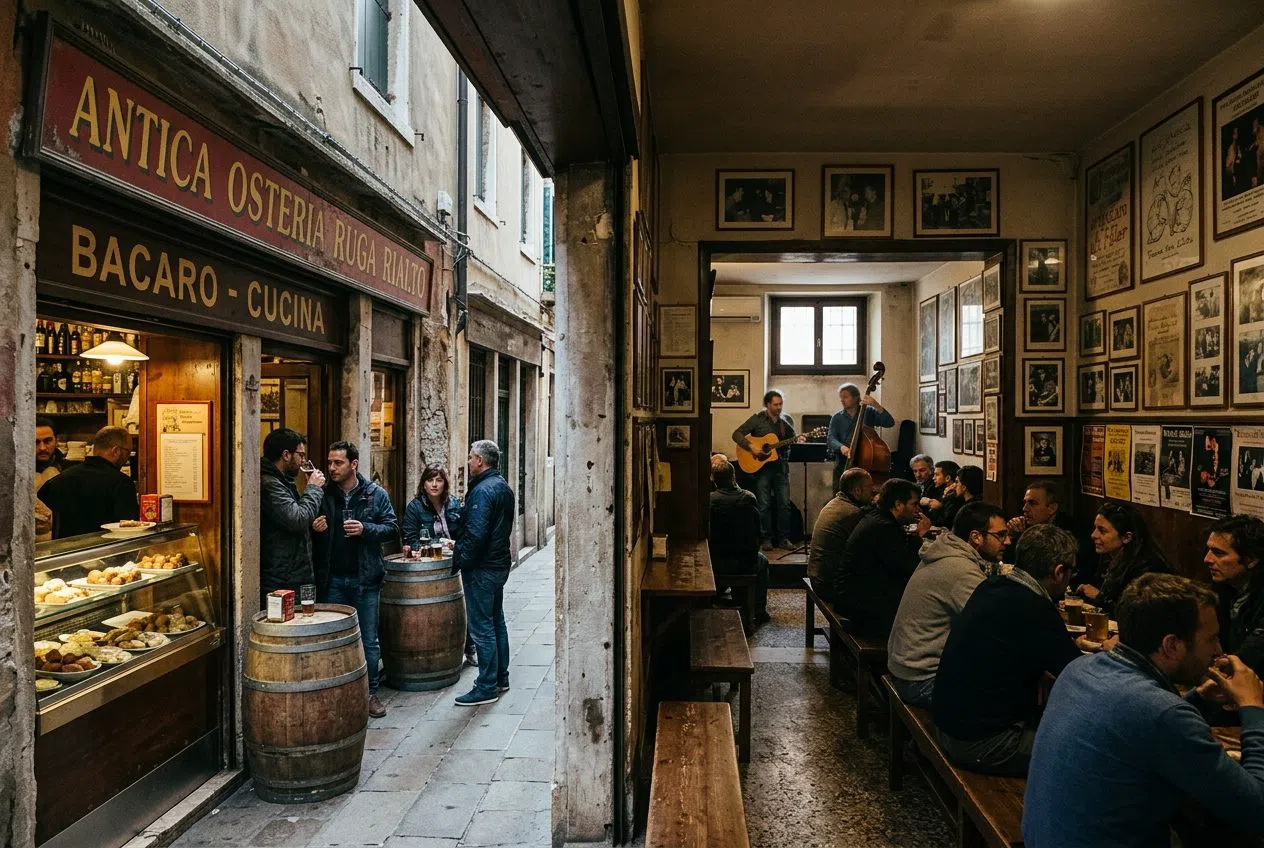
Antica Osteria Ruga Rialto — Ruga Vecchia San Giovanni, three minutes from the bridge — solves the other problem, which is Venice going to bed. It is open until after midnight, seven days a week, and in a city where the bacari shutter by eight that makes it the default late stop. It also has large internal rooms that get hired for birthdays and celebration dinners, so it is the one Rialto address genuinely set up for a party — call to book. Cicchetti are €2–3 and plates €12–20. It is scruffy and loud by design, so do not arrive expecting polish.
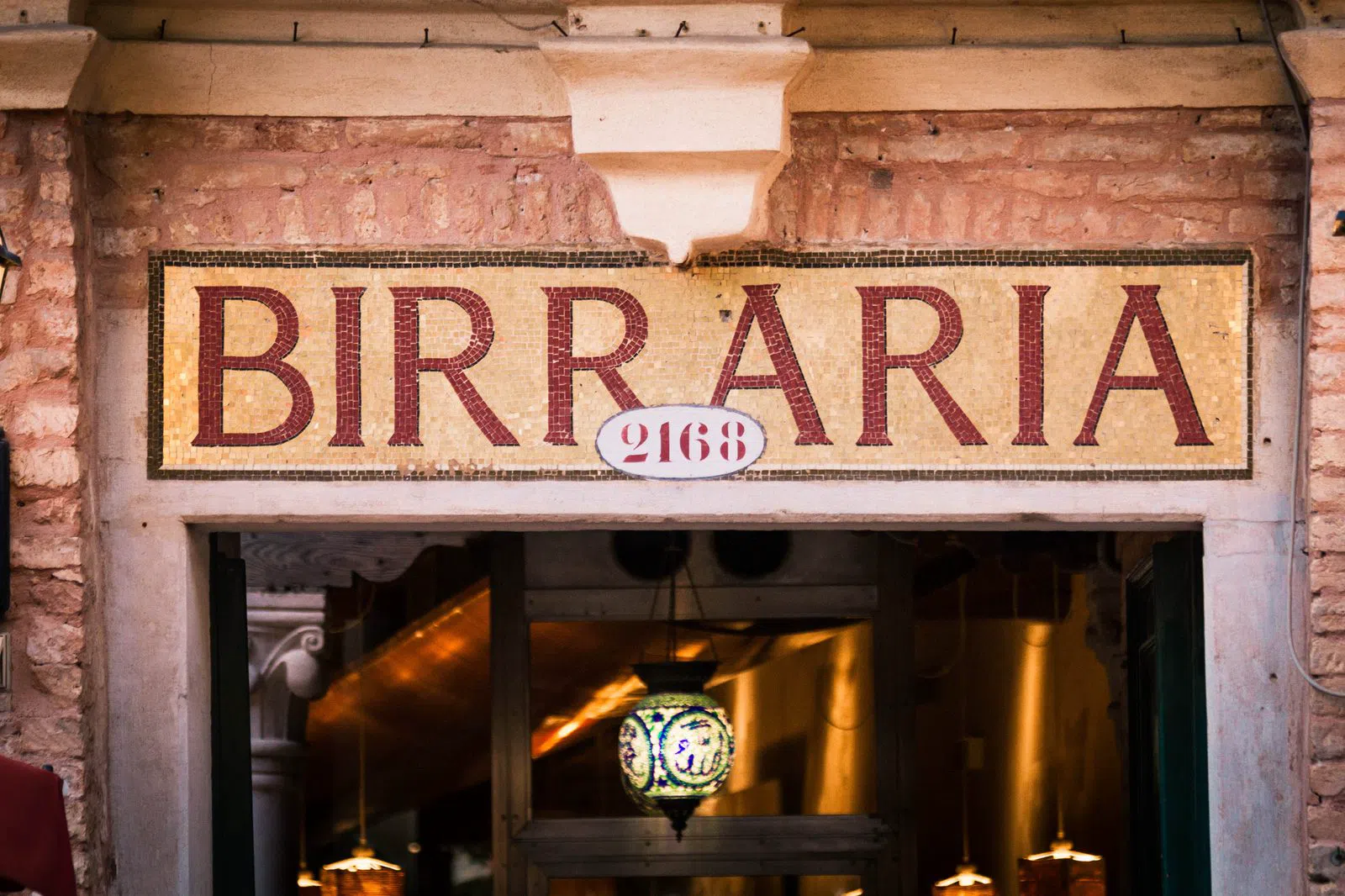
Six minutes west, on Campo San Polo itself, Birraria La Corte — Campo San Polo — is the answer when there are twelve of you and every bacaro in the sestiere is standing-room-only. Wood-fired pizza at €10–16, mains €18–26, beers €5–7 and a serious tap list, with more indoor and outdoor covers than anything else nearby and a very large square to sprawl into. Book by phone or email for ten or more. It is not where you go for a defining Venetian meal, and it does not pretend to be; it is where a group of twelve eats well without three of them standing up.
The quiet end: two rooms of art
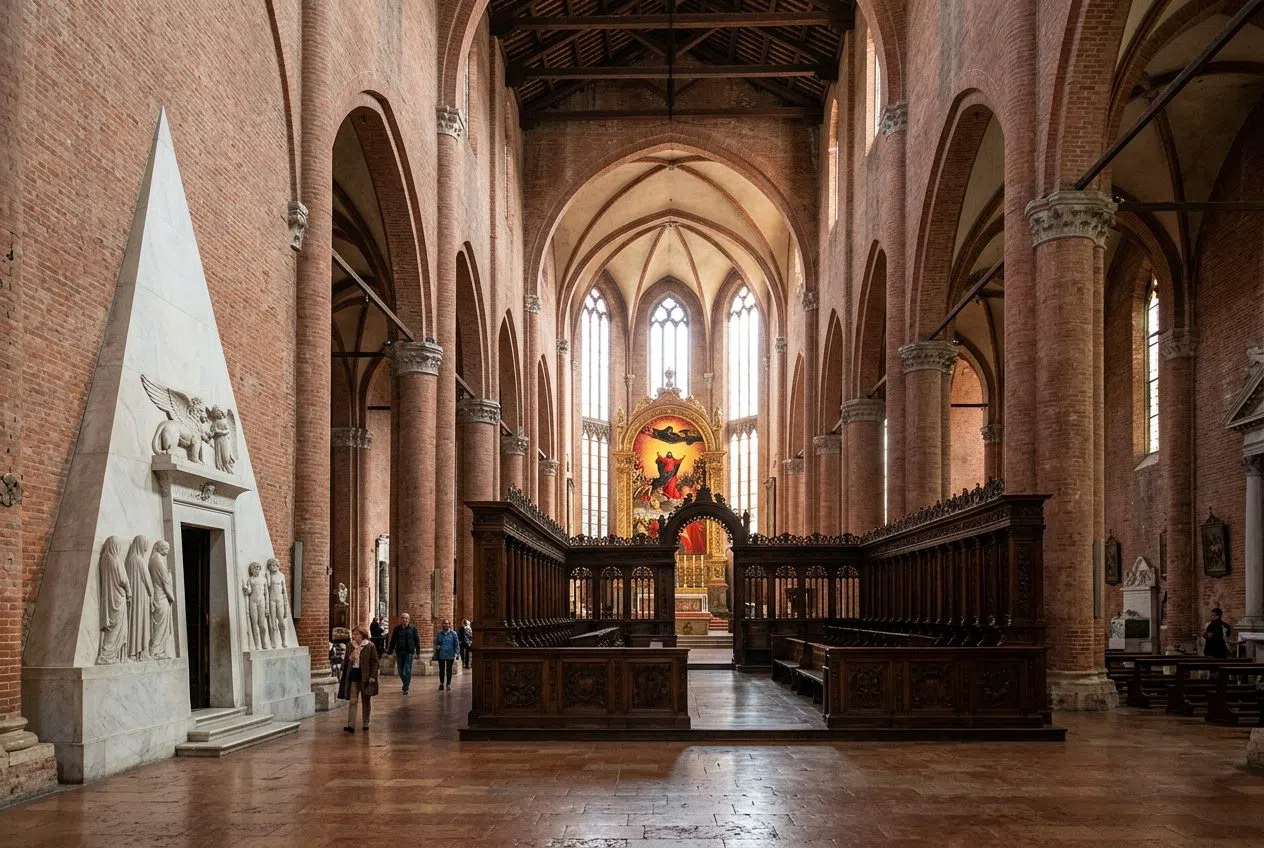
From Campo San Polo it is eight to ten minutes west to Basilica di Santa Maria Gloriosa dei Frari — Campo dei Frari, three minutes from the San Tomà vaporetto. Entry is €3 and it is open to all, though large groups should steer clear of Sunday morning, when the church is closed to sightseers for services. Titian's Assumption, above the high altar, is the reason to make the walk; give yourself forty-five minutes and sit down in front of it rather than circling. Since April 2026 there is also 'Frari Night', a limited-capacity after-hours evening visit with the paintings lit and the day crowds gone — capacity is genuinely small, so treat it as something to book before you travel rather than on the day.
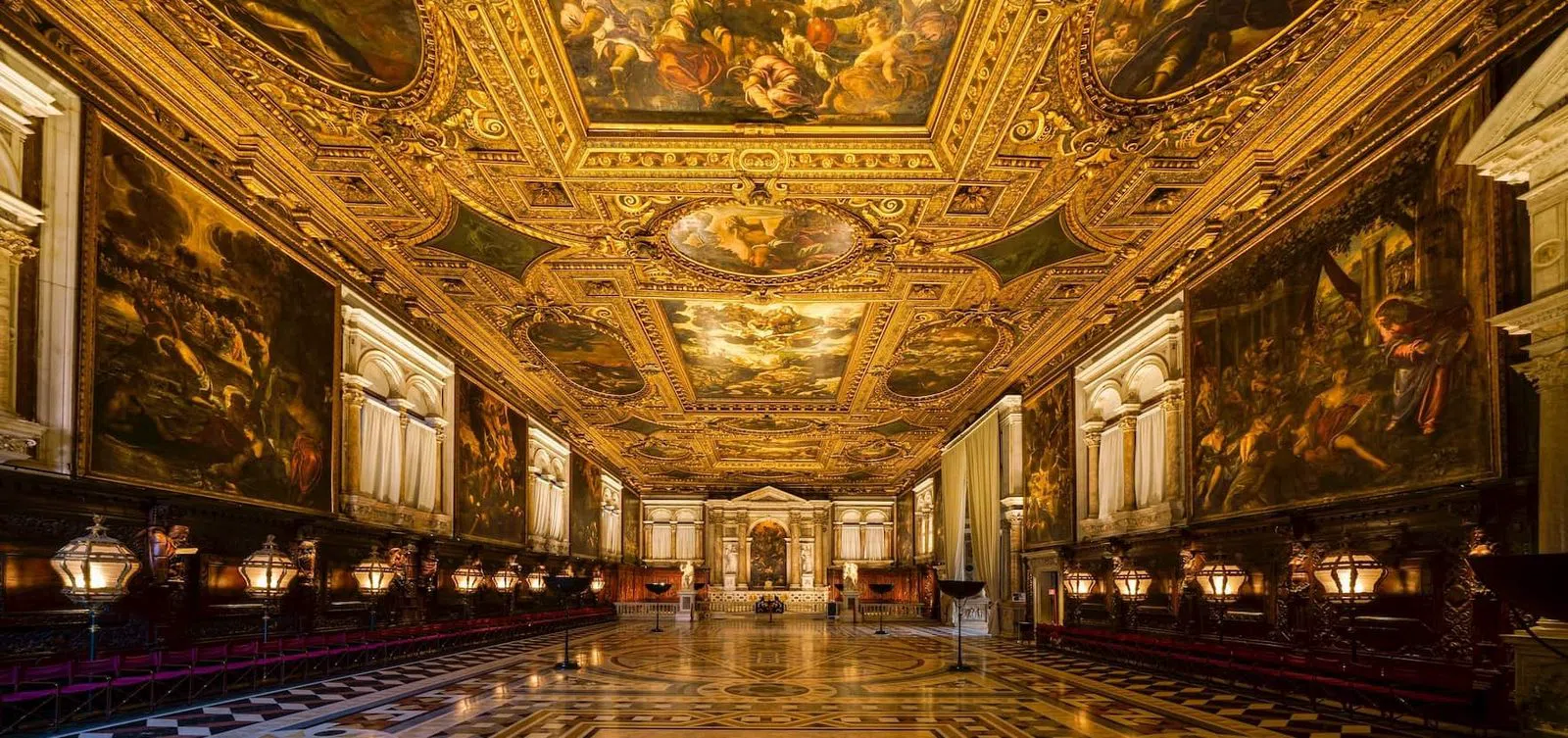
Sixty seconds from the Frari door, across a small campo, is Scuola Grande di San Rocco — Campo San Rocco. Over fifty monumental Tintorettos, painted across twenty-four years, cover the walls and the ceilings. Entry is €12 adult, €10 concession, €3 for ages 8–18 and €26 for a family; there are no group restrictions, and they hand out audio guides and mirrors so you can look at the ceiling without wrecking your neck. Last entry is 5pm. It takes a while to process, and it is markedly quieter than anything comparable in San Marco — on a wet Tuesday in February you may share the upper hall with four other people. Allow sixty to ninety minutes.
This pair, done in the first hour of opening, is the single strongest reason to sleep in San Polo rather than commute in.
Where to stay
San Polo's advantage as a base is that you are inside the Rialto action but can walk out of it in four minutes. For the full picture across the city, start with the Venice guide; to compare rates and areas directly, use the Venice hotel search.
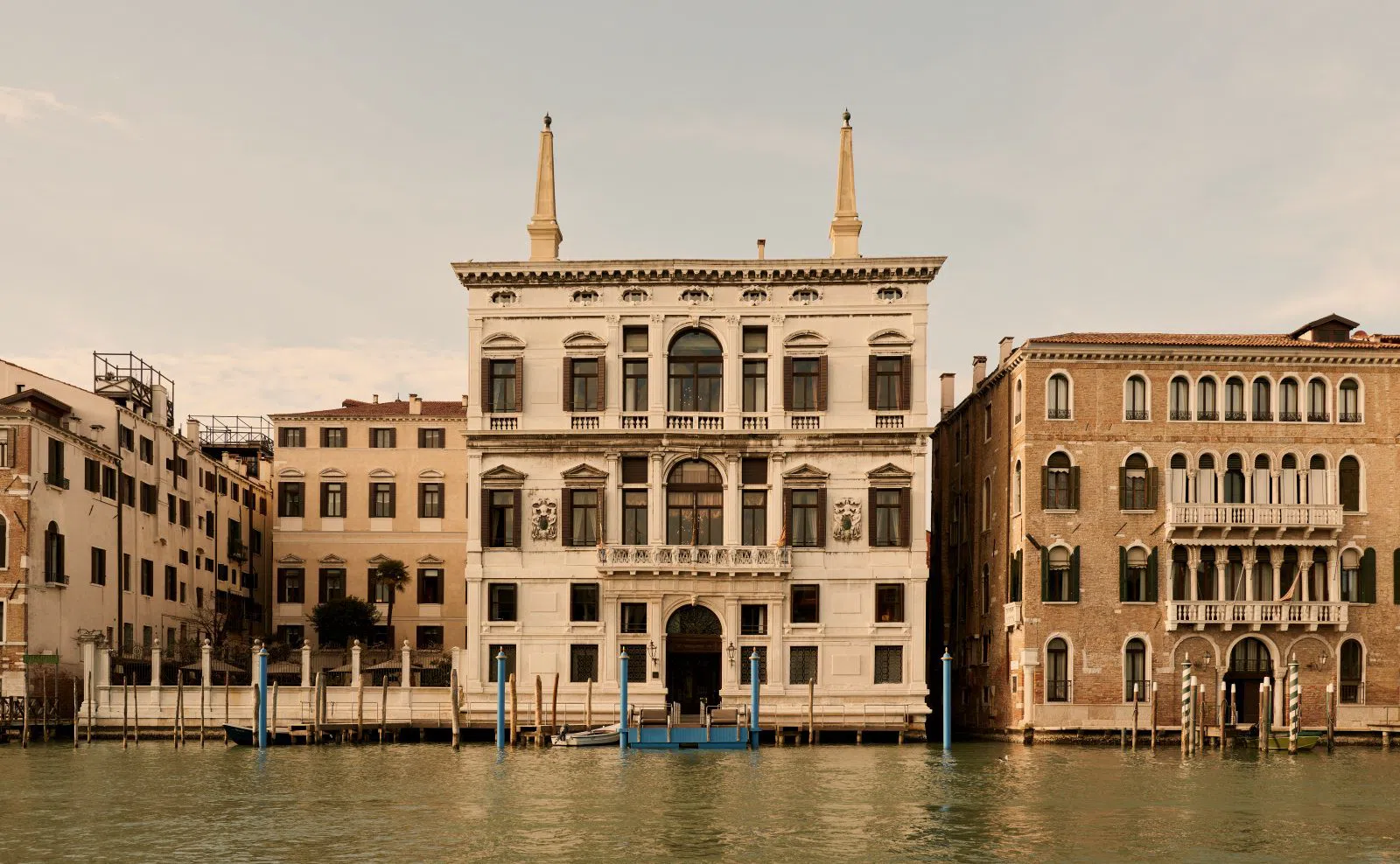
Aman Venice — Grand Canal, San Polo — is the extravagant end: 24 suites, from roughly €1,800–3,000+ a night, with private dining and whole-floor bookings possible. It suits a small celebration party rather than a large group, and it is honestly only worth the outlay for a milestone trip.
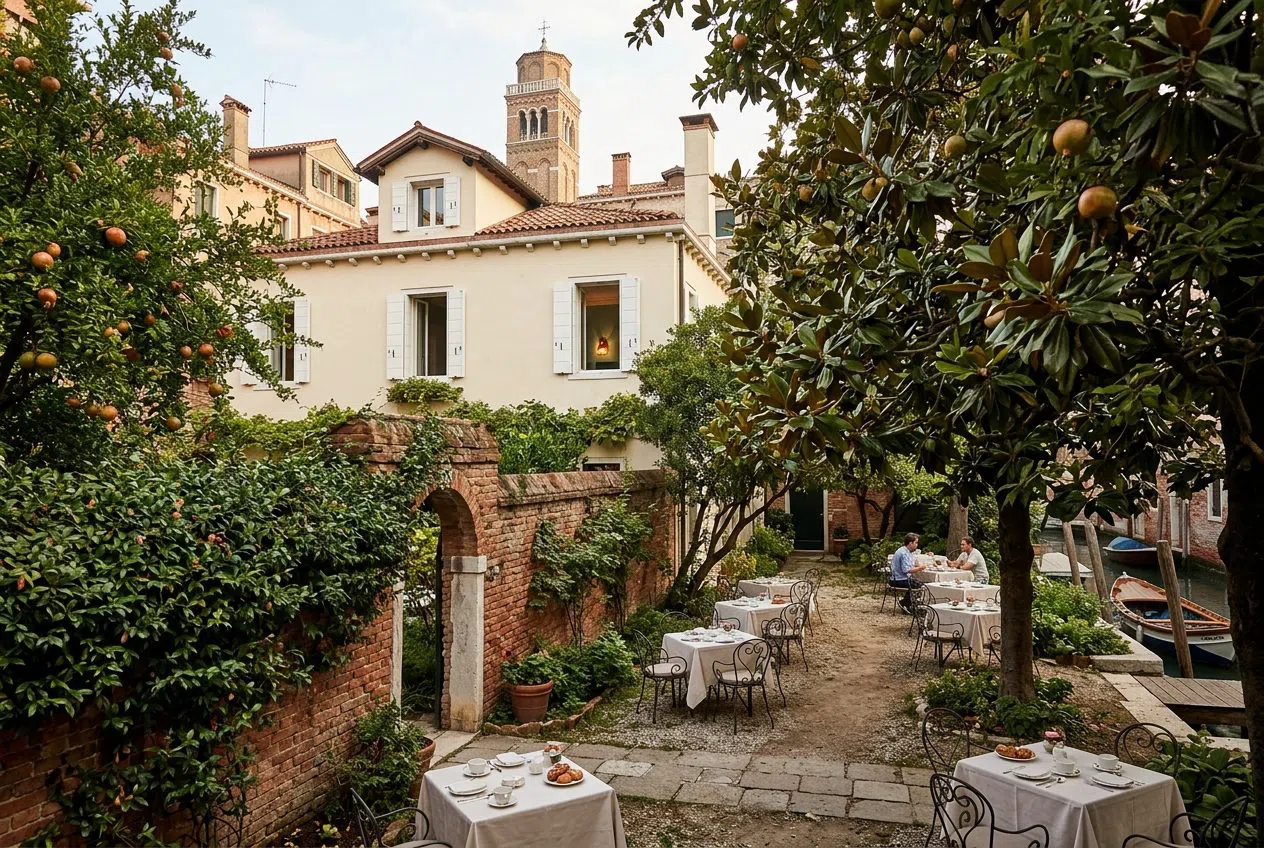
Oltre il Giardino — Campo dei Frari end — has six rooms at roughly €300–500 a night, in what was once Alma Mahler's house, with a private garden that is close to unheard of in central Venice. It is a couples' hotel by default, but a small party of up to about twelve can take it in full. The location is the quiet Frari end, away from Rialto foot traffic.
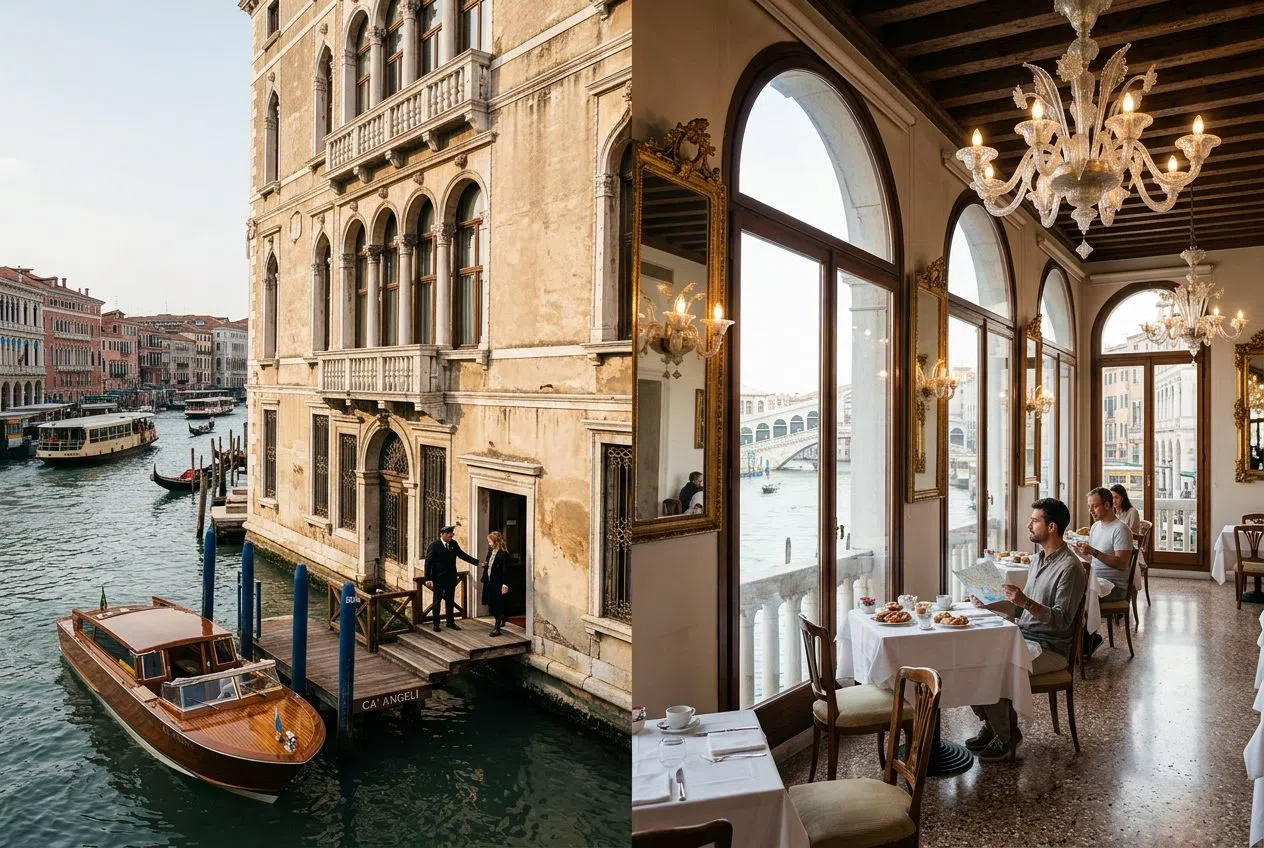
Ca' Angeli — midway between Campo San Polo and the Rialto — is six rooms at around €270, with a Grand Canal breakfast view for a fraction of what the palazzo hotels charge for the same water. San Silvestro vaporetto is 200m and the station a ten-minute walk. Best for pairs, though the whole property can be taken for a group of ten or so.
Matching the plan to your numbers
Two of you: do the bacaro crawl exactly as ordered above, book Antiche Carampane weeks ahead, and stay at Ca' Angeli or Oltre il Giardino.
Four to six: the same crawl works, but send one person ahead to hold ground at All'Arco, and book Cantina Do Spade for the sit-down so you are not eating on your feet twice in a row.
Eight to twelve: stop trying to make the bacari work. Meet at Al Mercà, where the campo absorbs any number, then move to Birraria La Corte on Campo San Polo for dinner and Antica Osteria Ruga Rialto for the late hours. Book both.
Practical notes
Transport. San Silvestro (line 1) serves the Rialto end, San Tomà (lines 1 and 2) the Frari end; Rialto Mercato (line 1) is useful in the mornings only. A single vaporetto ticket is expensive relative to the distance, so if you are staying in San Polo you will mostly walk — nothing in this guide is more than fifteen minutes from anything else. Wheeled luggage and bridge steps do not get on; factor that into which end you book.
Cash. Cards work at the restaurants and hotels, but bring €50–80 in small notes for the bacari and the pasticceria. Several take cash only or are simply faster that way, and standing at a counter counting out a card machine is how you lose your place.
Timing. The market runs Tuesday to Saturday mornings and is finished by one. The bacari are aperitivo and lunch businesses: All'Arco shuts at 2.30pm, Cantina Do Mori by 7.30pm and 3pm on Saturdays, Al Mercà in the early evening. Sunday closes a lot of San Polo — Do Mori, All'Arco, Al Mercà, Vineria all'Amarone and Antiche Carampane are all shut, and the Frari is closed to sightseers in the morning. Monday takes out Osteria Bancogiro, Antiche Carampane, Vineria all'Amarone and the fish market. Plan a Sunday or Monday around San Rocco, Cantina Do Spade and Ruga Rialto, all of which open daily.
Budget, per person, per day. Cicchetti-and-ombre lunch with a coffee and pastry: €20–30. Add a sundowner at Bancogiro and a group dinner at Birraria La Corte: €60–75. Swap in Antiche Carampane with wine: €110–130. Both churches together cost €15. A frugal, well-fed day in San Polo is entirely possible at €40 — which is not something you can say of the sestiere across the bridge.
Before you go
Is San Polo a good area to stay in Venice?
Yes, particularly if you want to be near the Rialto without sleeping inside the crowds. San Silvestro and San Tomà vaporetto stops sit at either end, Santa Lucia station is a ten to fifteen-minute walk, and the sestiere crosses end to end in about fifteen minutes. Rooms range from Ca' Angeli at around €270 to Aman Venice at €1,800–3,000+ a night.
What days is the Rialto fish market open?
The Pescheria (fish market) runs Tuesday to Saturday mornings only and winds down by about 1pm. It is closed Sunday and Monday, which catches out most first-time visitors. The Erbaria (fruit and vegetable stalls) runs Monday to Saturday. Arrive between 8am and 9am to see the trade actually happening.
Do I need to book restaurants in San Polo?
It depends where. The bacari — Cantina Do Mori, All'Arco and Al Mercà — take no reservations at all; you turn up and stand. Cantina Do Spade will seat six to ten if you book. Antiche Carampane needs booking weeks ahead in high season and caps out at about six people. Birraria La Corte and Antica Osteria Ruga Rialto both want a phone call for ten or more.
How much does a Rialto bacaro crawl cost?
Around €20–25 a head for two rounds at three bars. Cicchetti run €1.50–4 each and a glass of wine starts at about €2; a spritz at Al Mercà is €3–4. Bring €50–80 in small notes, since counters move faster on cash. A seated wine flight at Vineria all'Amarone is a different proposition at €20–35 per person.
What is Frari Night and how do I visit?
Frari Night began in April 2026 at the Basilica di Santa Maria Gloriosa dei Frari: a limited-capacity after-hours evening visit with the paintings, including Titian's Assumption, lit and the daytime crowds gone. Capacity is small, so book before you travel rather than on the day. Standard daytime entry is €3, and the church is closed to sightseers on Sunday mornings.