The Venice issue
Cannaregio, Venice: the neighbourhood guide
The sestiere north of the Grand Canal, walked in order — where to drink standing up, which church is empty, and what actually works for a group of eight.
By Kim SolheimTimed walking routes and the quieter half of the city
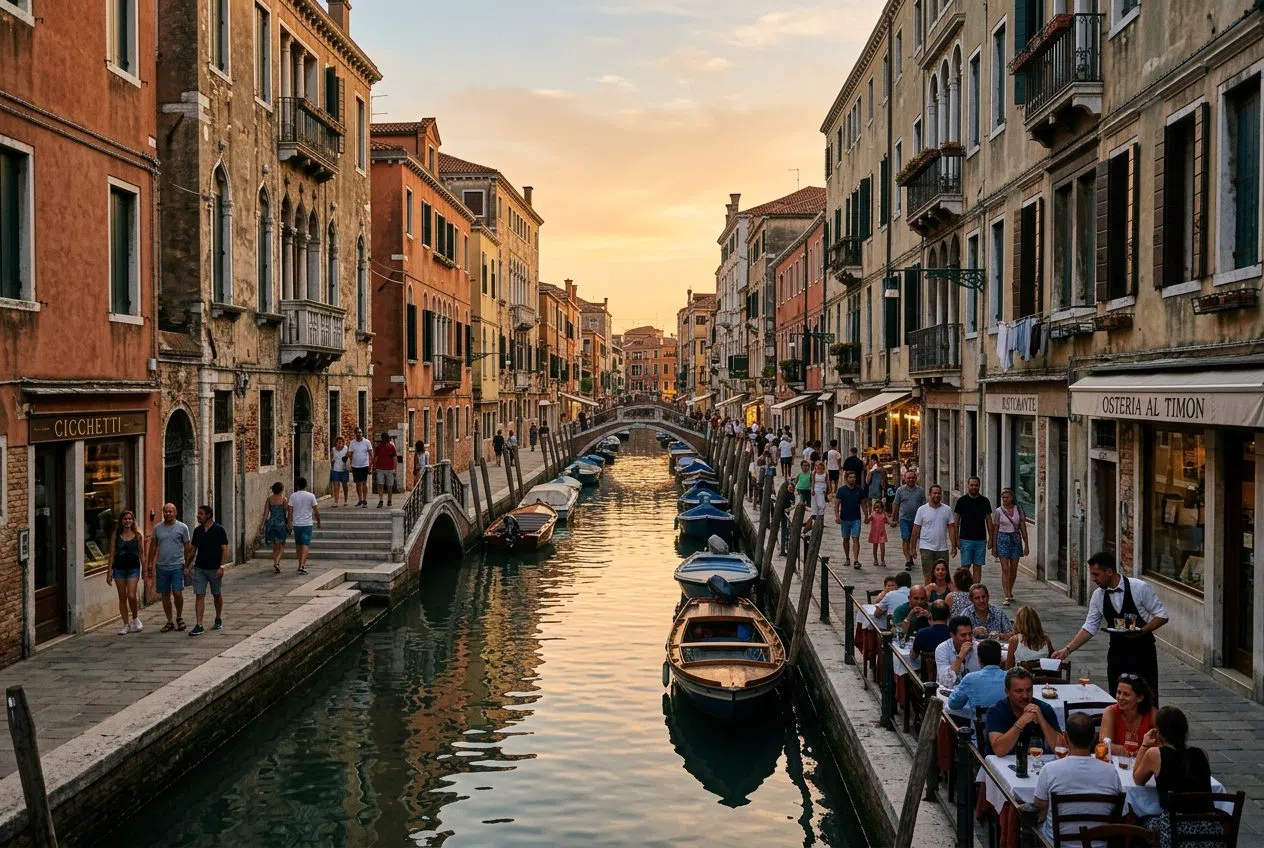
The last stretch of Cannaregio is where Venice stops performing. Five long canals run north from Santa Lucia station towards the open lagoon, and the crowds drain away after the second bridge, leaving laundry lines, a working coffee roastery and a strip of bars where the fondamenta itself is the seating plan. Twenty minutes on foot from the station platform, you are in a part of the city that still has an ordinary evening.
Getting your bearings
Cannaregio is the sestiere between the railway station and the Fondamente Nove, bounded to the south by the Grand Canal. Three lines matter. The Strada Nova is the wide shopping spine that carries almost everyone from the station towards the Rialto — quick, useful, and busy from 10am to 7pm. Two canals north of it, the Fondamenta della Misericordia and its neighbour the Fondamenta della Sensa run parallel for about 500 metres and hold most of the eating and drinking in this guide. West of both sits the Ghetto, a five-minute walk from the station over the Ponte delle Guglie.
Nothing in this guide is more than twenty-five minutes' walk from anything else in it, and most of it is far closer than that. If you are building a wider trip, the Venice guide covers the other five sestieri; this piece stays north of the water.
The practical consequence of that geography: you can put a whole day together on foot, in sequence, without a single vaporetto ticket. Below is that sequence, with the walks and the money written in.
Plan your Venice trip
Live prices from our booking partners.
Free cancellation on many rooms. We may earn a commission when you book.
Morning: coffee, then the Ghetto
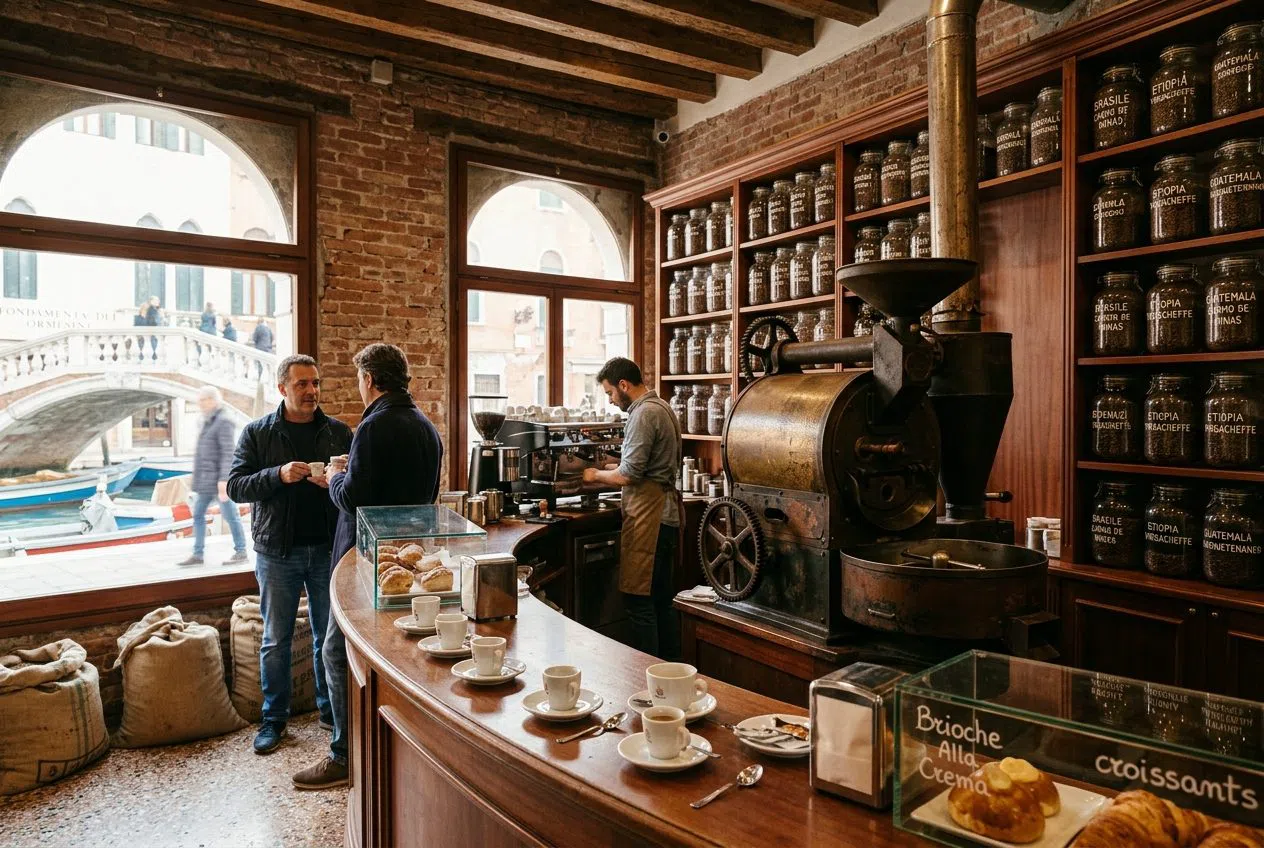
Start at Torrefazione Cannaregio (Rio Terà San Leonardo, five minutes from the station). It has been roasting on site since 1930 and is the only working roastery-bar in the historic centre, which you can smell from the bridge. Espresso runs €1.20–2, bags of beans €8–15. It is a standing bar — grab-and-go works for any number of people, but there is nowhere to sit a group down, so send one person in with the orders rather than filing eight of you through the door.
Three minutes north-west, over the Ponte delle Guglie and left along the canal, is Campo di Ghetto Nuovo. The Venetian Ghetto and its synagogue tours (Ghetto Nuovo, western Cannaregio) are the reason many people come to this sestiere at all: the world's first ghetto, established in 1516, and the only way to get inside the hidden upper-floor synagogues is on a guided tour. Museum entry is €12, the guided synagogue tour €15, and tours run hourly in English. Private group tours cost €100–150 plus €17 per person and are booked by email, so plan a week ahead if there are ten of you. Two closures to write down: Saturdays and Jewish holidays. One caveat: the museum is finishing a major restoration and reopens in autumn 2026 — the synagogue tours run regardless, so a spring or summer 2026 visit still works, it is just the tour rather than the collection.
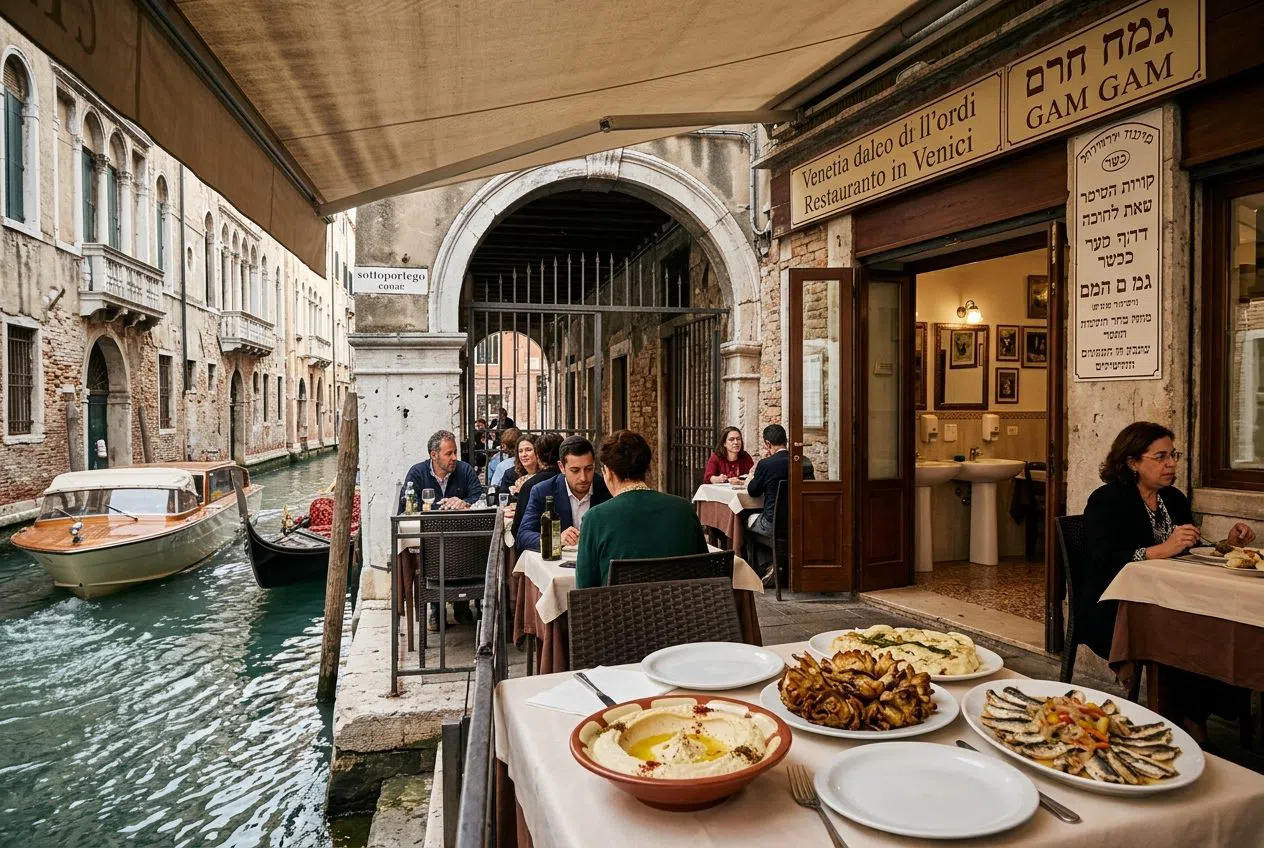
Lunch is thirty seconds away. GAM GAM Kosher Restaurant (foot of the Ghetto bridge, five minutes from the station) serves Sun–Thu, noon to 10pm, mains €15–25. It actively caters for groups — reserved private tables, and pre-ordered Shabbat meals arranged through Chabad — which makes it one of the few kitchens in Cannaregio that will take a party of twelve without flinching. It closes Friday evening and Saturday daytime, so a Friday-night arrival needs a different plan.
Two churches, and the quiet one
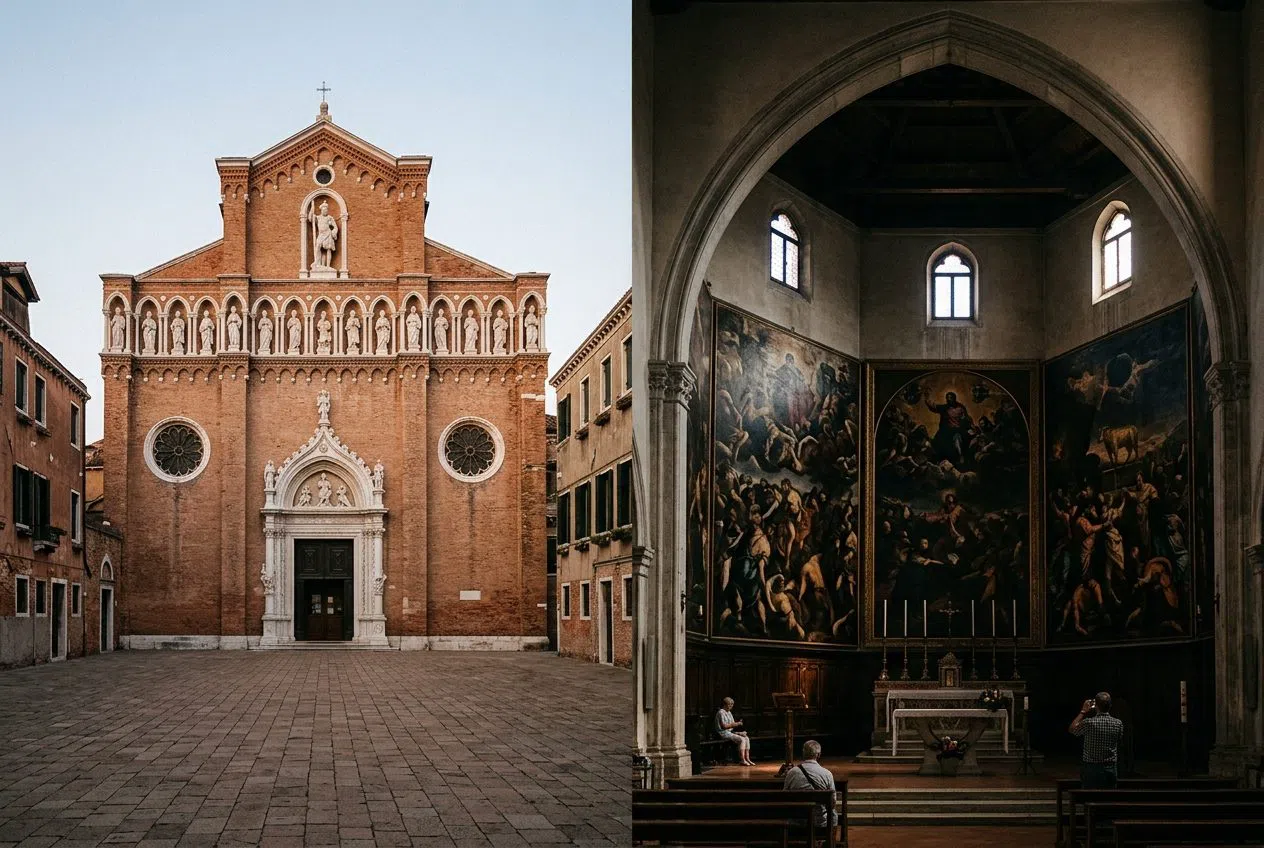
Ten minutes north-east of the Ghetto, following the Fondamenta degli Ormesini and crossing to the Sensa, is Chiesa della Madonna dell'Orto (northern Cannaregio). Entry is €3, or free with the Chorus Pass, and it opens Mon–Sat 10am–5pm. This was Tintoretto's parish church; he is buried in the chapel to the right of the chancel, and his largest canvases still hang where they were painted for. It is almost always empty. If you have been queueing for the Accademia or shuffling through the Frari, this is the alternative — the same painter, the same scale, no ticket window, no line. Groups are fine, but keep the volume down: it is a working church and there is a donation ask at weekends.
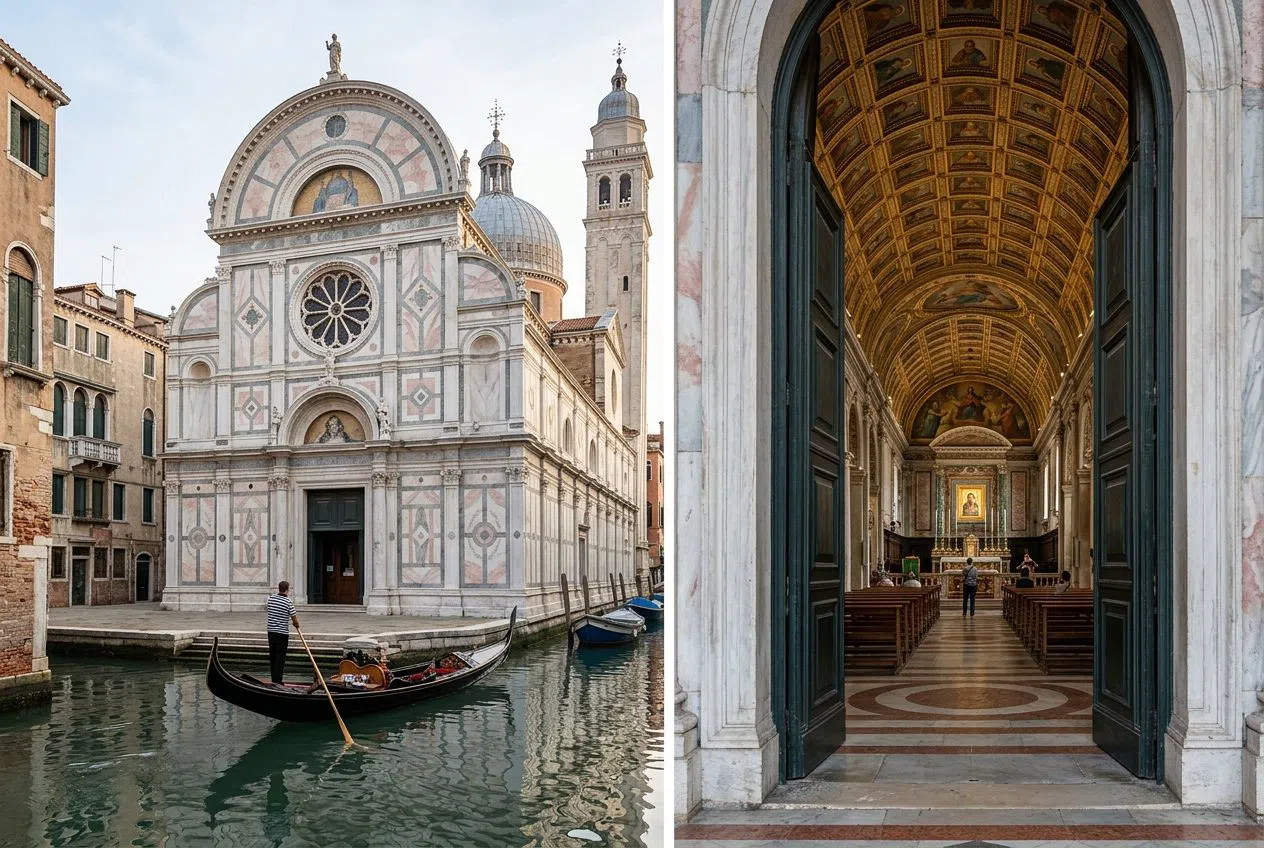
The second church sits at the other end of the sestiere. Chiesa di Santa Maria dei Miracoli (southern Cannaregio, between the Rialto and the Strada Nova) is a marble jewel box of a building, €3.50 or free with the Chorus Pass, open Mon–Sat 10.30am–4.30pm. It takes ten minutes to see properly and works best slotted in on the walk to dinner rather than made into a destination. It is small enough that a party of ten will shuffle through in single file rather than linger, so split up and meet outside.
An afternoon on the water
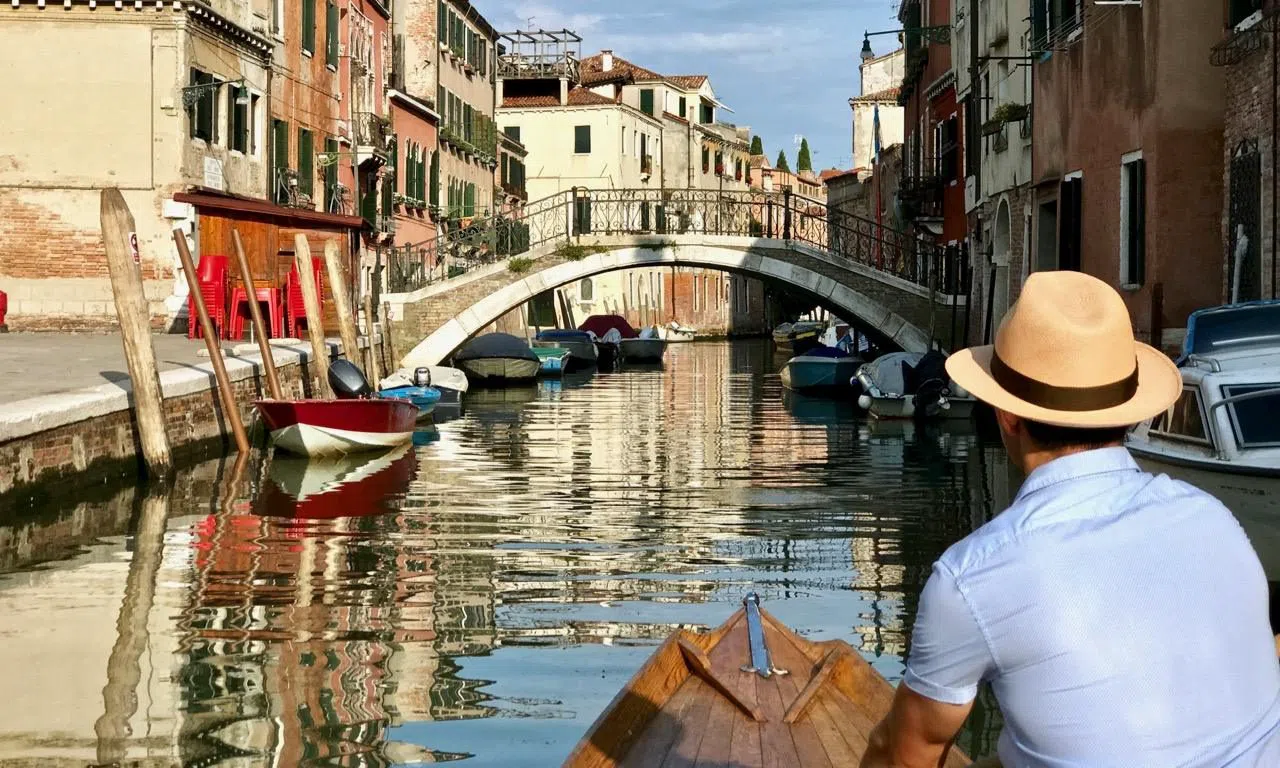
If you do one booked thing in Cannaregio, make it Row Venice (Sacca della Misericordia boatyard, northern edge of the sestiere). A women-run non-profit teaching voga alla veneta since 2012, it puts you standing up in a batellina with a vogatrice and ninety minutes to learn to move it. Around €120–160 per boat, up to four guests per boat, so a group of eight books two boats side by side and a group of twelve books three. Book well ahead — this is the constraint on the whole day, not the restaurants.
The sunset slot is the one to ask for. It finishes in the Misericordia basin, which is a four-minute walk from the first bar below, so the rowing lesson and the aperitivo crawl chain together without a detour.
Aperitivo: the Misericordia crawl, in order
This is the part of Cannaregio people come back for. Four bars sit within 300 metres of each other on the same canal bank, and the correct way to do it is standing outside with a glass, moving along when the mood changes.
6pm — Vino Vero (Fondamenta della Misericordia). The bar that made natural wine normal in Venice, open evenings from 6pm and from midday on Saturday and Sunday. Cicchetti are €2.50–3, wine by the glass €5.50–7 and up. There are no reservations and barely a dozen seats inside, which is the honest limit: four to six people happy to stand on the canal bank will have a good time, a booked party of fourteen will not fit and should not try. Order at the bar, take it outside, sit on the edge.
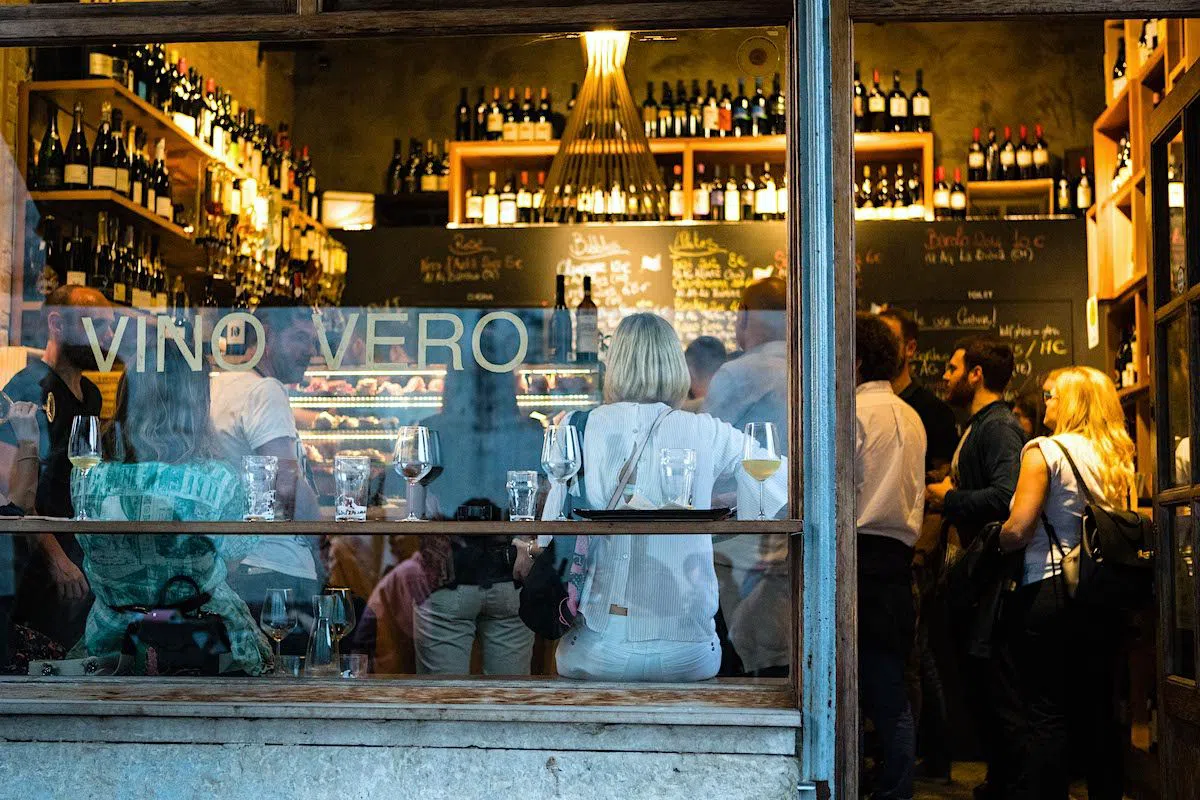
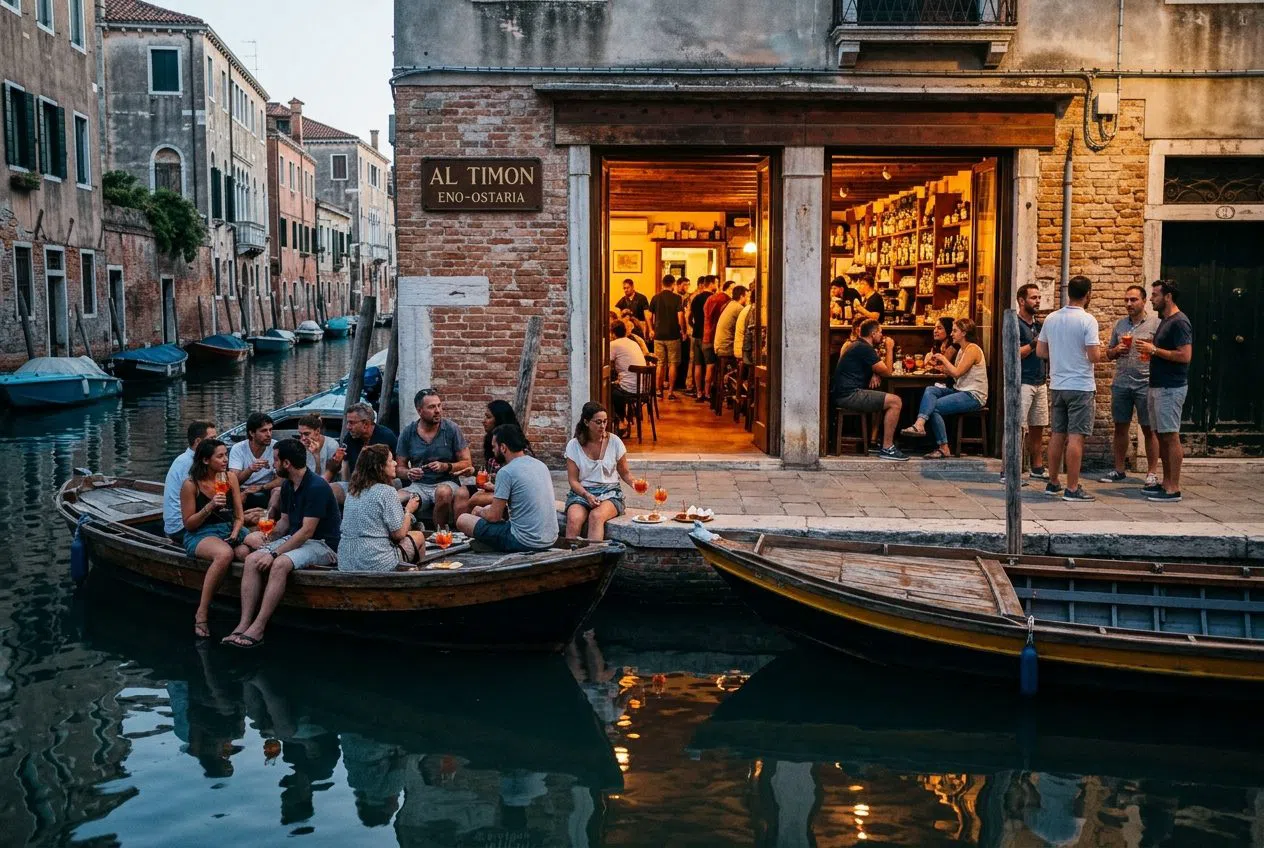
7pm — Al Timon (Fondamenta degli Ormesini, three minutes west along the water). The most photographed aperitivo spot in the sestiere and still genuinely local, largely because of the moored boats you can sit on with a glass. Cicchetti €2–4; sharing steak boards €20–35 per person. It is group-friendly in practice — the boats and the fondamenta absorb people — but the boat seats go early, so send someone ahead at 6.30pm to claim space. If you want a sit-down meat board rather than standing, book inside. Open 6pm to 1am daily.
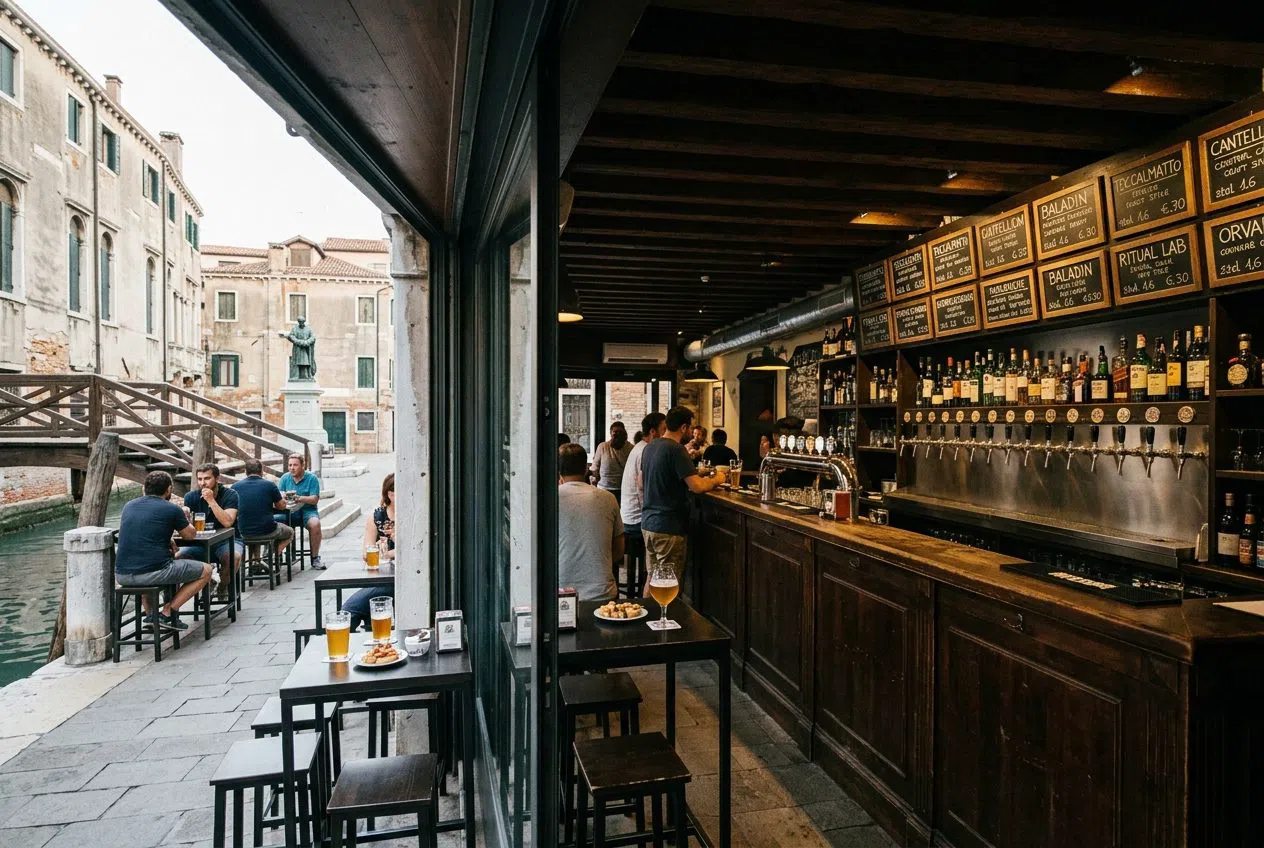
Instead of another small glass — Il Santo Bevitore (Fondamenta Diedo, two minutes north over the bridge). Open since 2005, 4pm to 2am daily, 21 rotating taps and their own MacGuffin gin, pints roughly €6–8. This is the most group-tolerant room in Cannaregio: standing space, big tables, no door policy. It is the answer when a stag party or a rugby crowd has had enough thimblefuls of Prosecco and wants a pint in a normal-sized glass. Nobody will look at you strangely for arriving as ten.
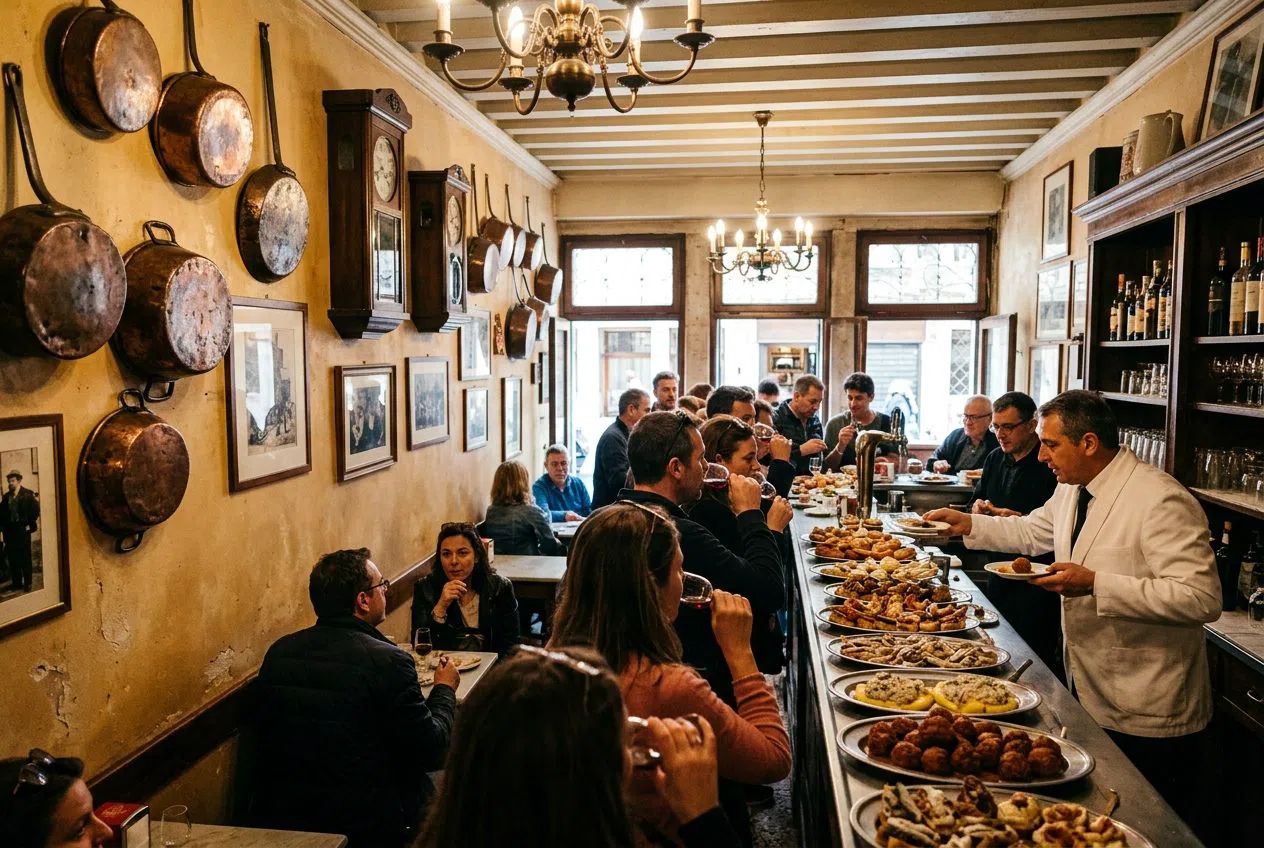
A twelve-minute detour south — Cà d'Oro alla Vedova (off the Strada Nova, by the Ca' d'Oro vaporetto stop). Run by the same family since the late 1800s and the benchmark for Venetian polpette, at about €2 each with wine by the glass €2–4. It is tiny. Two or three of you standing at the bar at 6pm on the way past is the play; a party of eight will not get a table and will block the room trying. Treat it as a stop, not a plan.
Dinner: three tables, three different evenings
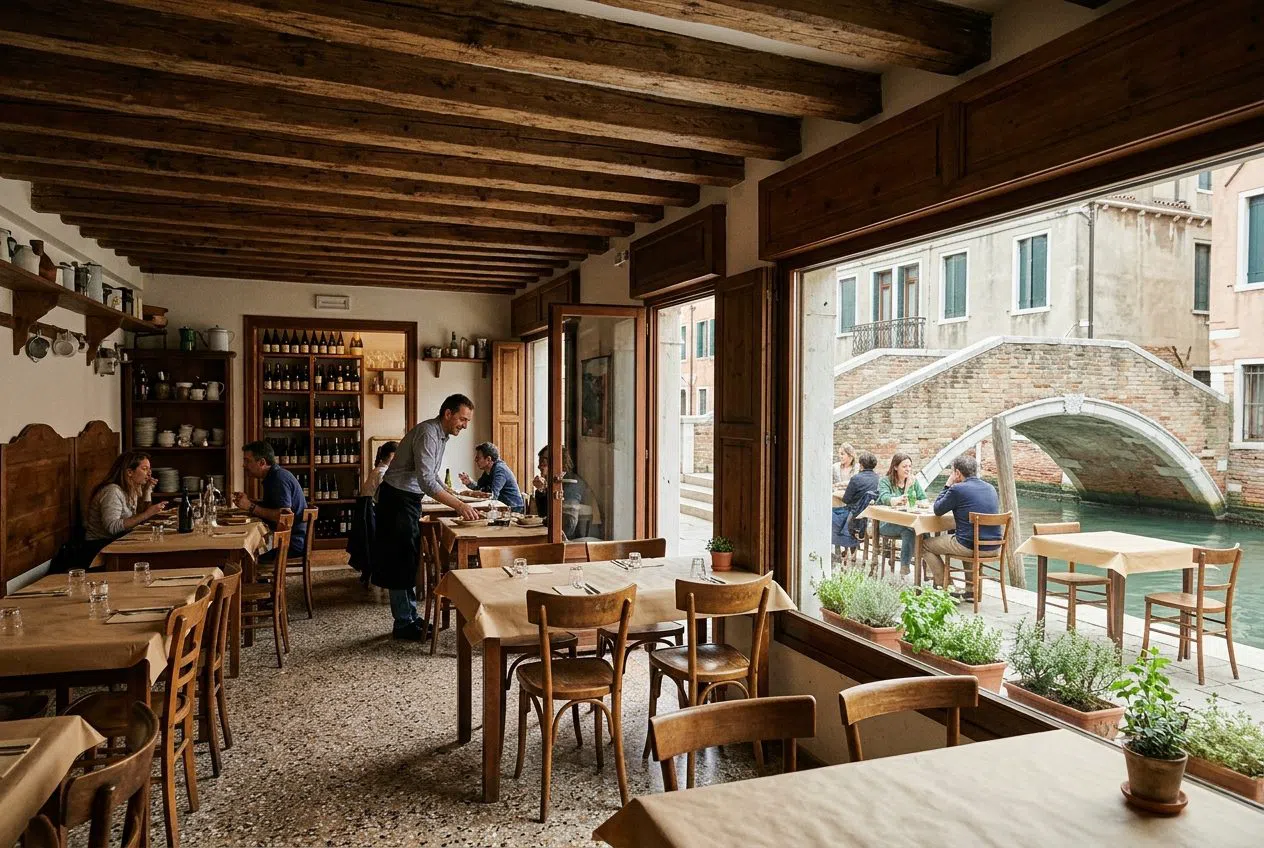
Osteria Anice Stellato (Fondamenta della Sensa, one bridge north of the Misericordia) is the value pick — lagoon fish and handmade pasta, mains €18–28, at prices San Marco has forgotten. It takes bookings and can seat six to ten if you call ahead. The canal tables are the prize and go first, so ask for one when you book, not when you arrive. Locals fill it, which is both the recommendation and the reason you cannot walk in at 8.30pm.
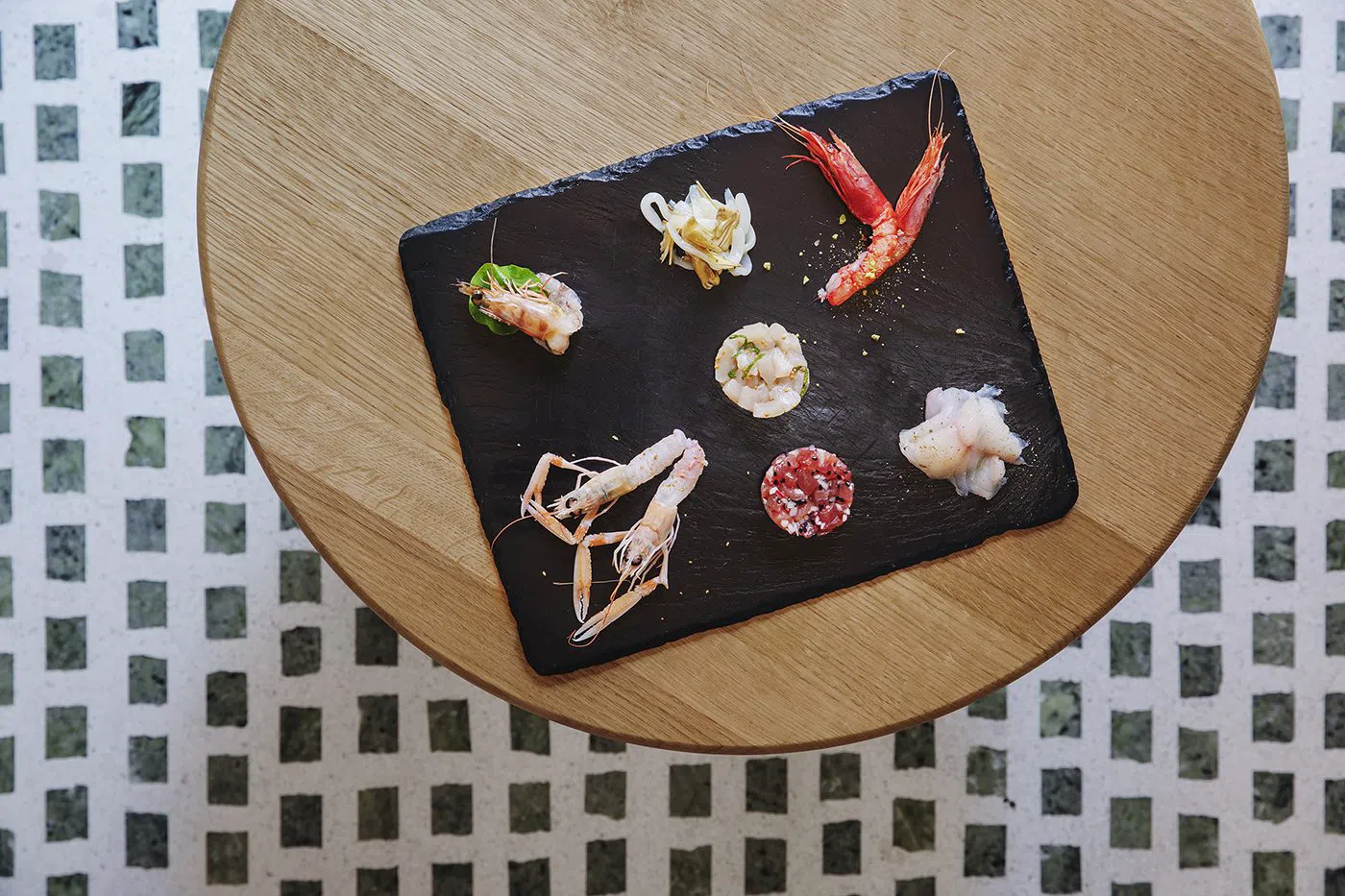
Ostaria da Rioba (Fondamenta della Misericordia) is the smarter table on the strip: refined raw fish and homemade pasta, £££ territory at roughly €50–70 per person with wine. Reservation-led, comfortable with groups of six to eight, closed Mondays, service 12.30–2.30pm and 7.30–10.30pm. Portions are small and prices are Venetian — this is a treat dinner for a couple or a celebrating six, not a way to feed hungry people cheaply.
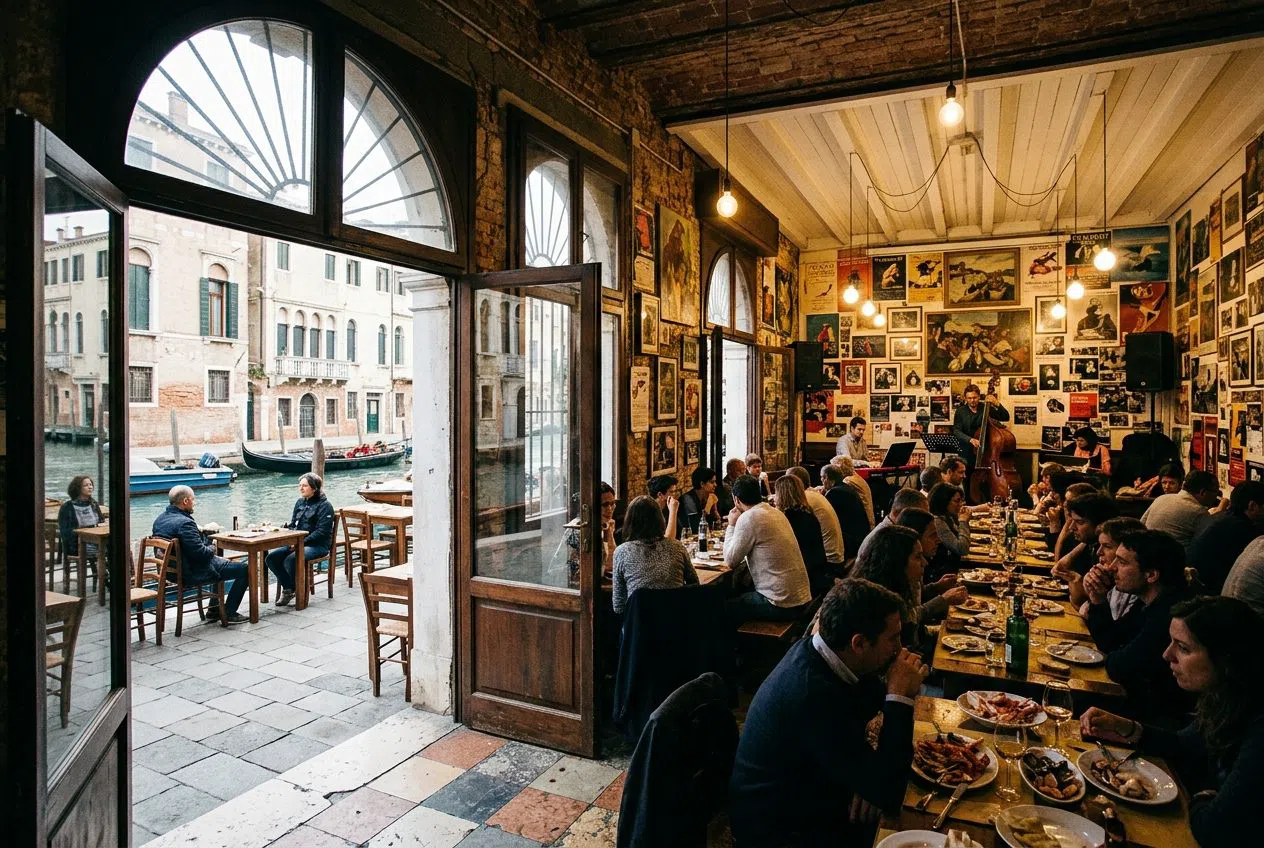
Il Paradiso Perduto (Fondamenta della Misericordia, two minutes east) is the opposite proposition and a Cannaregio institution: long shared tables, live jazz and rock with Mondays as the reliable music night, mains €15–25 and large shared seafood platters. Portions are sized for people who have been drinking. Book ahead for anything over four, inside or on the canal. It is loud and chaotic by design, so do not bring anyone hoping for a quiet conversation — send them to Anice Stellato instead and meet afterwards.
Late, and the door realities
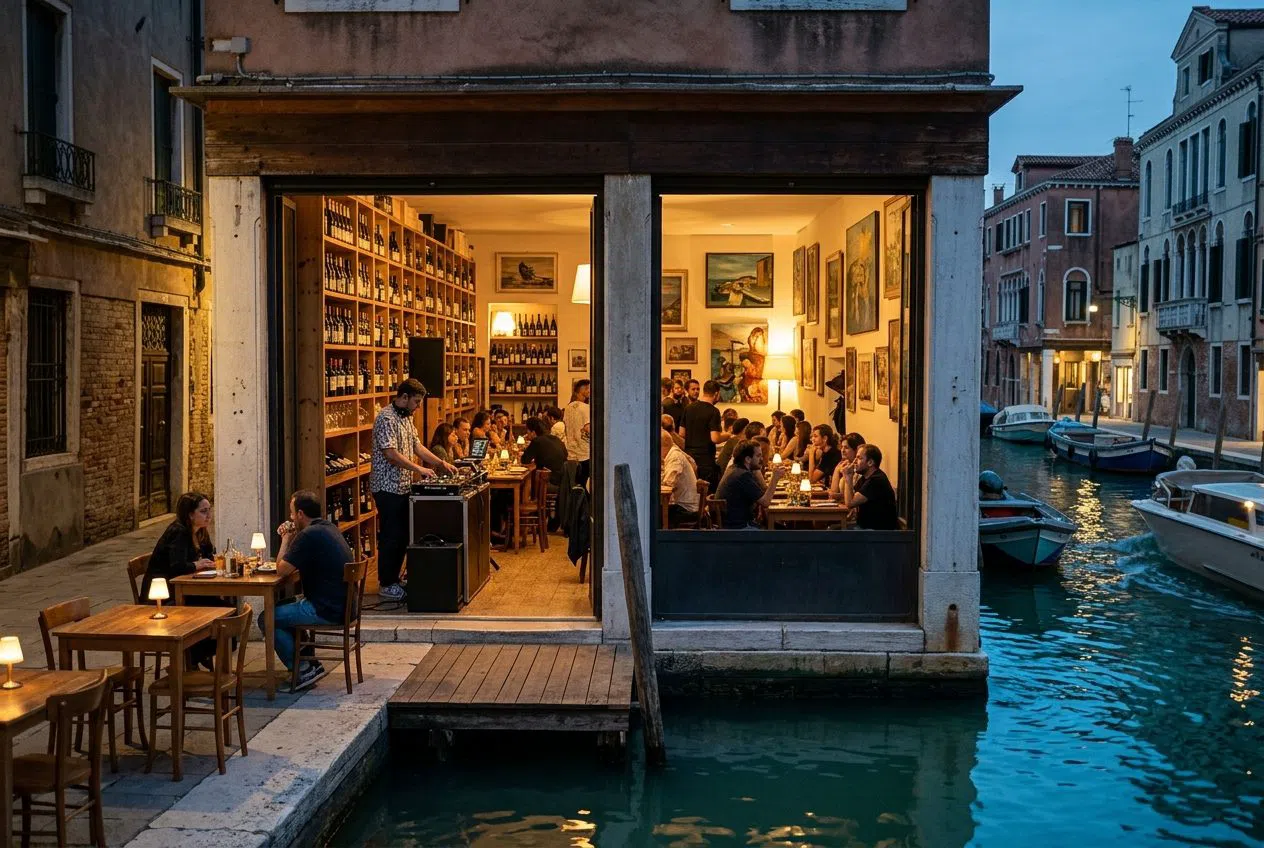
Venice closes early. The exception is Bea Vita (Fondamenta della Misericordia), which reopened in May 2024 under the Vino Vero team and now runs DJs, live music and shows — wine €6–9 a glass, plates €10–18. Groups stand outside on the fondamenta and nobody minds; the inside rooms are small, so book if you want to eat as a party rather than drink as one. This is the last stop, and after it Il Santo Bevitore's 2am licence is the only thing left standing.
The honest summary on doors: there are no velvet ropes in Cannaregio and no bouncer will turn you away for your shoes. The constraint is square metres. Vino Vero and alla Vedova are small rooms that break at about six people; Al Timon, Bea Vita and Il Santo Bevitore absorb crowds happily; Paradiso Perduto, Anice Stellato, da Rioba and GAM GAM all want a phone call if you are more than four. Book two things — dinner and Row Venice — and improvise the rest.
Where to stay
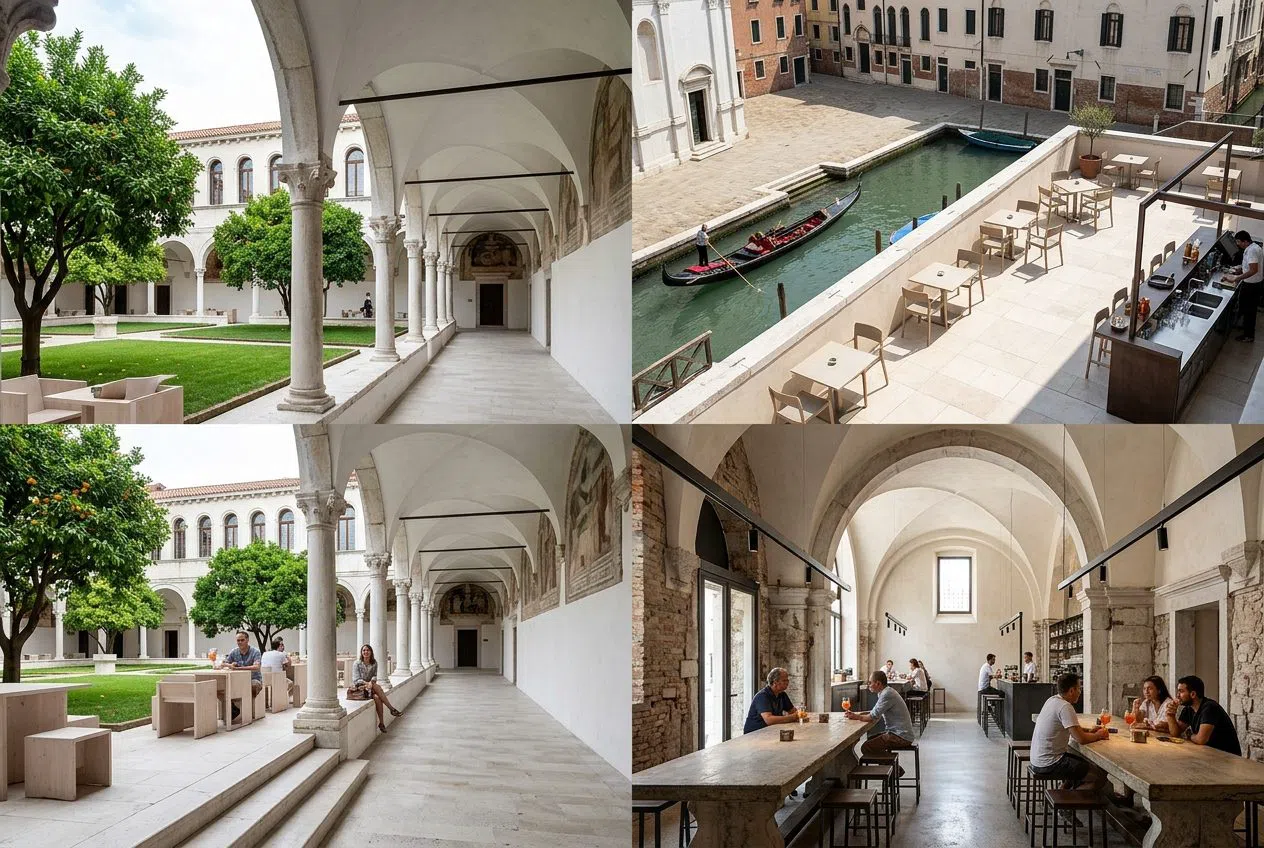
Combo Venezia (Campo dei Gesuiti, eastern Cannaregio) is a former convent turned hostel-hotel with dorm beds from around €35 and private rooms from around €100, plus apartments, a bar and restaurant on site, a conference room and bookable group dinners. For a mixed-budget group where some people want a dorm and some want a door that locks, it solves the problem in one building, ten minutes from the Rialto and on the right side of town for the Misericordia.
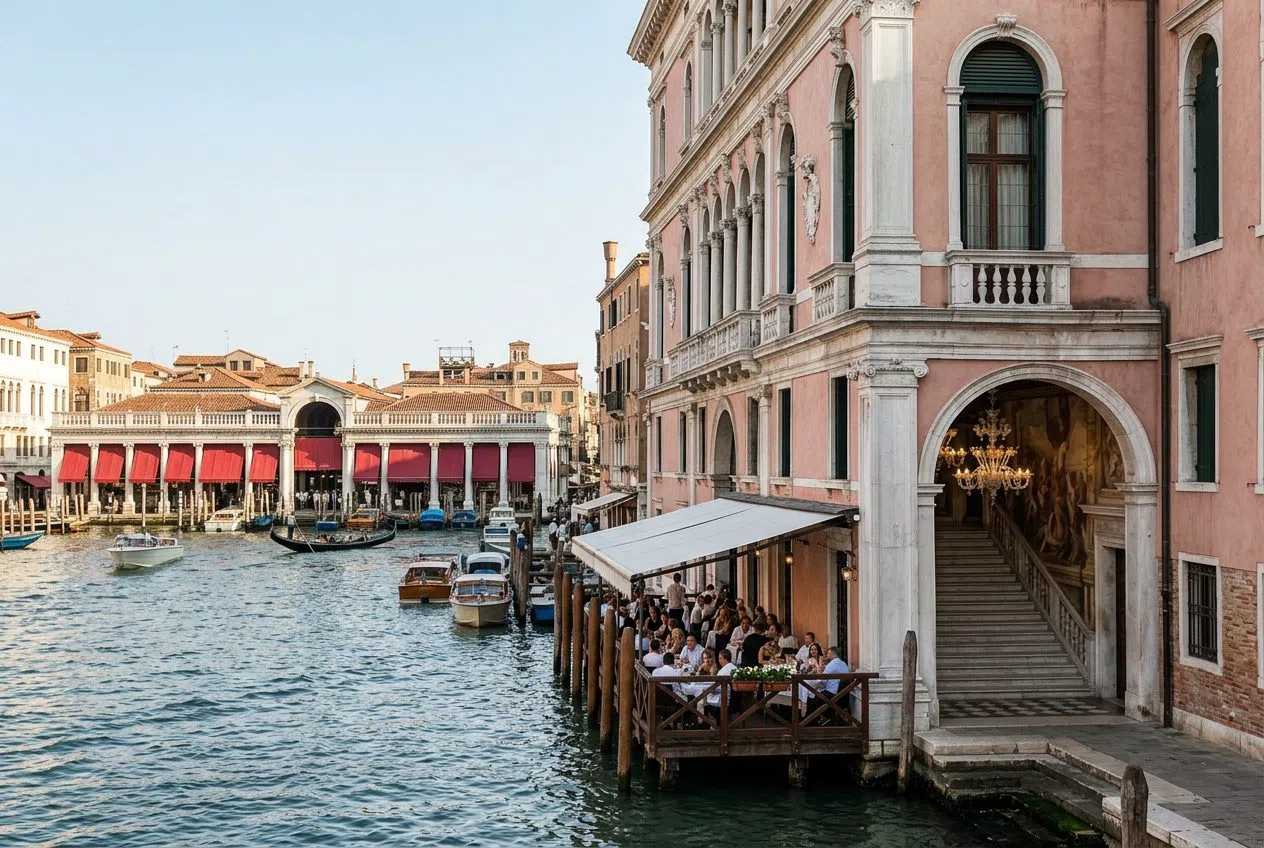
At the other end, Ca' Sagredo Hotel (Campo Santa Sofia, on the Grand Canal) is a five-star palazzo — €350–700+ a night, piano nobile salons and a canal terrace used for private parties, seven minutes' walk from the Rialto. It takes group and event bookings but it is a formal house, not a party hotel; treat it as one splurge night for a celebration rather than a base for a loud weekend. For everything between those two poles, the Venice hotel search listings cover Cannaregio's smaller hotels and apartments.
Practical notes
Transport. Walk. From Santa Lucia to the far end of the Misericordia is about twenty minutes on flat fondamenta with four bridges, and it is quicker than the vaporetto in most conditions. If you are arriving from the Rialto side, lines 1 and 2 stop at Ca' d'Oro, which puts you five minutes from alla Vedova and Ca' Sagredo. The walk home along the Fondamenta at midnight is well lit and busy enough to be unremarkable.
Cash. Bacari take cards now, but small rounds of cicchetti are faster in cash, and a €20 note covers a stop for two at Vino Vero or alla Vedova. Carry some.
Timing. Mondays: da Rioba is closed, Paradiso Perduto has its music night. Saturdays: the Ghetto tours and GAM GAM do not run — do the churches and Row Venice instead. Both Chorus churches shut by 5pm, so sights first, water second, bars from six.
Budget. A day here runs roughly £45–60 per person doing it the standing-up way — coffee, a church, cicchetti and three glasses, then Anice Stellato. Add the rowing lesson at €120–160 split across four, and a da Rioba dinner takes it past £100. Book Row Venice and one dinner in advance; leave the evening loose.
Before you go
Is Cannaregio a good area to stay in Venice?
Yes, particularly if you want an evening. It is walkable from Santa Lucia station, ten minutes from the Rialto, and it has the city's most reliable strip of late bars along the Fondamenta della Misericordia. Combo Venezia (dorms from ~€35, privates from ~€100) covers mixed-budget groups; Ca' Sagredo at €350–700+ a night is the splurge option on the Grand Canal.
Where should a group of 8–10 eat and drink in Cannaregio?
Il Santo Bevitore takes a standing crowd with no door policy and 21 taps; Al Timon absorbs groups on its moored boats if you claim space by 6.30pm; Il Paradiso Perduto has long shared tables but needs a booking for more than four. Avoid Vino Vero and Cà d'Oro alla Vedova as a large party — both are tiny rooms that work for two to six.
Can you visit the Venetian Ghetto in 2026 while the museum is being restored?
Yes. The Museo Ebraico is finishing a major restoration and reopens in autumn 2026, but the guided synagogue tours run regardless — hourly in English, €15, and the only way inside the hidden upper-floor synagogues. Private group tours cost €100–150 plus €17 per person by email. It closes Saturdays and Jewish holidays.
What is the quiet alternative to Venice's crowded churches?
Chiesa della Madonna dell'Orto in northern Cannaregio. It was Tintoretto's parish church, he is buried there, and his largest canvases still hang in situ. Entry is €3 or free with the Chorus Pass, it opens Mon–Sat 10am–5pm, and it is almost always empty — the same scale of painting as the Frari without the queue.
How much does a day in Cannaregio cost?
Doing it standing up — espresso at €1.20–2, cicchetti at €2–4, wine at €5.50–7 a glass and dinner at Osteria Anice Stellato with mains €18–28 — around £45–60 per person. A Row Venice lesson adds €120–160 per boat of four, and dinner at Ostaria da Rioba at €50–70 per person pushes the day past £100.