The Venice issue
Castello, Venice: the neighbourhood guide
A west-to-east walk through Venice's quietest big sestiere — Carpaccio in the room he painted it for, cicchetti on Via Garibaldi, and honest advice on which doors a group will actually fit through.

By Kim SolheimTimed walking routes and the quieter half of the city
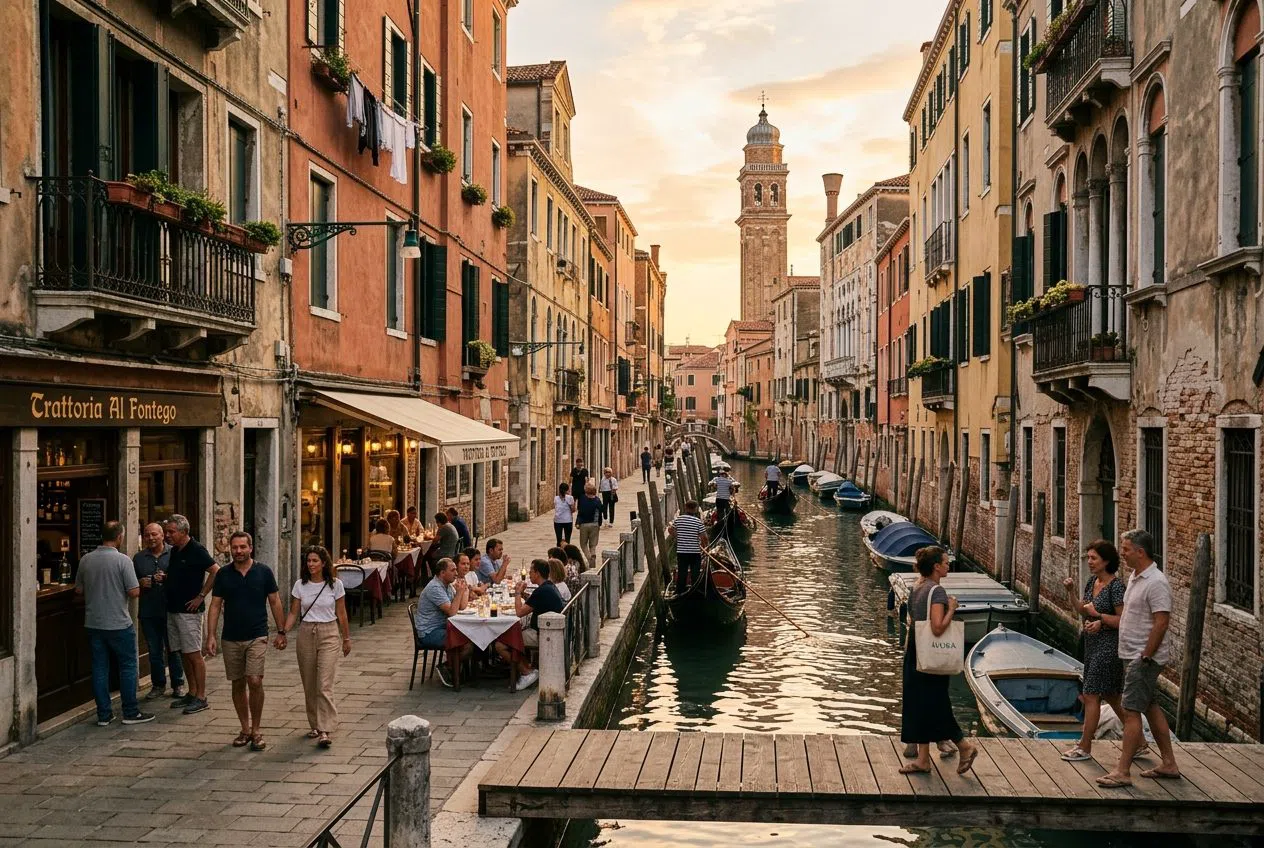
Castello begins in the crush behind Piazza San Marco and empties as you walk east, until somewhere past the Biennale gates the souvenir stalls stop and you are among football pitches, dog walkers and washing lines. It is the sestiere where Venetians still do ordinary things at ordinary hours — buy bread, argue about the art, stand at a counter with a small glass of wine at four in the afternoon. This guide runs west to east, which is also the order in which it gets quieter.
How the neighbourhood is laid out
From Santa Maria Formosa in the north-west to the tip of Sant'Elena in the east is about 45 minutes on foot at a Venetian pace, which is slower than you expect because of the bridges. The waterfront route — Riva degli Schiavoni, past the Arsenale, along to the Giardini — is flat, wide and hard to get lost on. The inland route through the calli north of it is narrower, quieter, and where most of the food is.
Vaporetto line 1 runs the southern edge with stops at San Zaccaria, Arsenale, Giardini and Sant'Elena; lines 4.1 and 5.1 do a faster version of the same run. If your legs are done, the boat from Giardini to San Zaccaria takes about eight minutes and saves twenty-five minutes of walking. Single tickets are expensive, so if you expect more than three rides in a day, price up a travel pass first.
Plan your Venice trip
Live prices from our booking partners.
Free cancellation on many rooms. We may earn a commission when you book.
Two quiet rooms in northern Castello
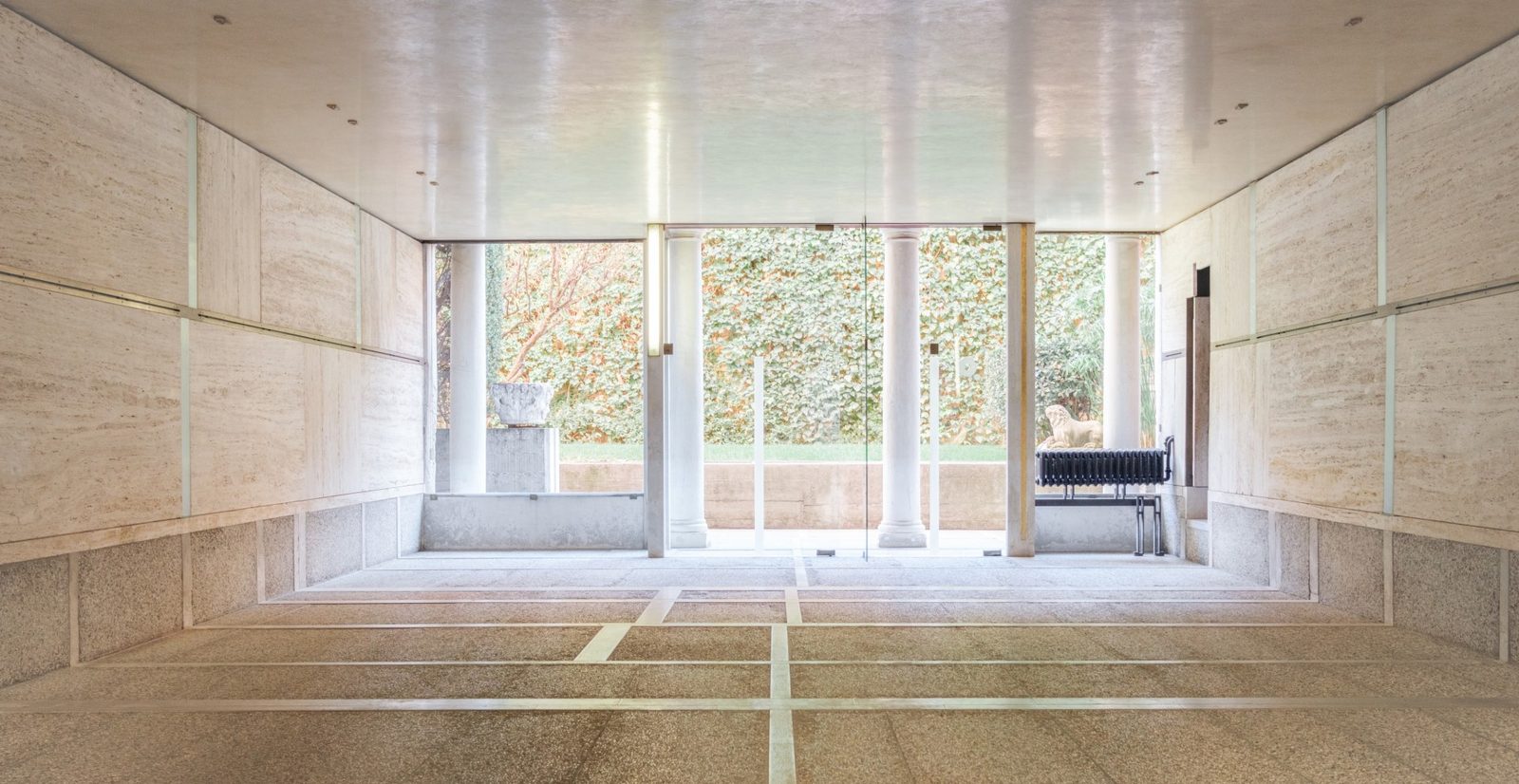
Start at Fondazione Querini Stampalia (Campo Santa Maria Formosa), a palazzo house-museum with a library and a picture collection, and a Carlo Scarpa intervention bolted underneath it — a water-level ground floor and garden Scarpa rebuilt in the 1960s. Entry is around £12-14, open Tuesday to Sunday 10:00-18:00, closed Mondays. Allow 75-90 minutes; the painting rooms upstairs deserve as long as the Scarpa work below. Groups are fine but should book ahead, because the Scarpa spaces are tight and a dozen people fill them.
Seven or eight minutes east, over two bridges, is the Scuola Dalmata dei SS. Giorgio e Trifone (Calle dei Furlani), also called San Giorgio degli Schiavoni. Carpaccio painted its cycle between 1502 and 1509 for this room, and the pictures still hang on the walls they were made for, at the height they were made for. Entry is about £7, open 10:00-17:30, closed Tuesdays. Individuals turn up; groups must reserve, and there is a hard cap of 25 people inside at once, which is the reason the room still works as a room. Half an hour is enough.
Both sit within ten minutes of San Marco, and both are the quiet alternative to it. If the choice is between these two and queueing for the Accademia on a wet afternoon, come here.
The Arsenale waterfront
Walk south to the Riva and turn east. About eight minutes past San Zaccaria you reach the Museo Storico Navale (Riva San Biasio), four floors of Venetian naval history — ship models, gondola fittings, the Republic's shipbuilding, and a great deal of twentieth-century navy. It is uneven. The stronger half is the Padiglione delle Navi, the reopened Ships Pavilion in a former oar workshop two minutes further along, where the actual boats are. A combined ticket is around £9 and both are closed Tuesdays.
The catch is scheduling. The Pavilion runs on guided slots only, maximum 25 per tour, and at weekends alone: Saturdays at 14:30 and 16:00, Sundays at 11:00, 12:30, 14:30 and 16:00. If the boats are what you came for, build the weekend around those times rather than hoping.
The Biennale year
Biennale Arte 2026 – 'In Minor Keys' (Giardini and Arsenale) runs 9 May to 22 November 2026, curated by Koyo Kouoh. A standard combined ticket is roughly £25-30; group tickets and guided group visits are sold through the Biennale's own site. It is closed Mondays, and it is the main reason to base yourself in Castello this year rather than San Polo or Cannaregio — from parts of Via Garibaldi the Arsenale entrance is a five-minute walk.
Two days is the honest answer for both sites; one long day leaves you skimming the national pavilions at speed. The sites absorb crowds better than almost anywhere else in the city, so the pressure falls on your stamina rather than on queues. With only an afternoon, take the Arsenale — the rope-walk building holds attention longer than the Giardini pavilions, and it thins out after 16:00.
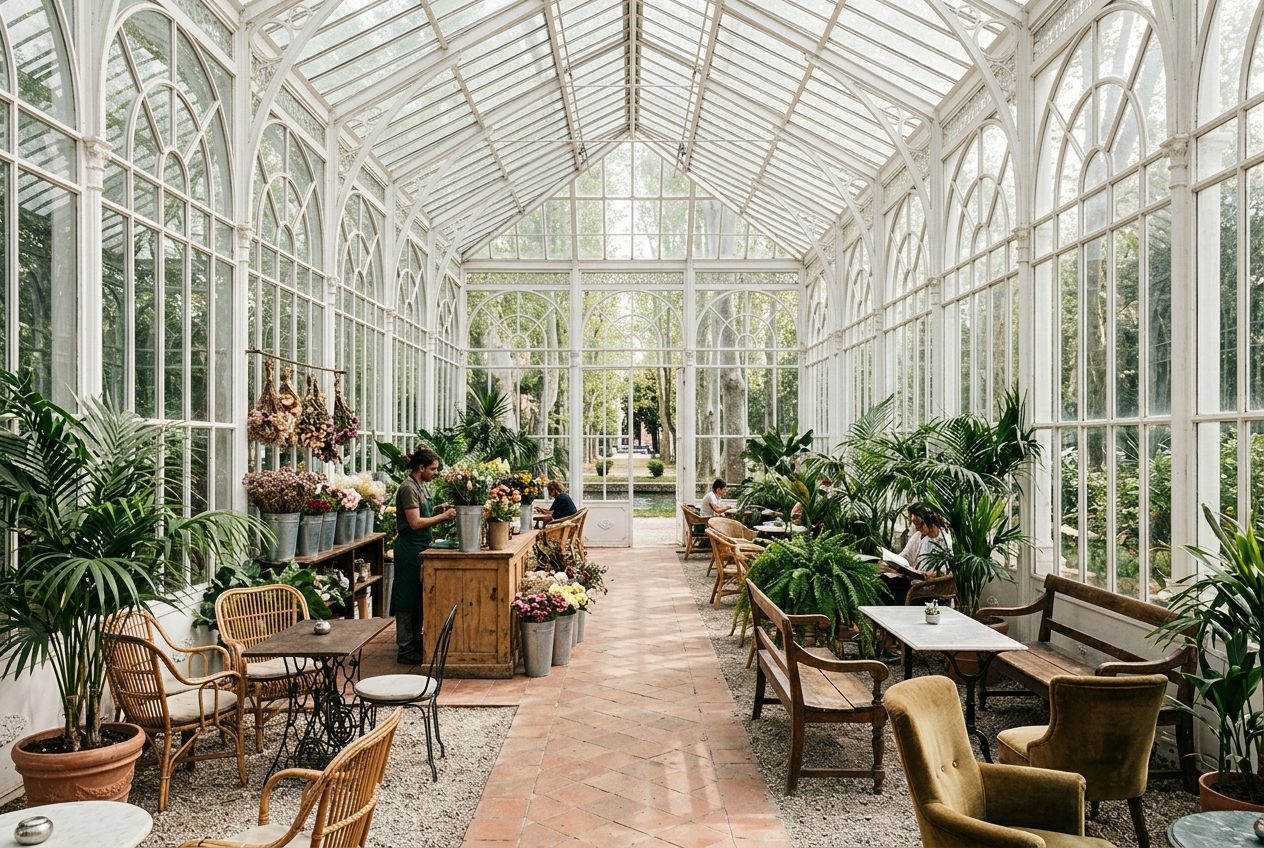
Five minutes from the Giardini gates, Serra dei Giardini (Viale Garibaldi) is a restored nineteenth-century greenhouse with a café, shaded outdoor tables, plants for sale and a programme of workshops and small events. Coffee, juice or cake runs £3-8, it is walk-in, and it opens roughly 10am-8pm daily from March to November. It is the breather you will want at hour four of the Biennale, and it takes a group of eight without anyone dragging chairs about.
Via Garibaldi from five o'clock
Via Garibaldi is a filled-in canal, which is why it is unusually wide for Venice, and from about five in the afternoon it does the thing the city is supposed to have stopped doing: people stand outside with a glass, children play, nobody hurries.
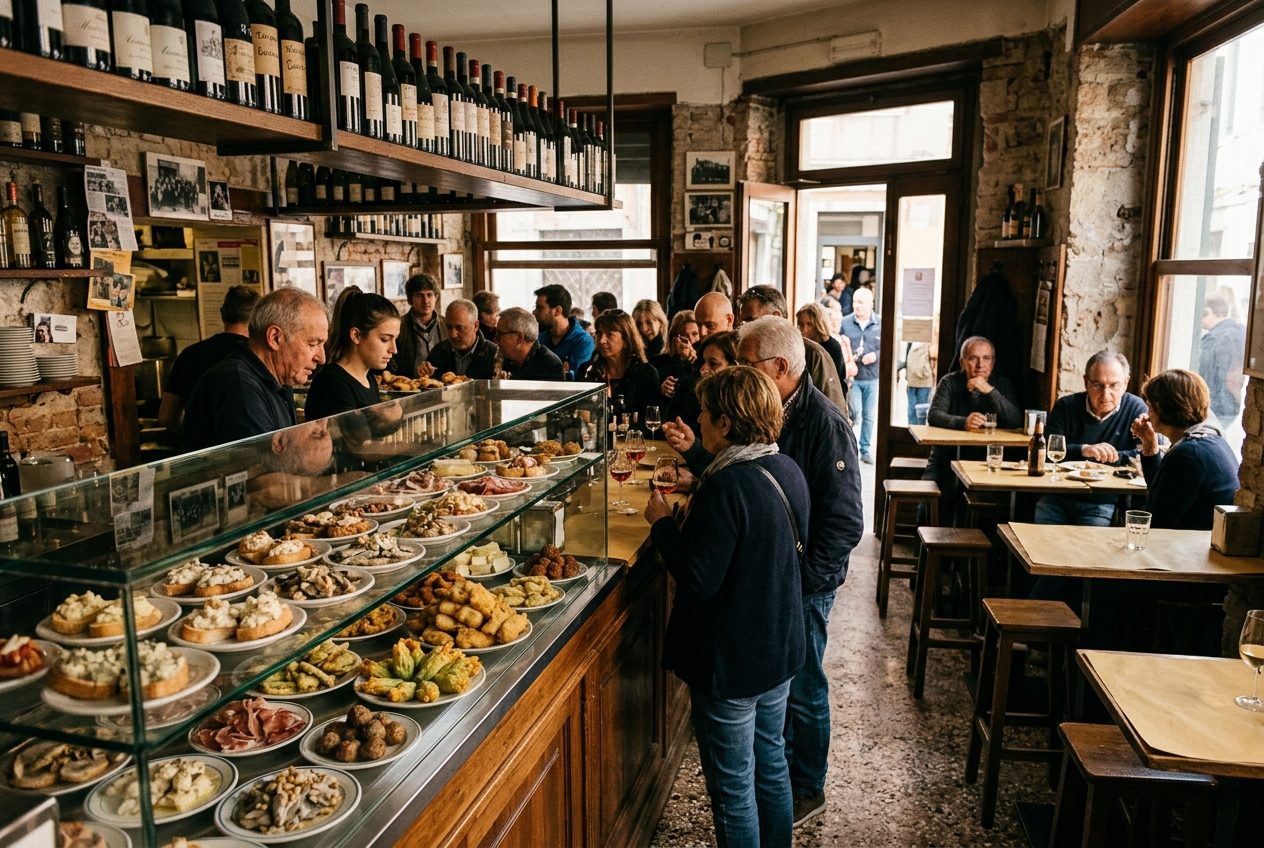
Start at Vecio Trani (Via Garibaldi), scruffier and cheaper than its neighbours, with a broader spread of cicchetti than anywhere else on the street. Cicchetti are £2-4 each, a glass £3-5. Walk-in only and standing room, so it suits a group happy to hover with plates and does not suit anyone who needs a chair. Two or three plates and a glass each, twenty minutes, then move on.
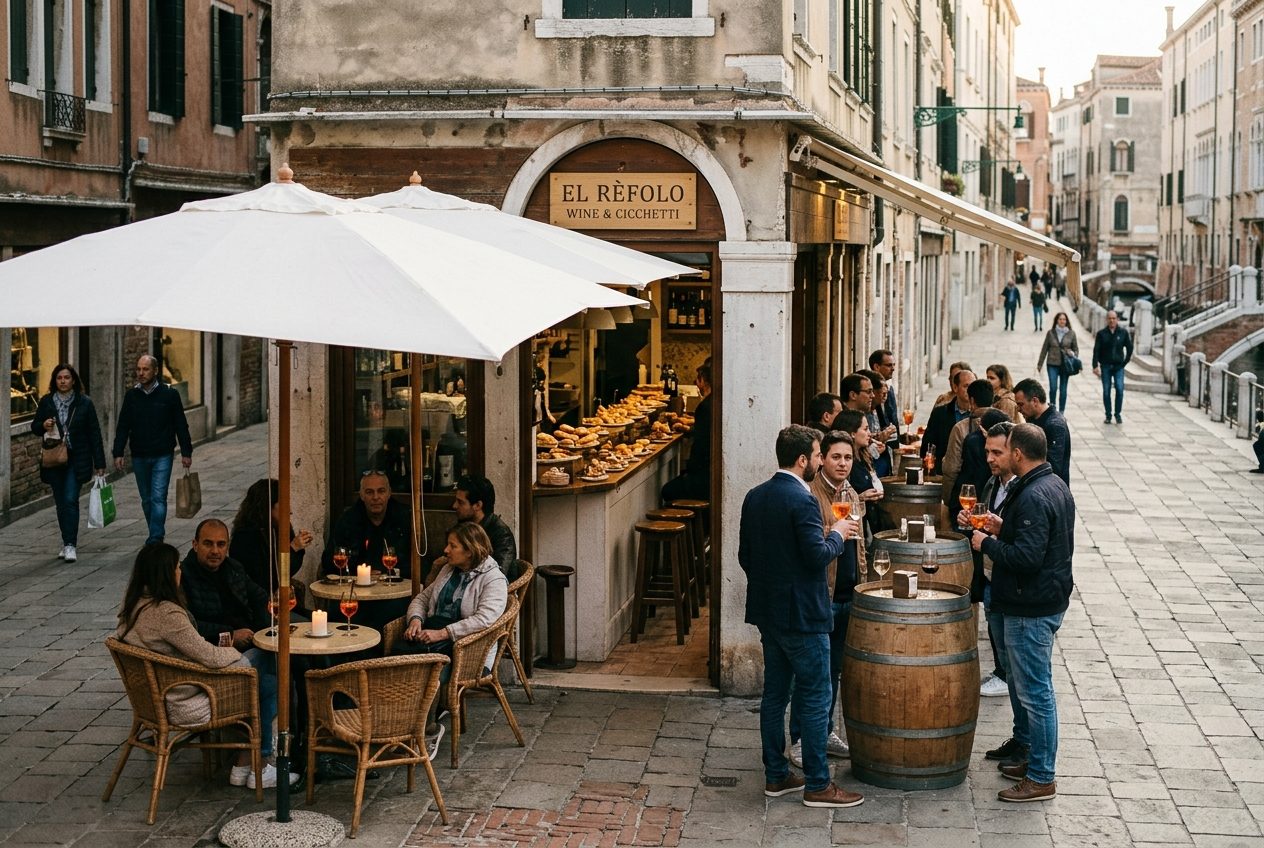
Four minutes along is El Refolo (Via Garibaldi), the anchor of the street. No bookings, barely any indoor room, and the drinking happens standing on the via itself. A spritz or an ombra is £4-6, cicchetti £3-5. Six people is comfortable; twelve of you blocking the pavement will annoy the people who live above it, and they would be right. There is live music some Friday evenings. It is an easy place to fall into conversation with an actual Venetian, which is a low bar in a city of day-trippers but a real one here.
If your group has hit its spritz limit — and UK groups usually do by night two — Strani (Via Garibaldi) is the answer: a serious rotating list of bottled and draught craft beer, rare in Venice. Beers are £5-7, cutting boards of cheese and salumi £10-14. The street terrace absorbs a dozen people, the staff are used to rounds, and there is no door policy to speak of. It is the one address on this street I would send a group of ten to without a word of warning about behaviour.
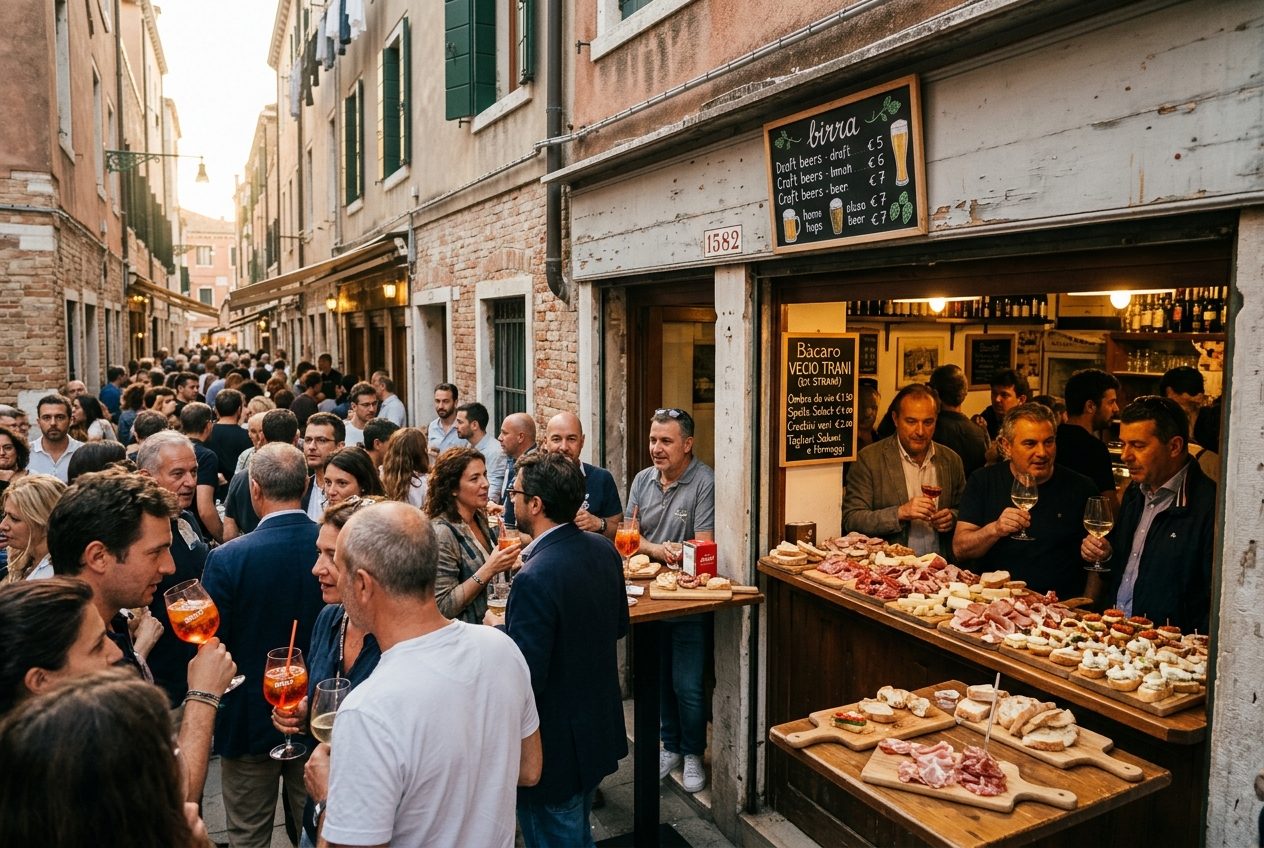
Done in that order — Vecio Trani, El Refolo, Strani — you have a self-made bacaro crawl of about ninety minutes covering perhaps 400 metres, at £25-35 a head.
Sitting down properly
Castello's restaurants split cleanly by how much control you want over the evening.
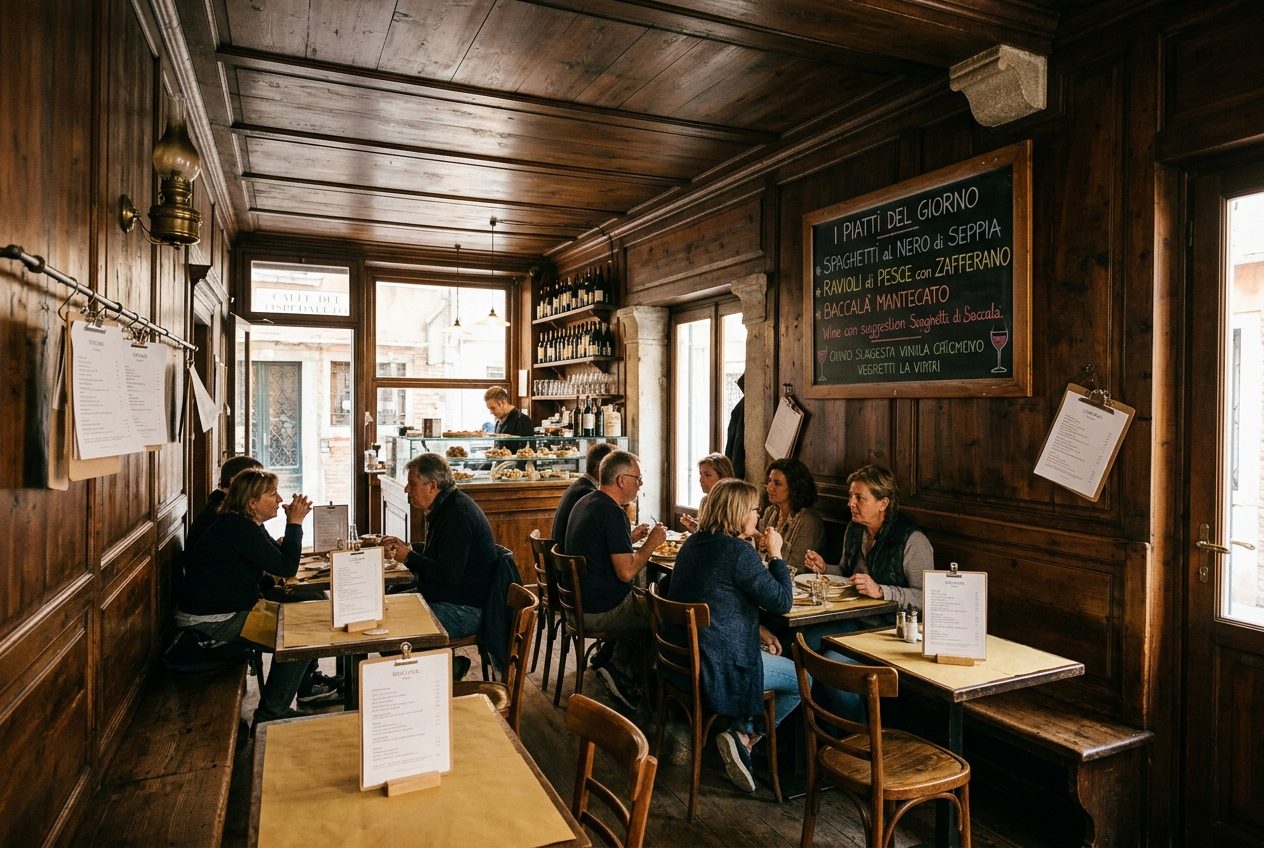
Osteria Alla Staffa (northern Castello) takes no reservations at all. Turn up at 7pm when it opens, or you will not seat more than four. Closed Tuesdays, £25-40 a head, and it is a locals' room in a stretch of the sestiere visitors rarely reach. The value is real and so is the risk: arrive at 8pm with six people and you will be eating somewhere else.
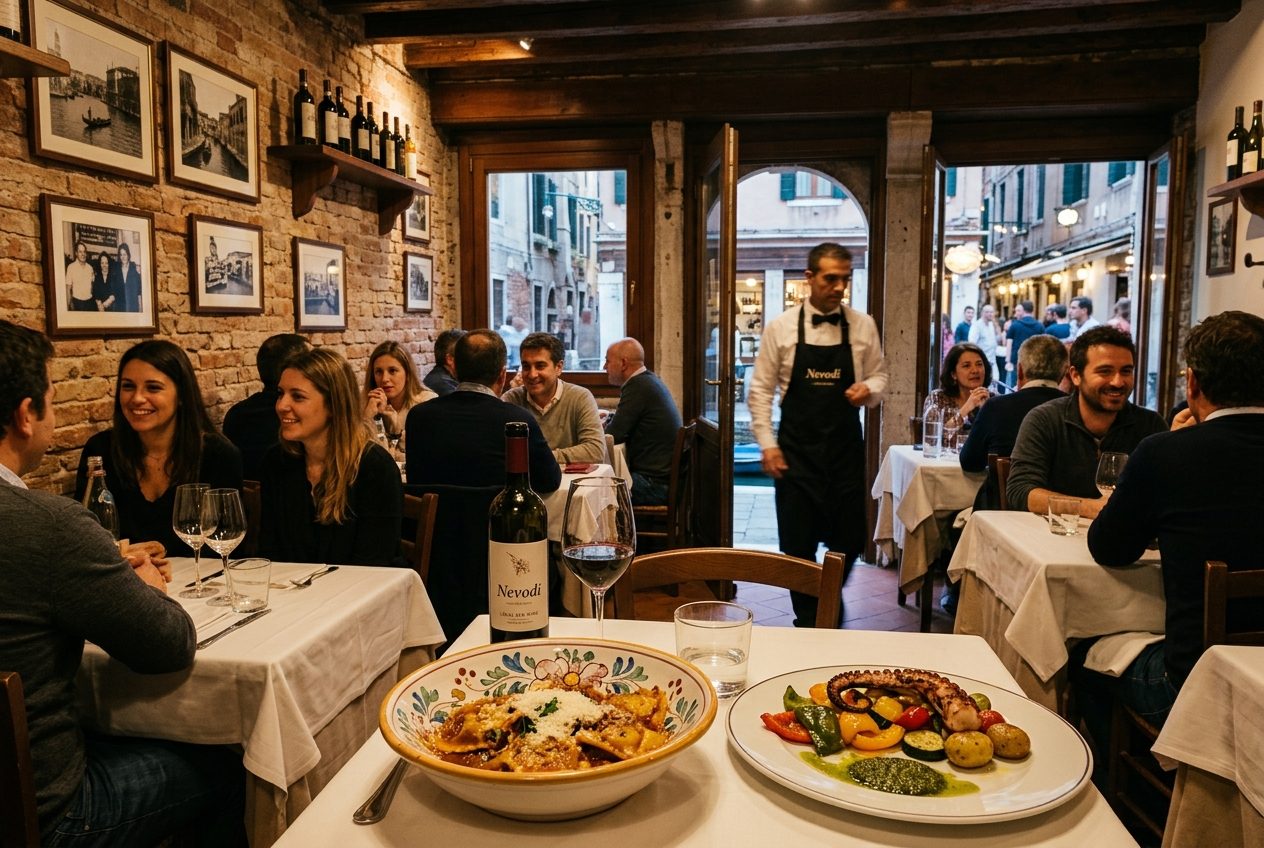
Trattoria Nevodi (eastern Castello) is run by the Colauzzi family and is the sit-down meal I book first in this part of the city — £30-45 a head with wine, and a small room. It takes group bookings, but anything over eight needs a phone call rather than a form, and reservations after 7pm are essential. Reserve well ahead; walk-in odds are poor.
Al Covo (Campiello della Pescaria, behind the Riva) was opened in 1987 by Cesare Benelli and Diane Rankin and is now run with their son Lorenzo. It holds a Michelin Plate, sources carefully from the lagoon, and costs £60-85 a head. Reservation-only, closed Tuesday and Wednesday, and it suits parties of two to six; larger tables are possible but need booking far ahead. This is a couples' or foursome's dinner, not a group's.
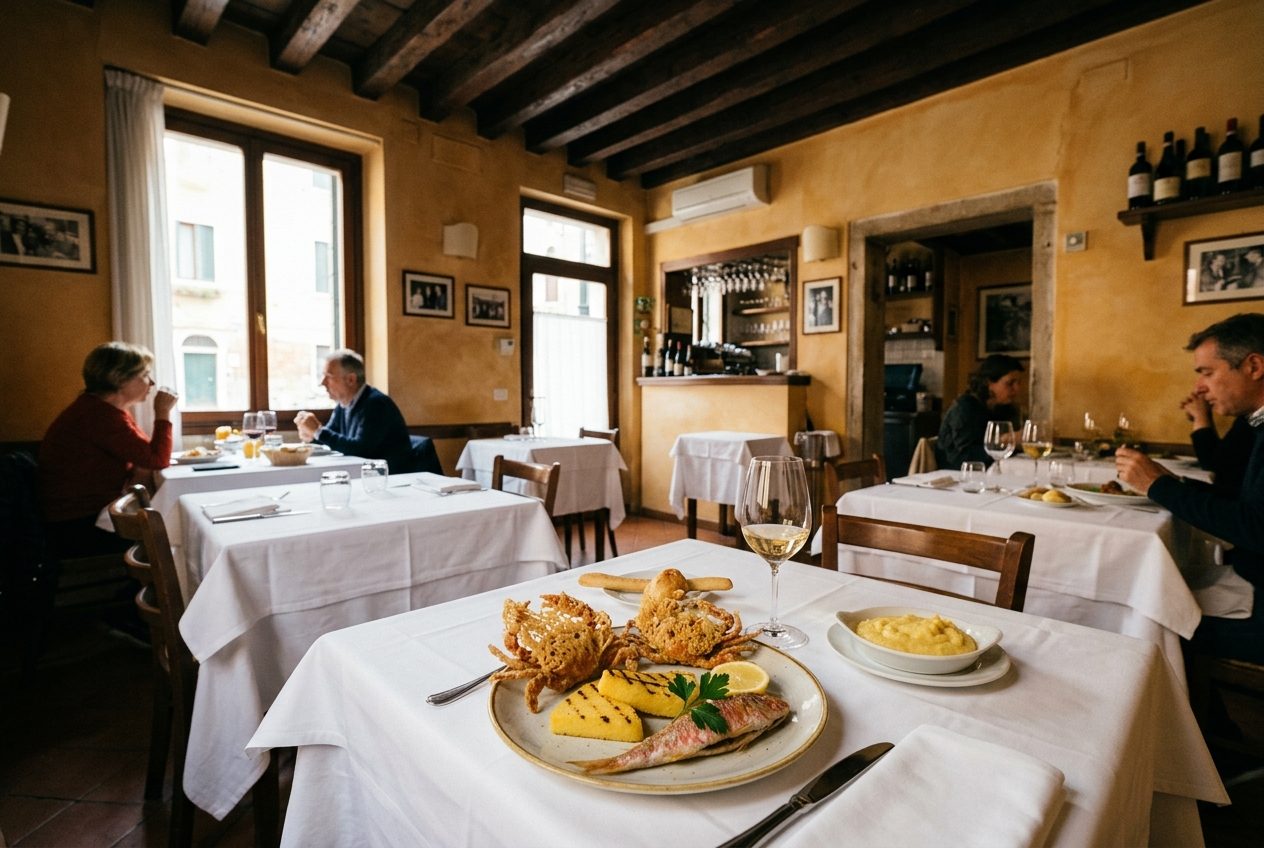
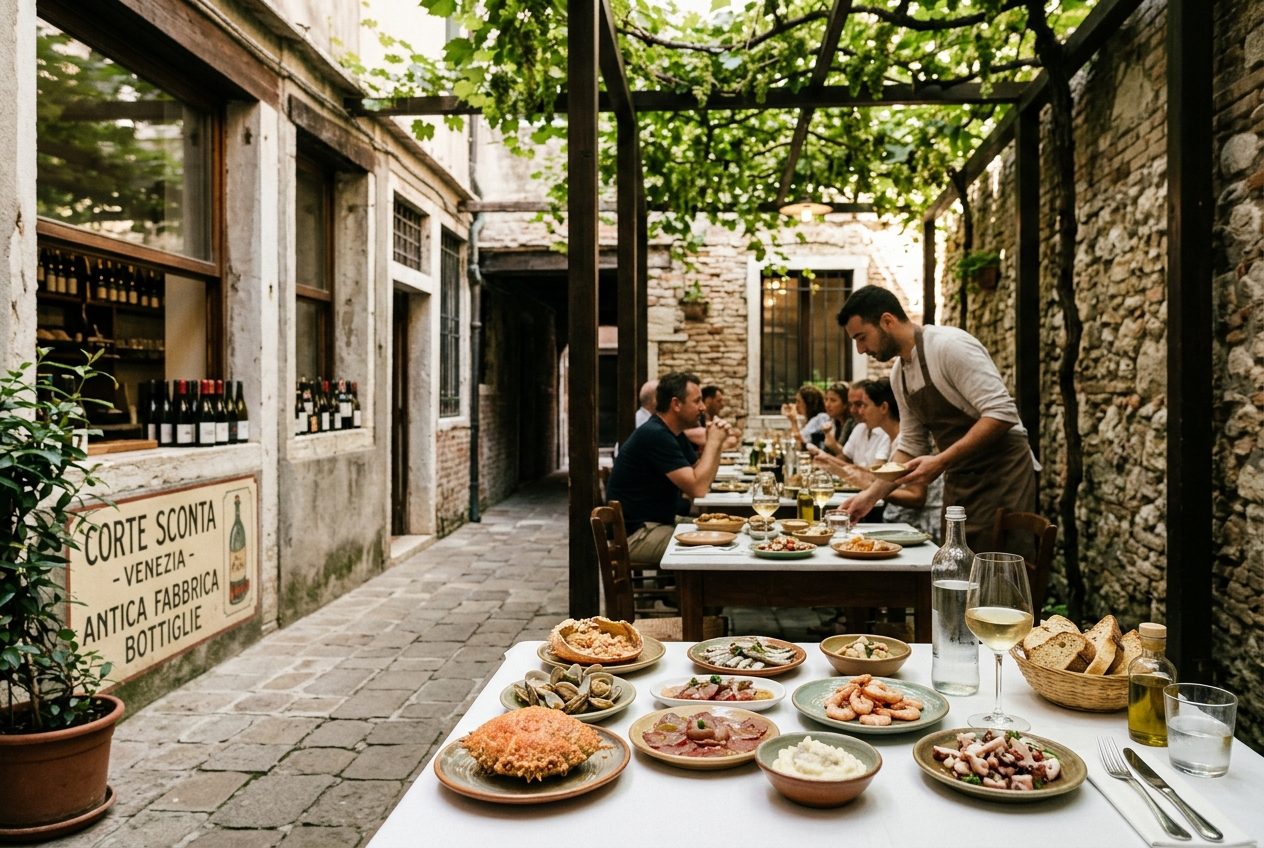
Corte Sconta (Calle del Pestrin) has been going since 1980 and books groups by phone or email — with the caveat that a reservation only counts once they have confirmed it by email, and the garden is never guaranteed however nicely you ask. It runs £65-90 a head. Check the calendar before planning around it: closed every Sunday and Monday, and shut entirely 15 July-15 August and again 7 January-7 February. A surprising number of people arrive in early August to a locked door.
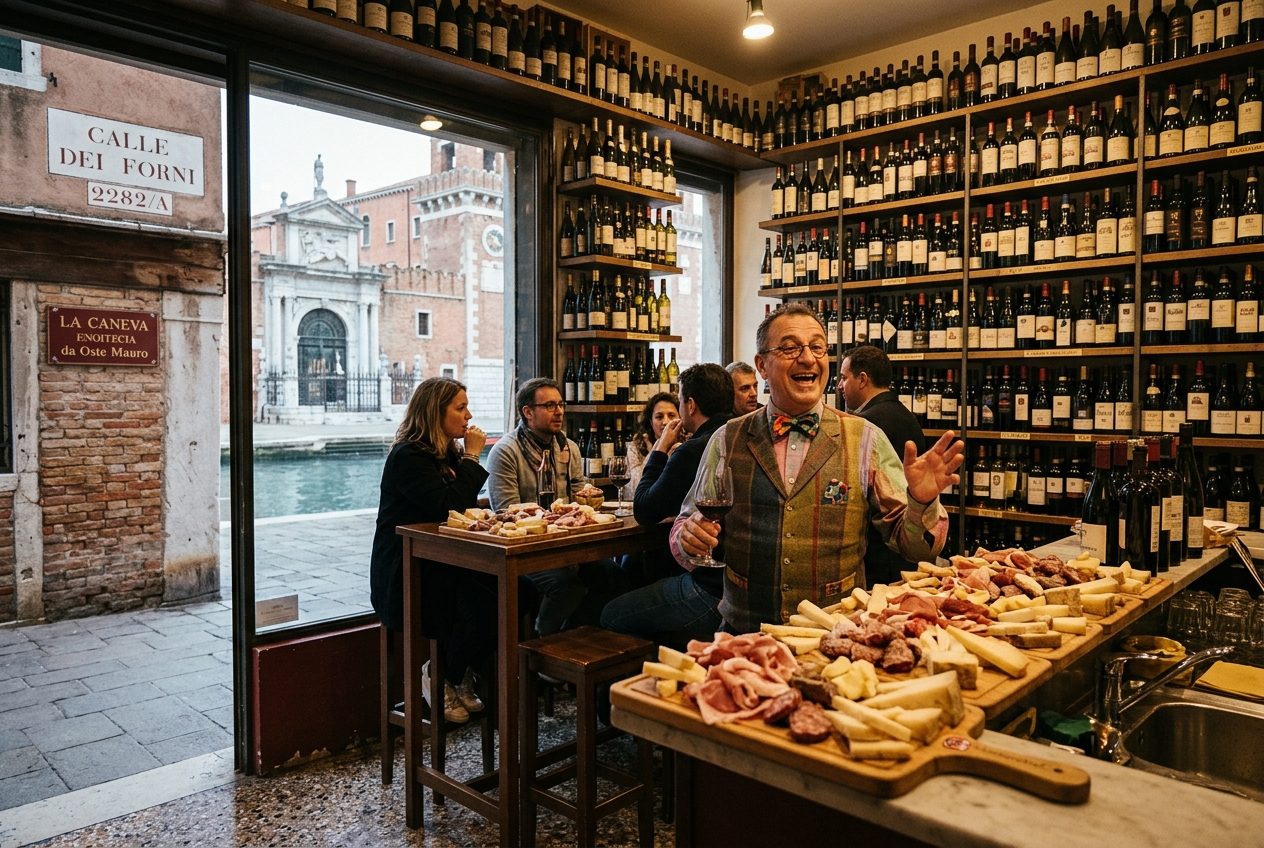
For wine rather than a full menu, La Caneva – Enoiteca Guesteria da Oste Mauro (near Santa Maria Formosa) opens 19:00 to 02:00 and takes reservations from 17:30, strongly advised for more than four because the room is small. Expect £30-50 a head with wine. One thing to know: this is the successor to Enoiteca Mascareta, which closed in 2020. Guidebooks and blog posts written before then still send readers to the old Castello 5183 address, and people still turn up there.
Groups, doors and honest expectations
Castello has almost no door policy in the London sense — no lists, no bouncers, no minimum spend. What it has instead is small rooms, and the constraint is physical. Plainly:
- Six or fewer: everything above works, including the no-booking places, provided you arrive early.
- Seven to twelve: Strani, Serra dei Giardini and the Biennale are comfortable. El Refolo becomes a nuisance to residents. Alla Staffa is effectively off the table.
- Over twelve: book Trattoria Nevodi or Corte Sconta by phone weeks out, use Strani for drinks, and split the group for everything else. The Scuola Dalmata caps at 25 and the Ships Pavilion tour at 25, and both need reserving.
Stag and hen groups: Castello is residential, and the reason it is pleasant is that people live there. Standing quietly outside El Refolo with a spritz is fine. Singing is not.
The green end: Sant'Elena
Past the Biennale gates, Castello becomes somewhere else entirely. Parco delle Rimembranze (Sant'Elena) is free, open and unlimited, and it is the one place in Venice where a group can sprawl on grass without anyone minding. Dog walkers, kids' football, benches, pine trees, no souvenir stalls. It is a solid 45-minute walk from Santa Lucia station, or a vaporetto ride, and that distance is exactly why it stays as it is. Bring a bottle from a shop on Via Garibaldi and an hour with nothing planned.
Where to stay
Two properties define the sestiere's top end, and they suit different trips.
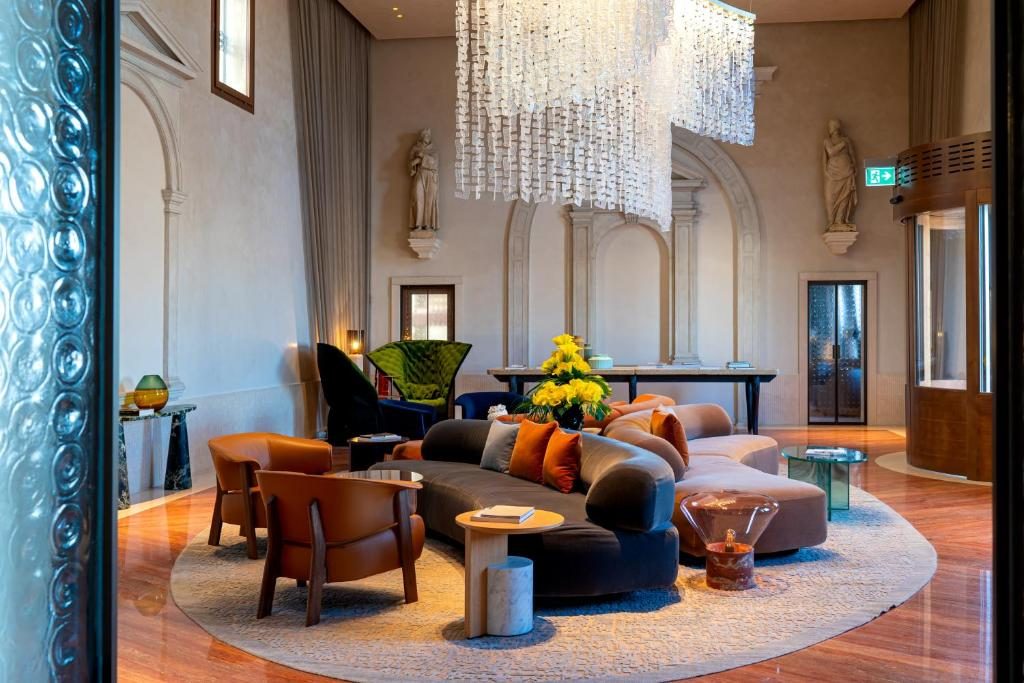
Ca' di Dio (Riva Ca' di Dio) has 66 rooms and suites, two restaurants, a bar and a wellness area, and faces San Giorgio Maggiore across the water. It is the design-led choice, five minutes from the Arsenale Biennale entrance, and at £450-900+ a night it handles a group booking or a small event comfortably — that scale is unusual in Venice.
Londra Palace Venezia (Riva degli Schiavoni) has 53 rooms, which makes it right for a couple or a small party and wrong for a large one; book direct if you need connecting rooms. Tchaikovsky wrote his Fourth Symphony in one of them. Rates run £350-700+. Worth knowing while you compare: the neighbouring Danieli stays shut until it reopens as a Four Seasons on 26 August 2026, so anything you read about it is out of date until then.
If neither fits the budget, the streets north of the Riva and around Via Garibaldi hold plenty of small guesthouses at a fraction of the price — start with a Venice hotel search and filter by the Arsenale and Giardini vaporetto stops rather than by "near San Marco", which pushes you west into noise and higher rates. For orientation across the rest of the city, our Venice guide covers the other five sestieri.
Practical notes
Getting there and around. From Marco Polo airport, the Alilaguna boat to San Zaccaria takes about 80 minutes and lands you a few minutes from the Riva; a land bus to Piazzale Roma plus a vaporetto is quicker but means your bags across two changes. From Santa Lucia station, allow 45 minutes on foot to Via Garibaldi, or take line 1 or 5.1. Within Castello, walk — it is about 30 minutes end to end and the boats do not shortcut the inland routes.
Cash. Cards work almost everywhere now, the bacari included, but carry £30-40 in euros for cicchetti counters, the Scuola Dalmata entry and anywhere selling a two-euro ombra. Small bars still round awkwardly on card.
Timing. Aperitivo runs 17:00-20:00, which is when Via Garibaldi is worth seeing. Dinner service starts around 19:00 and the good tables are gone by 20:00. Tuesday is the difficult day — Al Covo, Alla Staffa, the Scuola Dalmata and the Museo Storico Navale all close. Mondays close the Biennale and Querini Stampalia. Build the week around those two days before anything else.
Budget, per person per day. A modest day runs about £60-75: one museum, cicchetti for lunch, a bacaro crawl and a trattoria dinner. Add a Biennale ticket at £25-30 and a seafood dinner at Al Covo or Corte Sconta and you are at £140-170. Hotels sit on top — £450-900+ at Ca' di Dio, £350-700+ at Londra Palace, considerably less in the guesthouses off Via Garibaldi.
One last thing. Everything here except the park and the Biennale sites happens in rooms holding fewer than 40 people. Book what can be booked, arrive early for what cannot, and keep the group small enough to fit through a Venetian door.
Gallery
Castello in pictures
Castello — your questions
Is Castello a good area to stay in Venice?
Yes, particularly in 2026. It is residential, quieter than San Marco or San Polo, and the Arsenale Biennale entrance is a five-minute walk from parts of Via Garibaldi. The trade-off is distance: Santa Lucia station is a 45-minute walk or a vaporetto ride away, so you commit to the boats or to walking. Ca' di Dio (£450-900+) and Londra Palace Venezia (£350-700+) are the two five-star options; guesthouses off Via Garibaldi cost a fraction of that.
Which days are Castello's museums and restaurants closed?
Tuesday is the hardest day: Al Covo, Osteria Alla Staffa, the Scuola Dalmata and the Museo Storico Navale all close. Mondays close the Biennale and Fondazione Querini Stampalia. Corte Sconta closes Sundays and Mondays, and shuts entirely 15 July-15 August and 7 January-7 February. Plan the week around Monday and Tuesday first.
Can a group of ten eat and drink in Castello without booking?
For drinks, yes — Strani on Via Garibaldi absorbs a dozen on its street terrace and the staff are used to rounds. For food, no. Osteria Alla Staffa takes no reservations and will not seat more than four unless you are there at 7pm opening. Trattoria Nevodi takes groups but anything over eight needs a phone call well ahead, and Corte Sconta only counts a booking once it has been confirmed by email.
When does the 2026 Venice Biennale run and how long do I need?
Biennale Arte 2026, 'In Minor Keys', runs 9 May to 22 November 2026 across the Giardini and Arsenale, curated by Koyo Kouoh, closed Mondays. A standard combined ticket is roughly £25-30. Two days covers both sites properly; with one afternoon, take the Arsenale, which thins out after 16:00.
Where is Enoiteca Mascareta now?
It closed in 2020. The successor is La Caneva – Enoiteca Guesteria da Oste Mauro, near Santa Maria Formosa, open 19:00 to 02:00 with reservations taken from 17:30 and advised for more than four. Older guidebooks still list the dead Castello 5183 address, and people still turn up there.