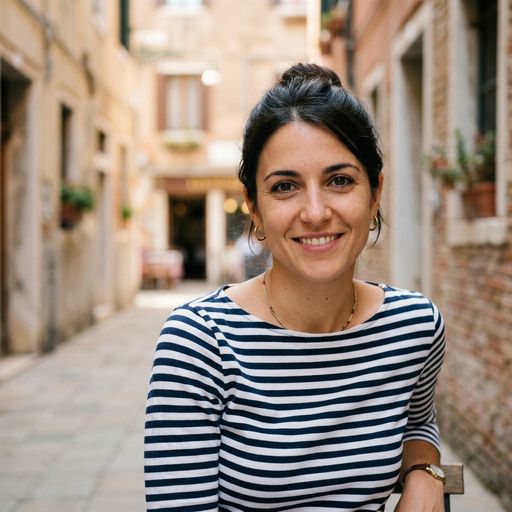
By 7am the ice is already melting under the first crates of branzino, a porter is shouting a price nobody argues with, and the bell at San Giacomo di Rialto has not yet struck the hour that decides when the tourists arrive. This is the Rialto before Venice performs itself for visitors, a working market with its own rhythm and its own bar, running on a two-hour window before the crowds flatten it into a photo backdrop.
The market sets the clock for everything else
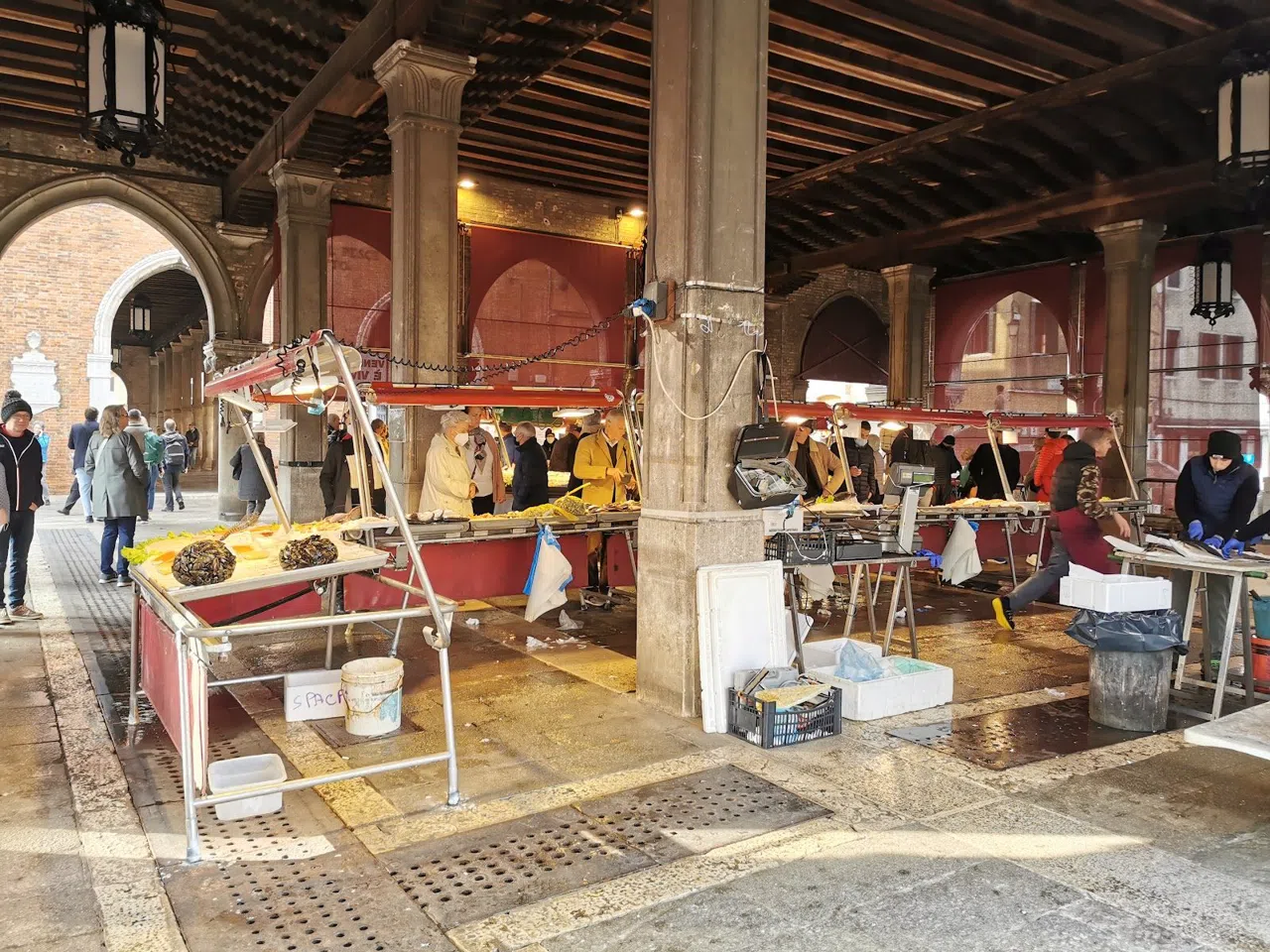
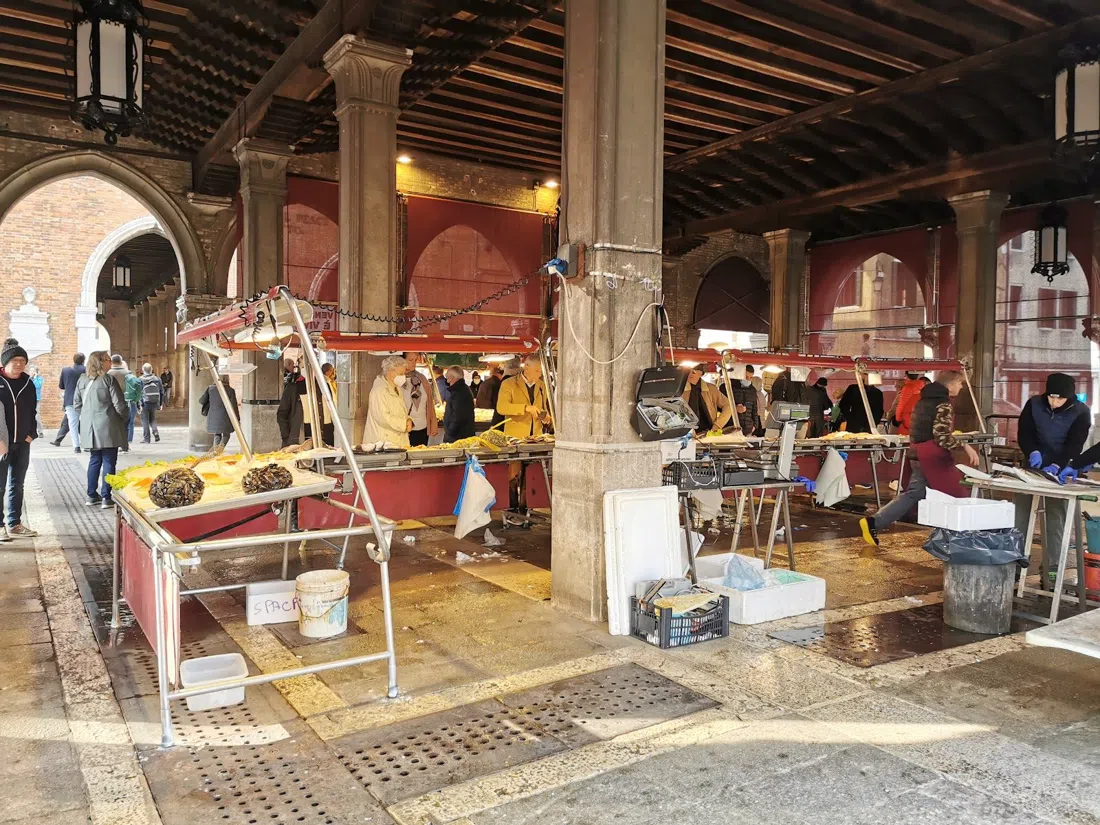
The Rialto Market (Pescheria & Erberia) is two markets sharing one footprint by the Grand Canal, a five-minute walk from the Rialto Bridge. The Erberia, the produce side, runs Monday to Saturday from 7:30am to 1pm; the Pescheria, the covered fish hall, keeps the same hours but only Tuesday to Saturday. It's shut Sunday and Monday, so don't plan a Monday dawn trip around fish. Entry is free and there's no booking system of any kind; you walk in, you look, you buy per kilo if you want to. The real theatre is between 7am and 8:30am, before the day-trippers arrive and the aisles are still wide enough to move through as a small group without queuing behind someone's rolling suitcase. Porters wheel crates off boats moored at the Pescheria's own dock, stallholders arrange sardines and moeche (soft-shell crabs, in season) into fans, and nobody is selling you anything you didn't ask for. By 9:30am the character changes; by 11am it's mostly shoppers doing their weekly rounds.
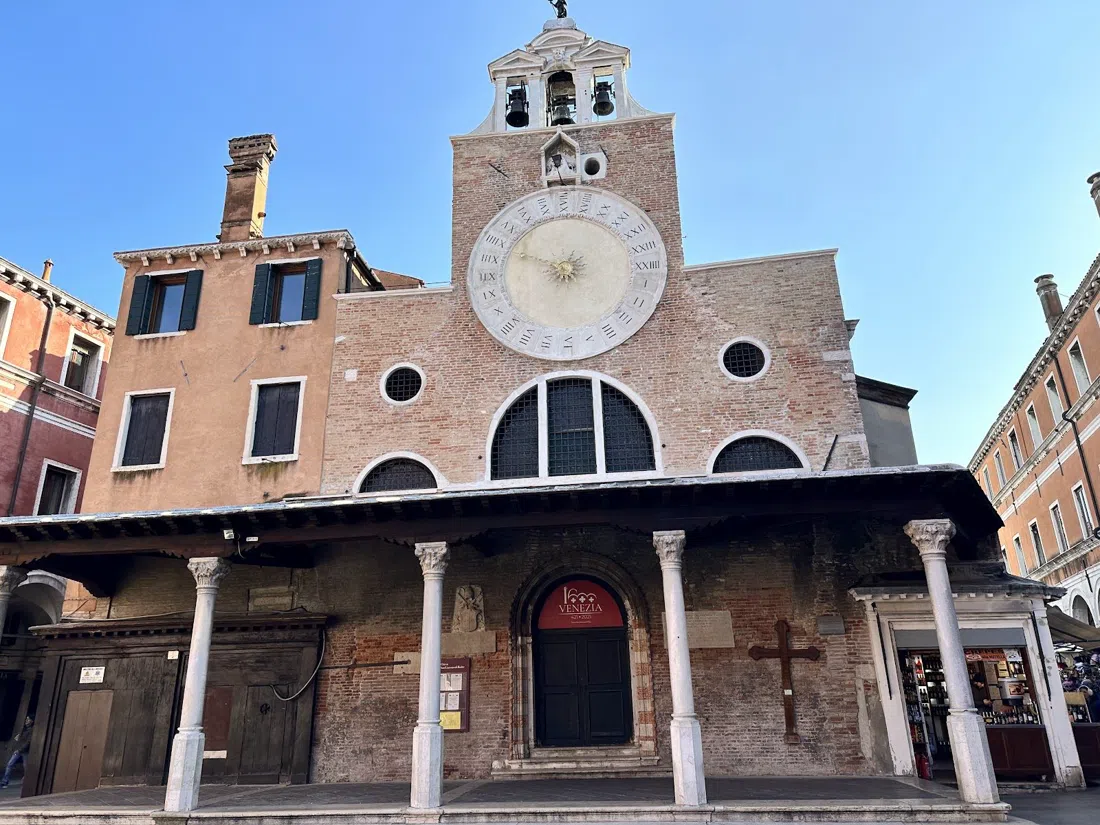
At the market's edge stands San Giacomo di Rialto (San Giacometto), the church whose clock has told the market when to open and close for centuries. It's free to enter, takes two minutes, and works as the natural photo stop and meeting point if your group has split up between the fish stalls and the fruit stands. It's not a destination in itself, but it's the visual anchor that makes sense of the whole layout once you've seen it.
Where the market drinks before it shops
The fisherman's hour (the market's own phrase for the mid-morning wine break its own workers take) happens at two addresses within a hundred metres of each other, both in the Rialto/San Polo pocket.
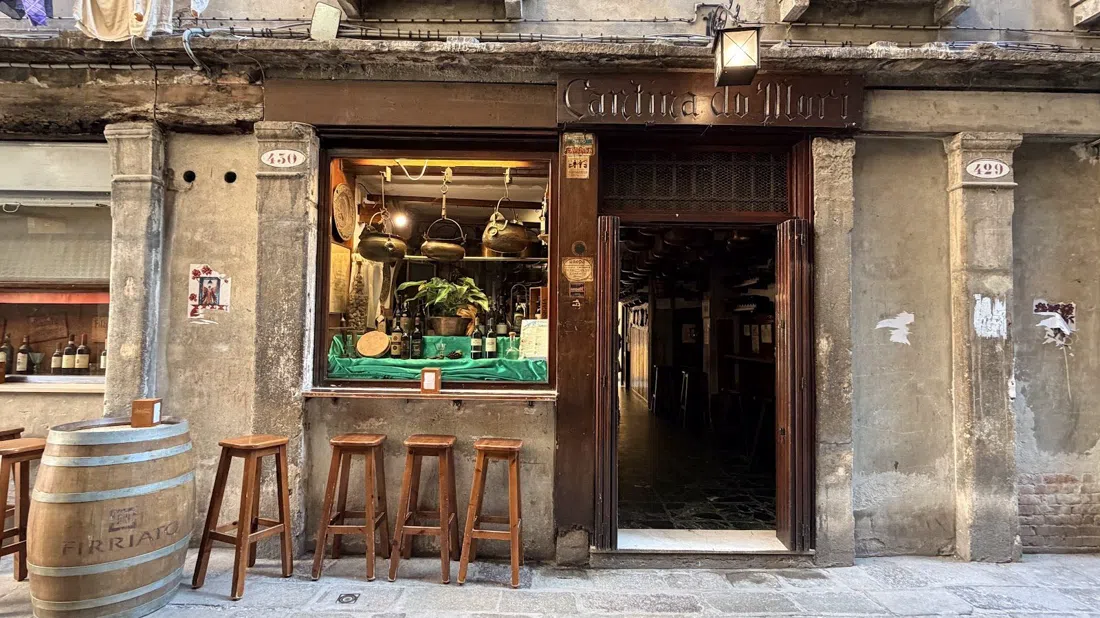
Cantina Do Mori, tucked into a calle just off the Erberia, is the oldest bacaro in Venice and opens at 8am, in step with the fish stalls. It was the traders' own local before it was anyone else's, and it still feels that way: standing room only, cash preferred, cicchetti at €2-4 and wine by the glass from €2-5. It suits pairs or trios who don't mind holding a small glass while market porters push past with hand trucks. It is not built for a group of eight to camp in.
Al Mercà, a tiny stand-up wine bar in the Erberia's own campo, opens around 9-10am and is where market porters and stallholders take their own break. It's the fisherman's hour distilled into one small counter. There's standing room for about eight, but the crowd spills naturally into the square outside, which is entirely normal here and not a sign you've overstayed. Wine starts at €1.50, cicchetti at €2-3. It's cheap enough and casual enough that stopping for ten minutes between market stalls costs almost nothing.
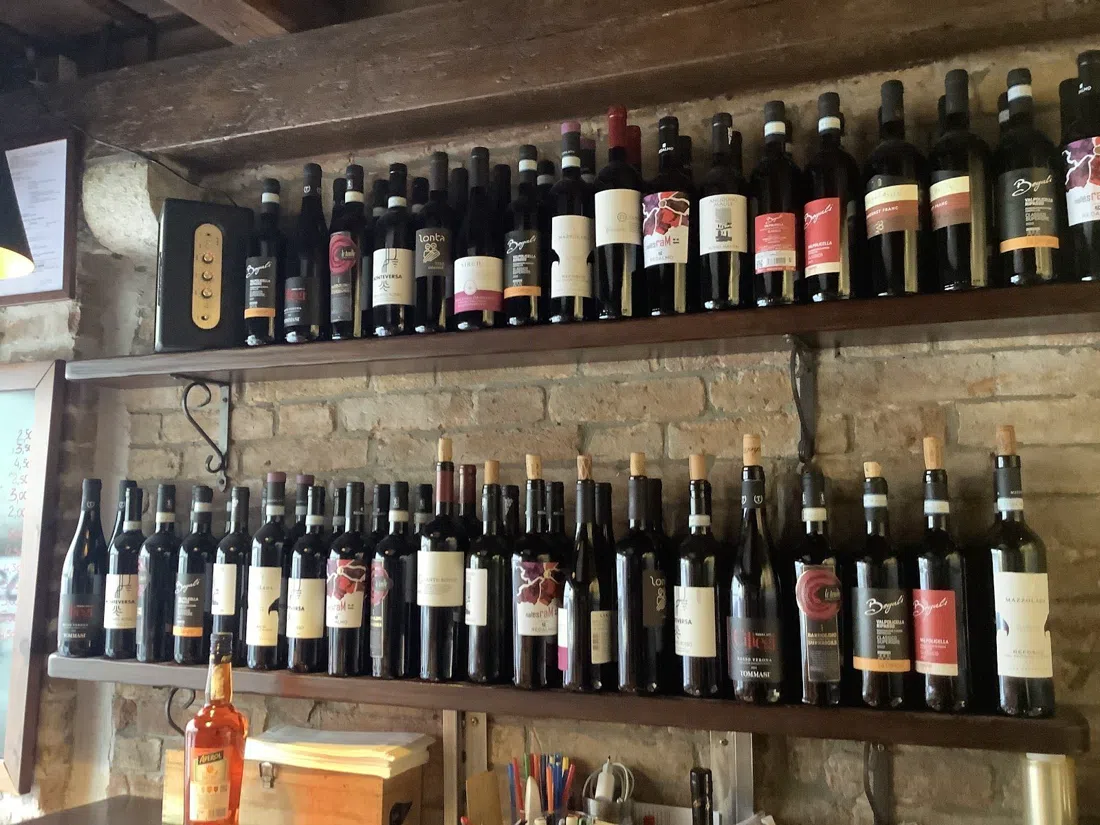
Standing at the bar where the fish just landed
Two bacari make the most of being literally across the street from the Pescheria, and both are worth building your morning around rather than treating as an afterthought.
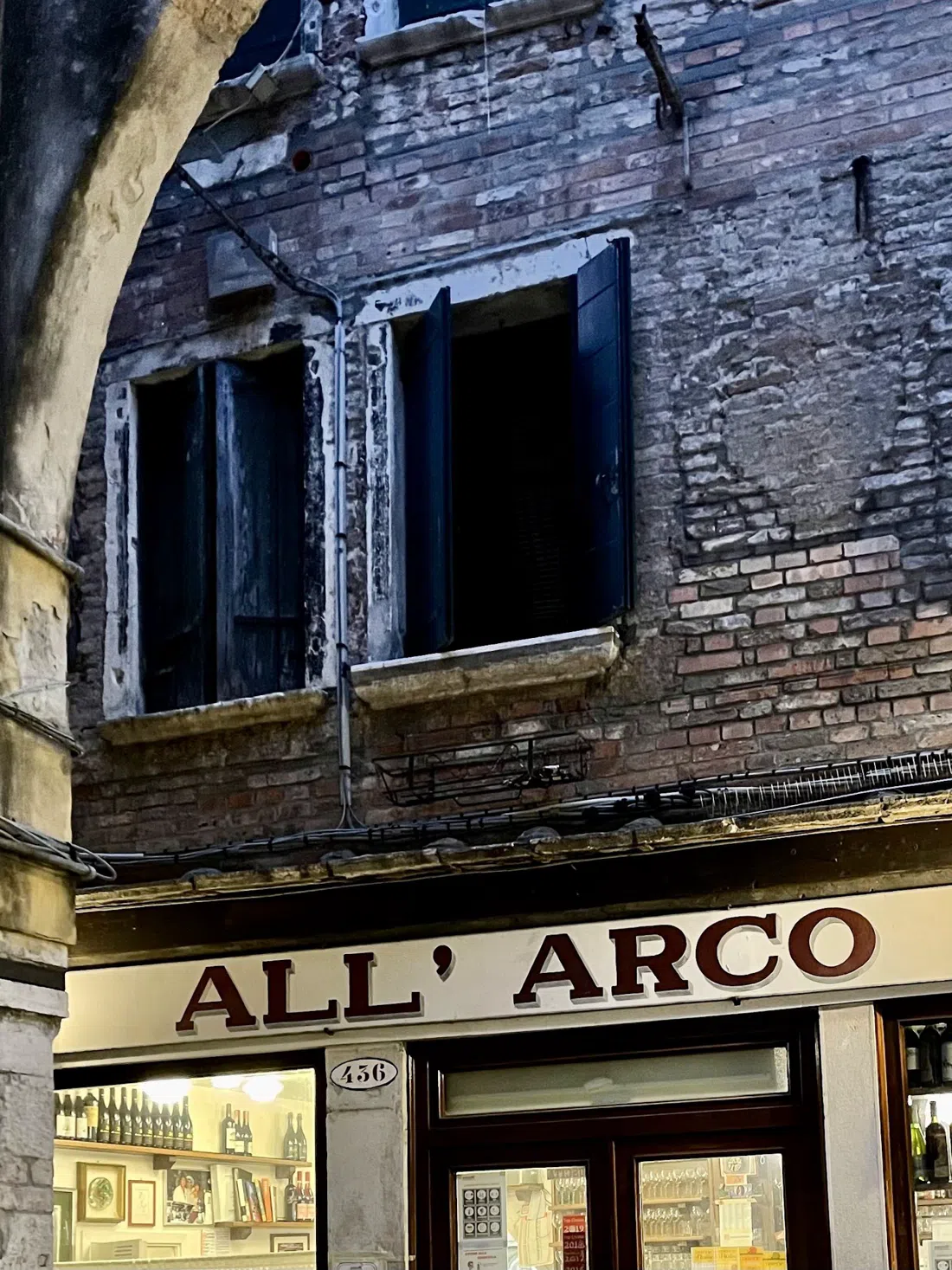
All'Arco, opposite the Pescheria in the same calle, is the best single bacaro in Venice, and it earns that by sourcing straight from the stalls across the road and prepping everything fresh from the moment it opens. There's no seating, no reservations, and no queue system: it's first-come, first-served, standing in the alley with a plate balanced on your palm. Cicchetti run €1.50-4, cash only. It suits small groups who are happy to eat standing and split up if the alley gets tight; it does not work for a party that needs a table.
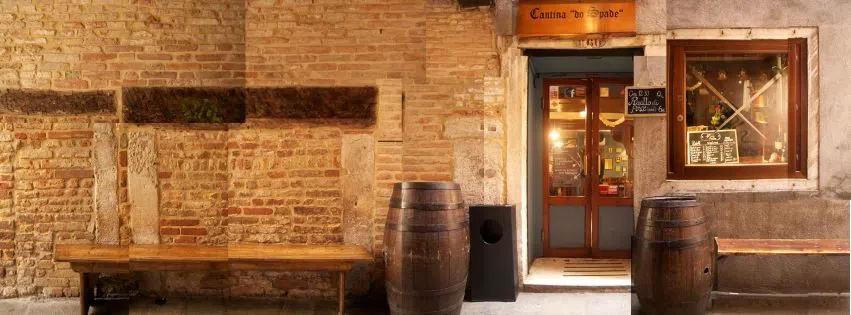
Cantina Do Spade, a two-minute walk from the market stalls, is one of the oldest taverns in the city and gives you the option All'Arco doesn't: an actual table. Standing at the bar is walk-in, cicchetti €2-4; a seated meal (mains €14-22) needs a reservation, which matters if your group is more than three or four and wants to sit down properly rather than eat on foot.
Shopping the stalls like a cook, not a tourist
Two shops just off the Erberia turn the market visit from spectacle into an actual grocery run, and both reward going early before the narrow aisles fill up.
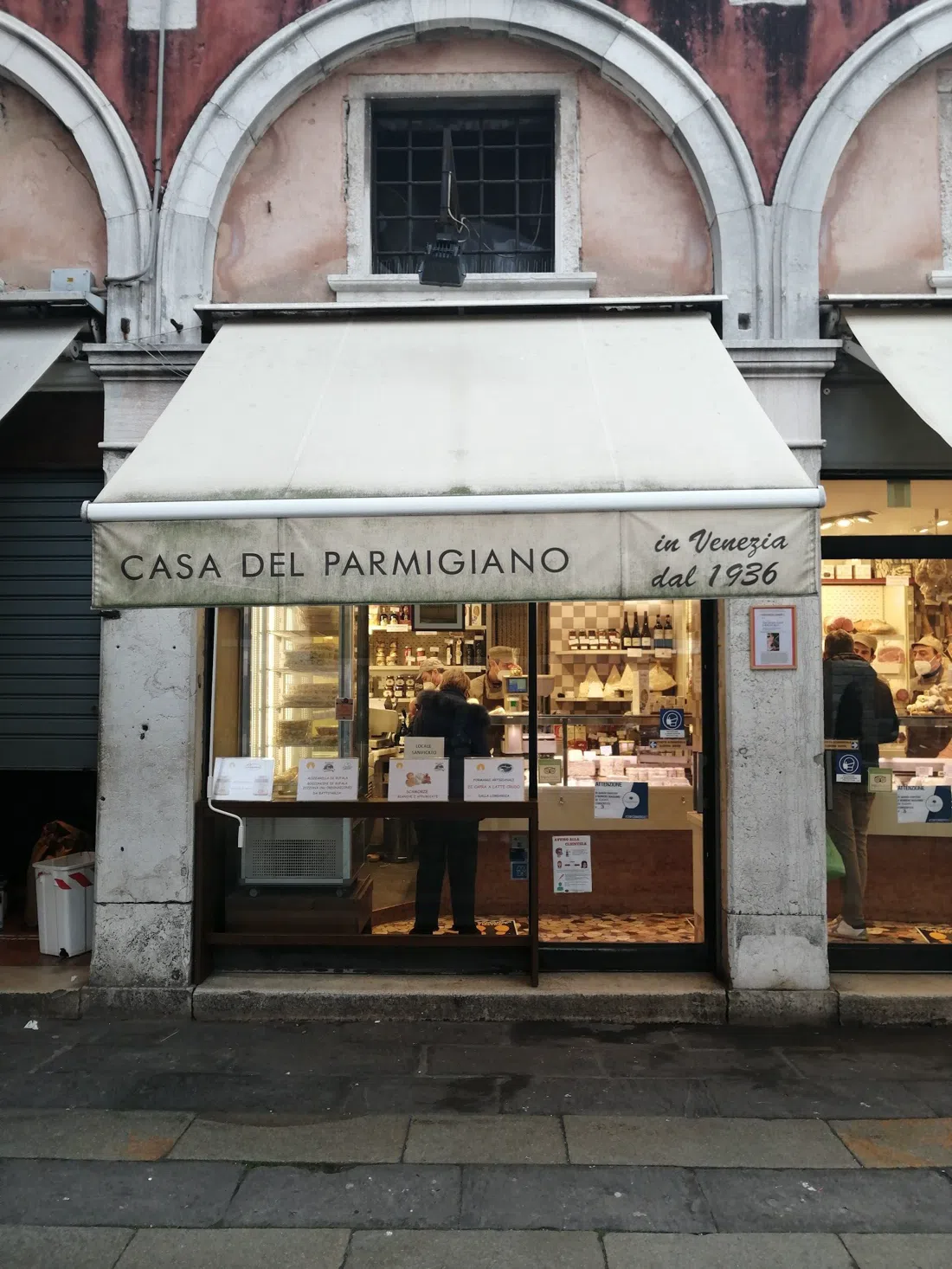
Aliani Casa del Parmigiano, right by the market, is three generations deep into selling cheese, cured meats, and prepared dishes to Venetians who cook. It's a small shop, fine for browsing in groups of two to four but not a place to bring a party of ten, and everything is priced per product rather than by weight off a wheel, so ask before you commit to anything expensive-looking. This is the shopper's-hour counterpoint to the fish stalls: where the Pescheria is theatre, Aliani is where you actually buy dinner.
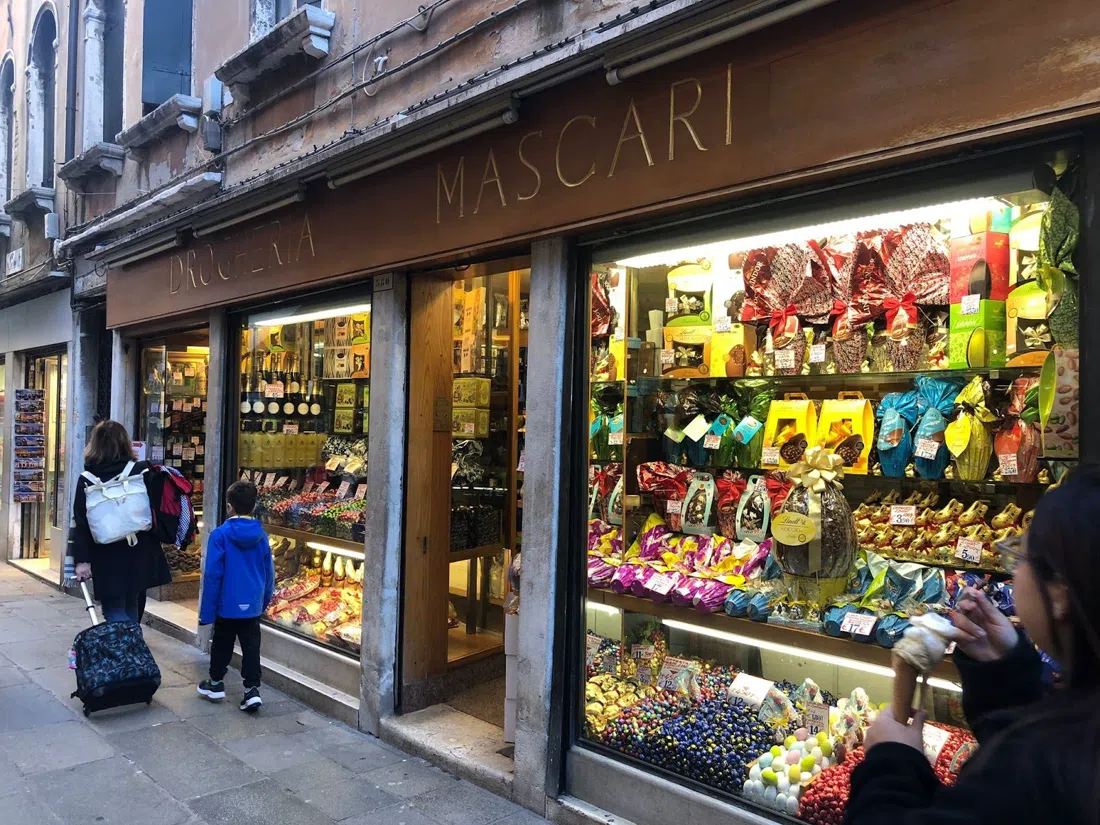
A minute from the Erberia, Drogheria Mascari is the oldest food specialty shop in Venice, and it looks it: jars of candied fruit, sacks of spices, bottles of vinsanto stacked to the ceiling. It's best visited in pairs; the aisle is narrow enough that a group of four already feels crowded. Prices run €-€€ depending on what you're after, from a small tin of saffron to a bottle of aged balsamic. It's squarely a looking-and-smelling stop as much as a buying one, and it earns the ten minutes even if you leave empty-handed.
Eating what was bought that morning
Three places turn the morning's shopping into an actual meal, at three different registers of formality.
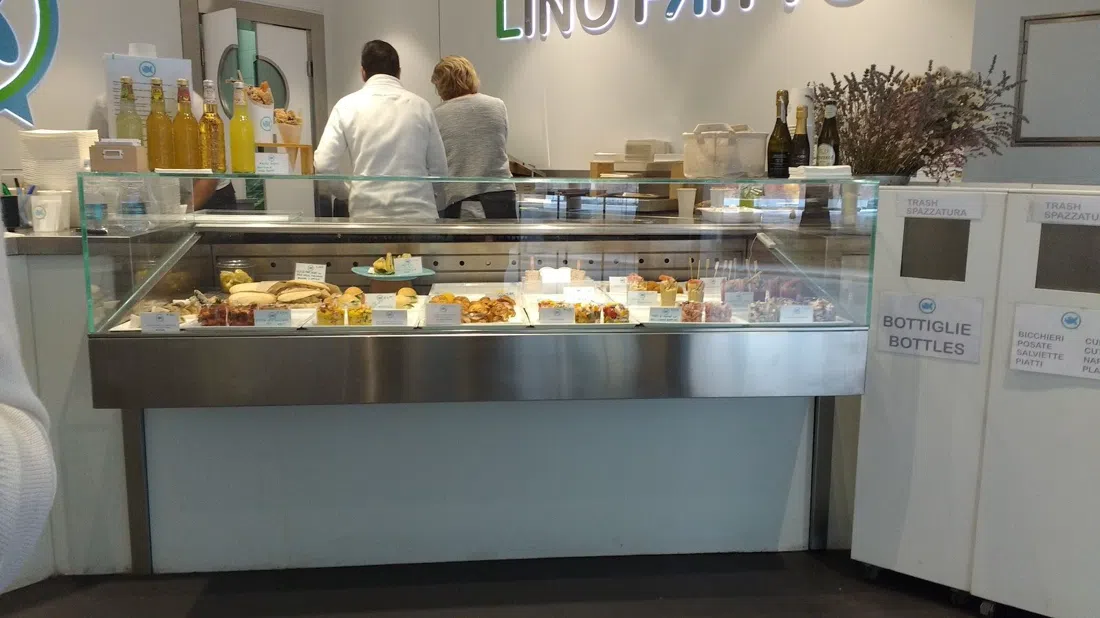
Pronto Pesce, run by the All'Arco team and sourced from literally across the street, is the cook's-hour payoff of the whole visit: small plates of whatever came off the boats that morning, €6-14. The space is genuinely tiny, comfortable for two, tight for anything larger; if your group is bigger than three, expect to eat in shifts or take plates outside.
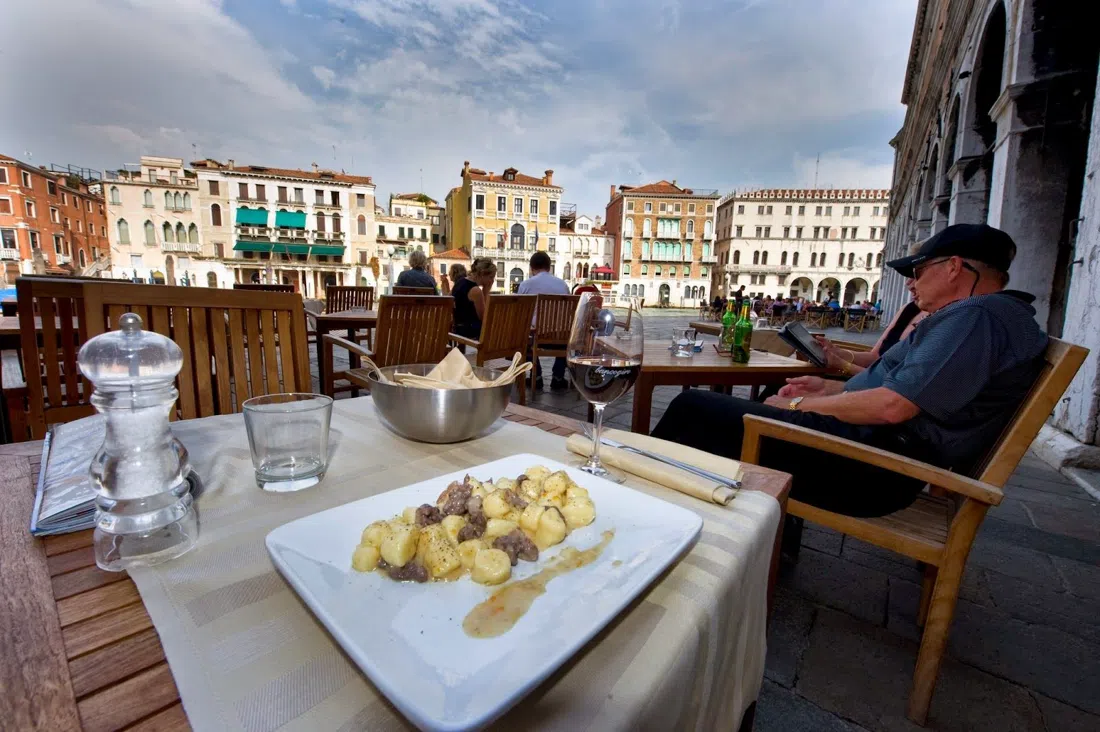
Osteria Bancogiro, canal-side with the best sit-down view of the market building itself, changes its menu daily around what was bought at Rialto that morning, with mains running €18-30. Reservations matter here, especially for groups, and terrace seating is limited in season, so this isn't a walk-up plan if you're set on sitting by the water.
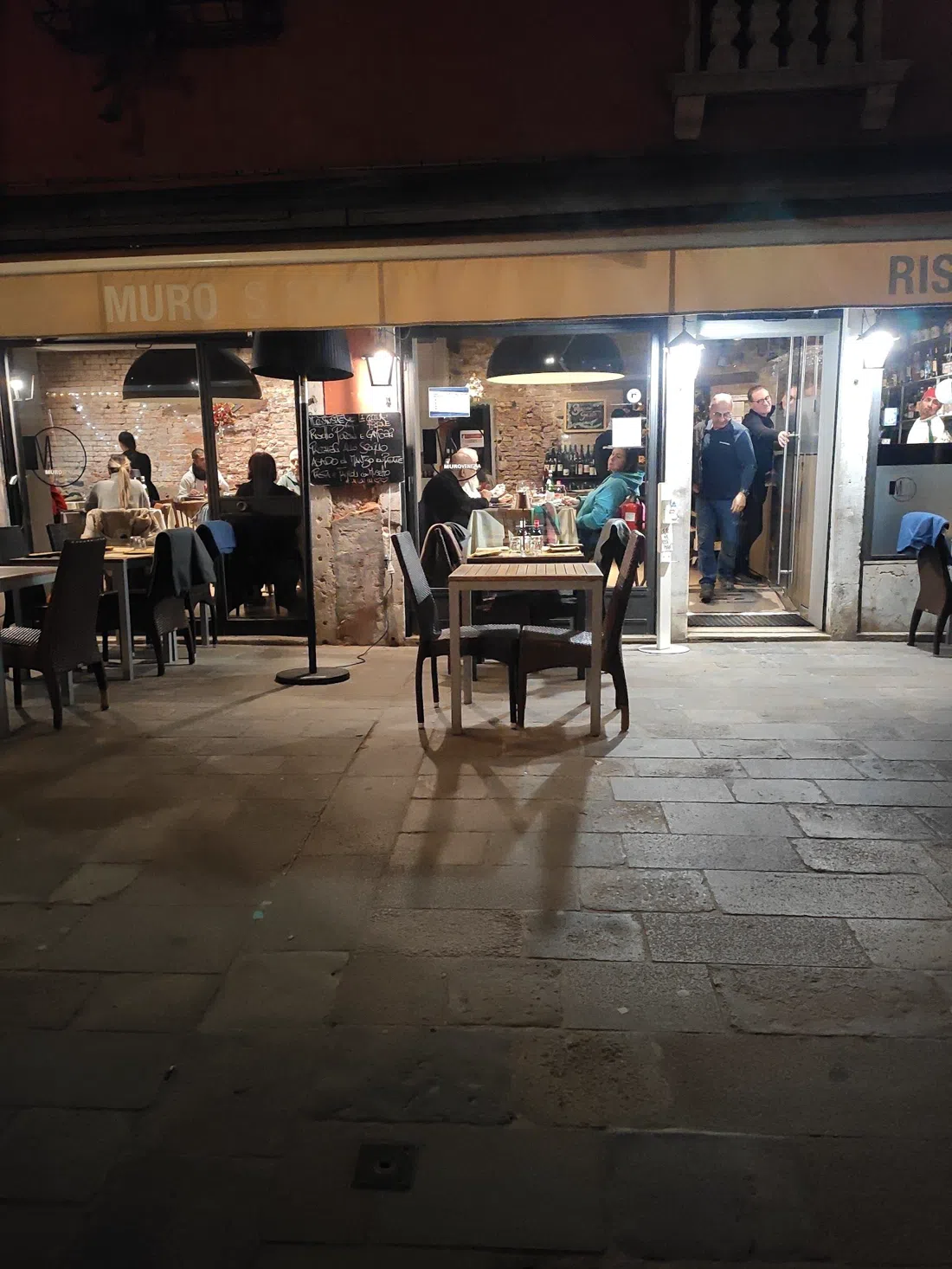
Muro Vino e Cucina Rialto is the newer arrival, open from 9am, sitting inside the market's own footprint rather than adjacent to it. It bridges the gap between the old-school standing bacari and a proper sit-down restaurant, with a full menu (mains €14-24) alongside a standing bar (cicchetti €3-6), and it takes groups comfortably, useful if your party can't agree on standing versus sitting.
The sit-down reward, if you book ahead
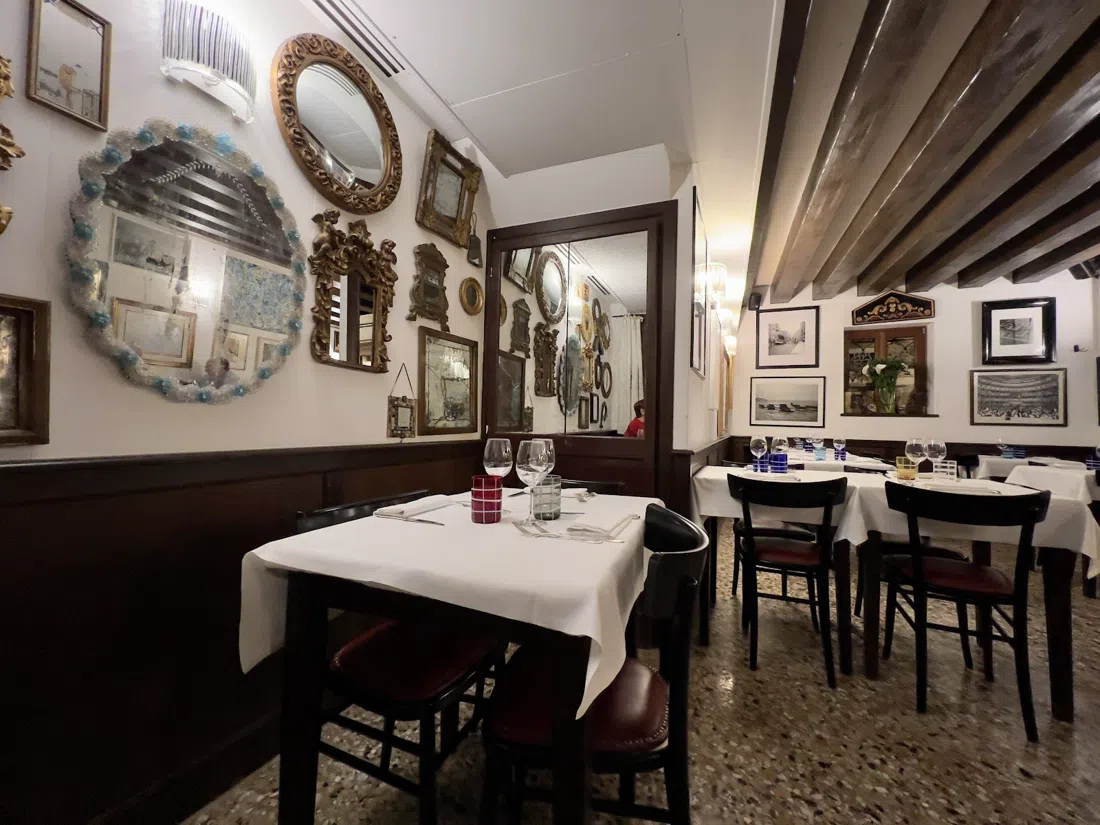
For a proper finish to a market morning, Antiche Carampane is the Michelin-bar-quality stop: a small dining room, deliberately no tourist menu, sourcing directly from Rialto each morning, with mains at €28-40. Reservations are essential, not a courtesy but an actual requirement, and it suits groups of two to six rather than anything larger. Book this one well ahead of your trip, not the night before; it's the kind of place that's coasting on nothing, because the seafood on the plate is doing all the talking.
Booking the hour instead of guessing it
If you'd rather have someone else navigate the stalls, negotiate the fishmongers, and turn the morning into an actual cooking lesson, the Rialto Market Tour & Cicchetti Experience run by Cesarine is built for exactly that: small groups, typically up to eight, bookable in advance, at roughly €90-140 per person. It's the one genuinely actionable way to live the dawn-market hour rather than just watch it happen around you, and it's worth it if you don't read Italian fish names or you'd rather not be the group of confused tourists holding up a stall's morning trade.
Transport, cash, and timing
The Rialto Market sits directly on the Grand Canal, a two-minute walk from the Rialto vaporetto stop (lines 1 and 2) and roughly ten minutes on foot from the Rialto Bridge itself, and there's no reason to take a water taxi for this. Arrive between 7am and 8:30am if you want the market at its quietest and the bacari at their most local; by 10am it's a different, busier place, and by midday most of the Erberia stalls are already packing up. Remember the Pescheria is closed Sunday and Monday: plan your fish-stall morning for Tuesday through Saturday, and treat Sunday or Monday as an Erberia-and-bacari day instead. Bring cash: most of the standing bars, including Cantina Do Mori and All'Arco, prefer or require it, and small shops like Aliani and Drogheria Mascari aren't set up for card taps on a €3 purchase. A realistic budget for the full morning (market browsing, two bacaro stops, a shop purchase or two, and a seated lunch) runs somewhere between €40 and €80 per person depending on how many places you sit down at. If you're staying over to do this properly at dawn rather than as a day trip, start with a Venice hotel search for something within walking distance of the Rialto Bridge, and check the Venice guide for how the market morning fits into the rest of a stay.