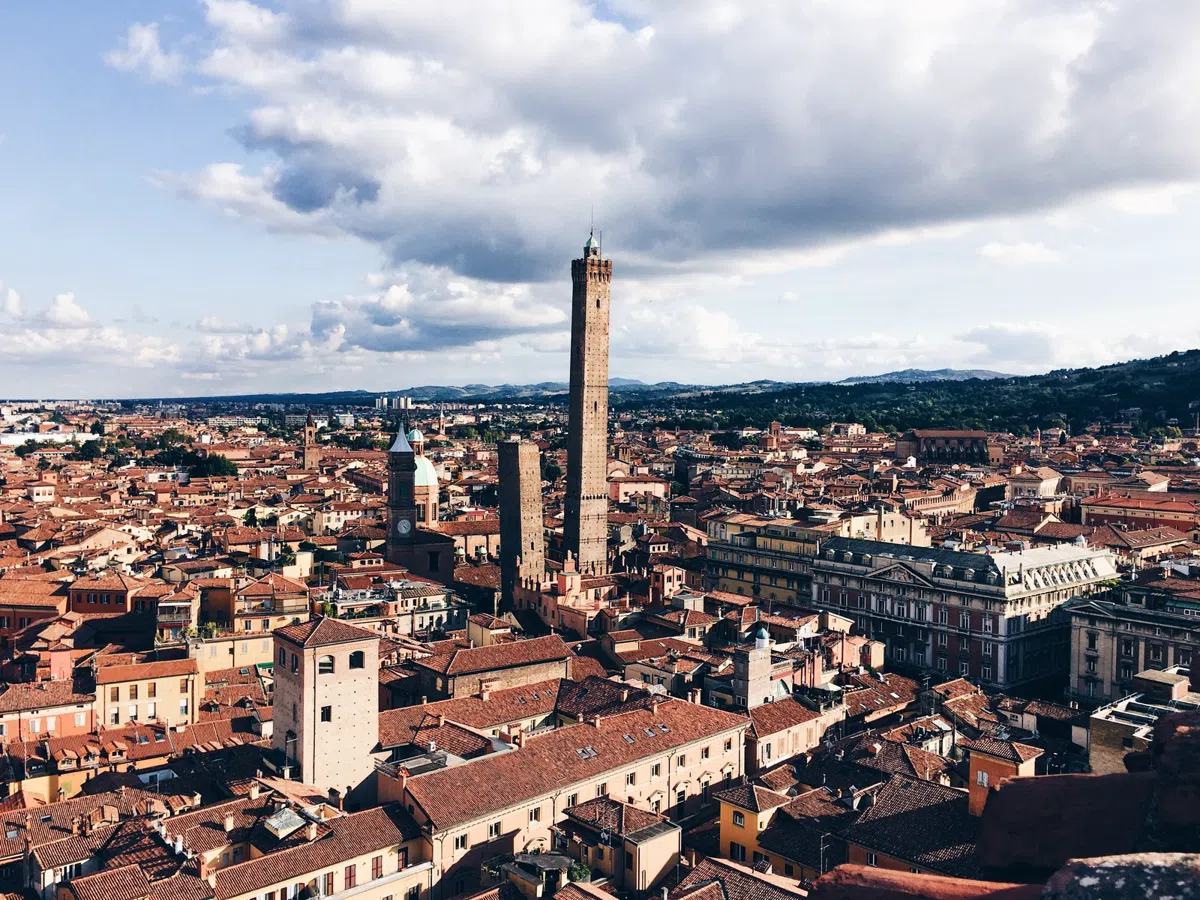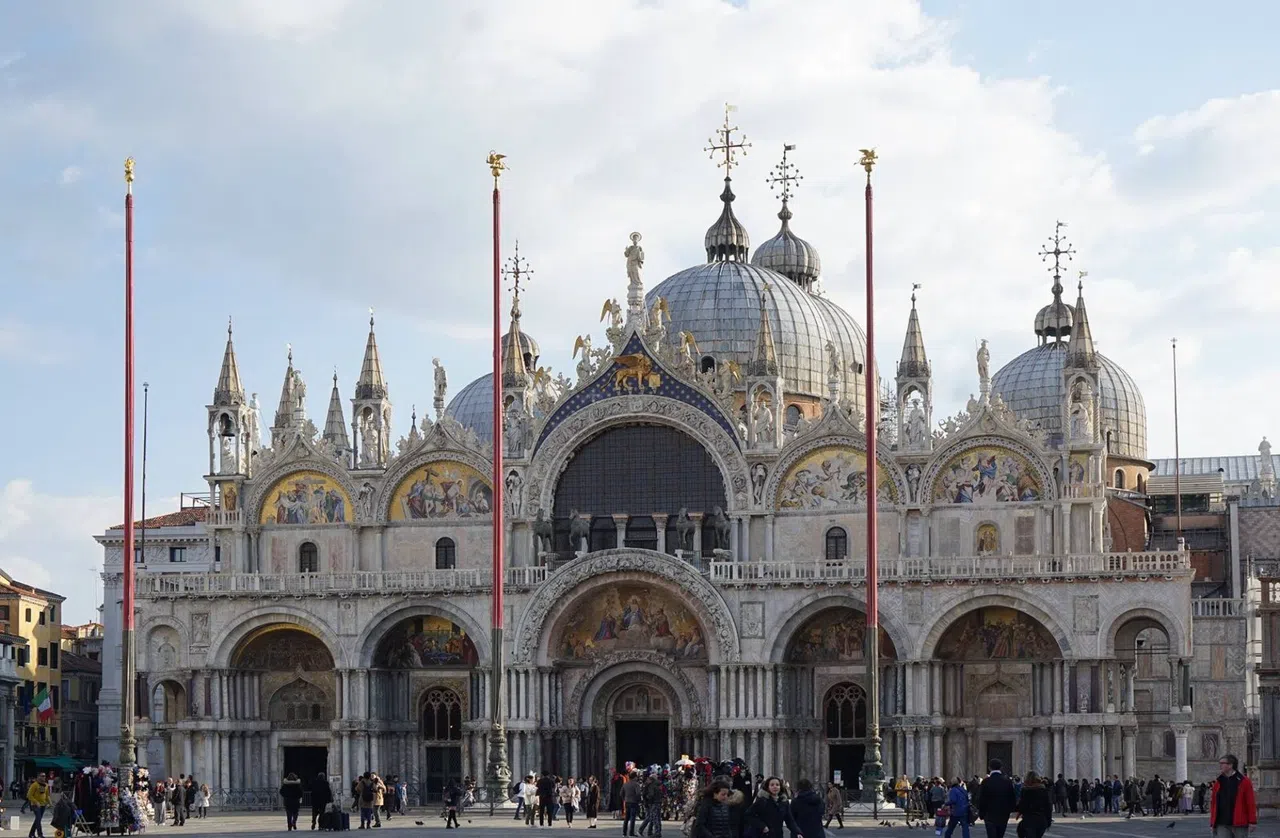

Venice measures itself in bells. Eleven towers still stand watch over the lagoon, and for six centuries each told its own parish what hour to fish, pray or dock, long before any of them agreed on a shared clock. Climb and walk enough of them in a few days and the city stops being a maze of alleys and becomes a diagram instead: campanili as waypoints, sightlines as proof that height above the water was never a neutral thing in the Republic.
St Mark's Square runs on two clocks, not one
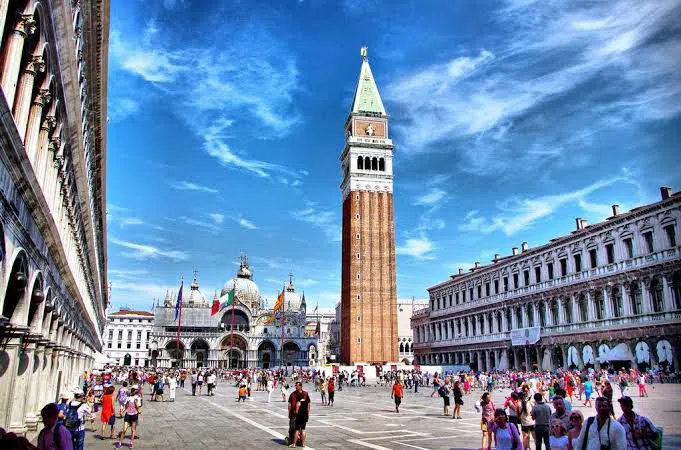
Start in St Mark's Square, because two of the race's main entrants share the same piazza and most visitors only ever climb one of them. Campanile di San Marco (St Mark's Bell Tower, San Marco) is the highest of the lagoon's towers and the only one built for scale rather than parish devotion. It's a lift ride, not a climb, and the view from the top is the one every other tower in this piece gets measured against. Book the timed online ticket before you go; the walk-up queue in the square runs long from late morning through early evening for most of the year. Entry is €10, elevator included, and groups over roughly ten people should reserve a slot rather than try to buy on the day. Give it 45 minutes, more if there's a wait at the top for photos.
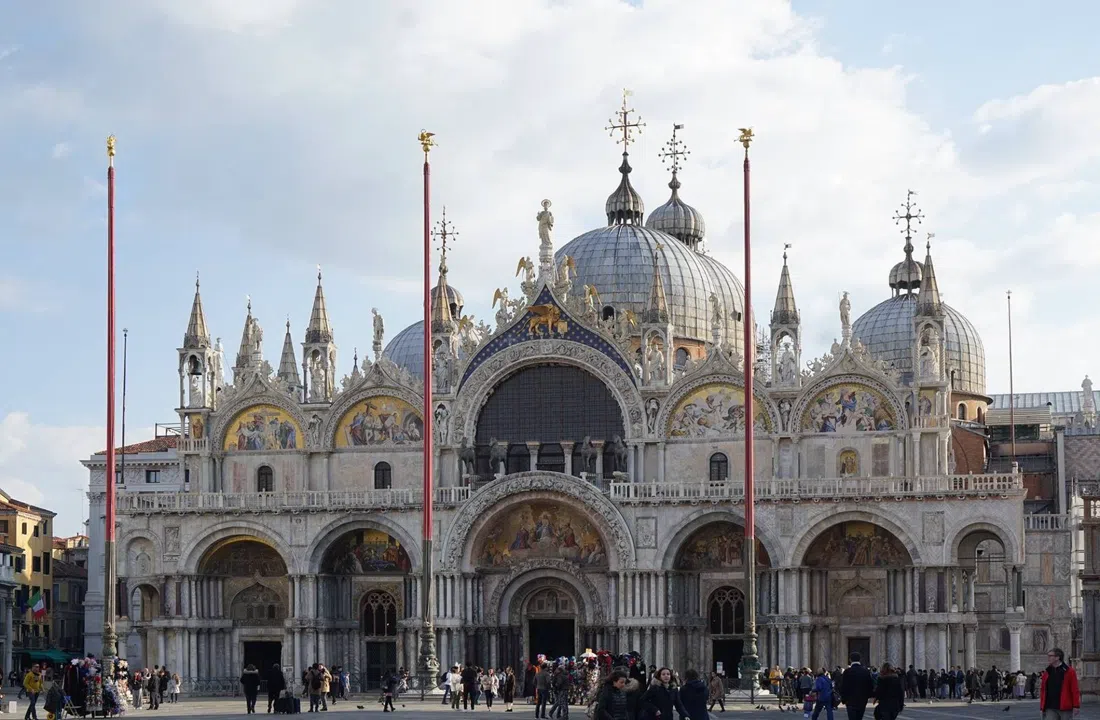
A couple of minutes on foot across the square is the tower's quieter, more interesting rival: Torre dell'Orologio (St Mark's Clock Tower, San Marco). This is the actual timekeeper the whole idea of a bell tower race rests on: a working Renaissance astronomical clock that still tells the hour, the zodiac and the moon phase to the square below. It's guided-tour only, capped at five visitors per slot, so it's the wrong choice for a group of eight, but it repays the forty minutes for two or three people who want the mechanism explained rather than just photographed. Tours run roughly €14-20 per person depending on the route, and slots fill days ahead in the warmer months, so reserve before you land in Venice, not after.

A Renaissance staircase that never kept an hour
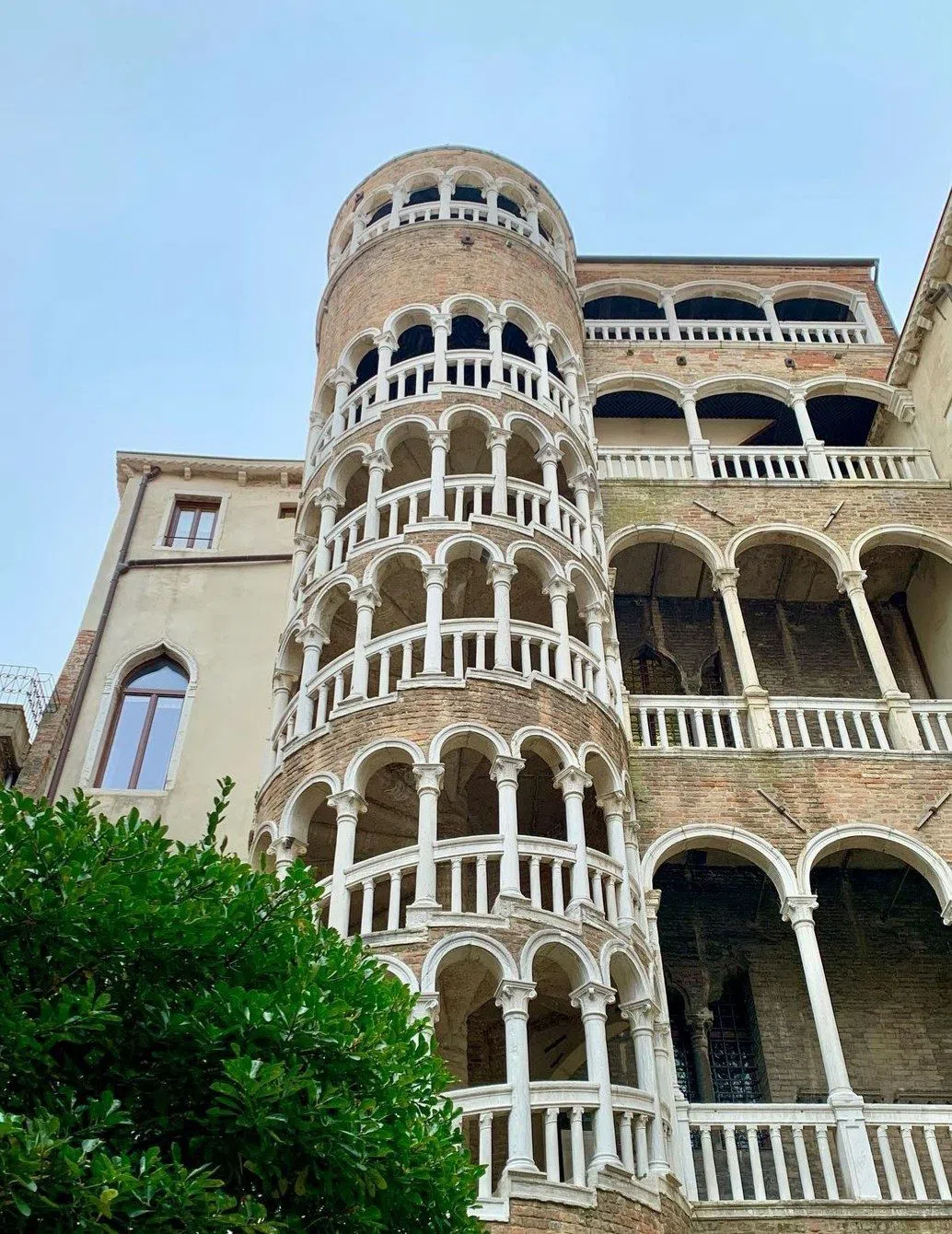
Ten minutes' walk northwest of the square, through the calli toward Campo Manin, is the piece's one honest wildcard: Scala Contarini del Bovolo (Spiral Staircase, San Marco). It has no bell and never told a parish anything. It's a private Renaissance staircase, an external spiral tower a noble family built purely so it could be climbed and admired, which makes it the closest thing Venice has to a tower entered for vanity alone. Entry is timed, capped at around twenty people per thirty-minute slot, worth booking ahead on weekends. Budget €9-12 and twenty minutes, plus the walk in, an easy pairing with the clock tower if the morning's already gone on St Mark's Square and a second, shorter climb fits before lunch.
Three towers disqualified by their own lean
Not every campanile in this race stands straight, and the leaning towers are arguably the more honest storytellers: Venice is built on wooden piles driven into mud, and a bell tower that starts to tip is a lagoon subsidence report you can read from the street.
Five minutes' walk west of St Mark's, across Campo Santo Stefano, is Campanile di Santo Stefano (Leaning Bell Tower, San Marco). Reinforced after the 1902 earthquake, it never got the chance to compete for height and now stands exterior-view only. You can look up at the lean from the campo but can't go up. The church interior takes small groups comfortably and costs €3 on its own, or comes included in the €15 Chorus Pass for anyone visiting several of Venice's parish churches over a longer stay.
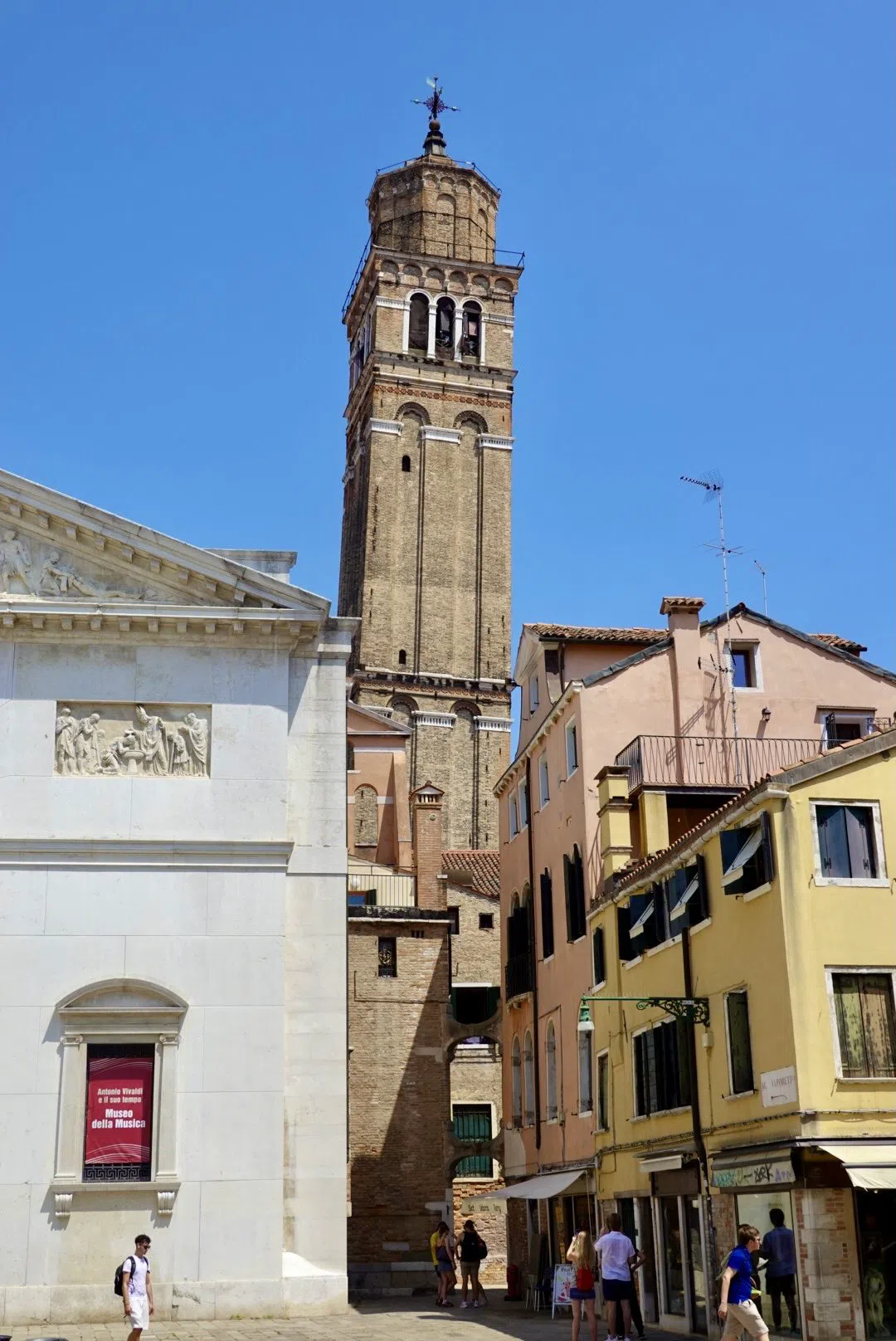
Across the Grand Canal and into Castello, around twenty minutes on foot or a quick vaporetto hop from Santo Stefano, Campanile di San Giorgio dei Greci (Leaning Bell Tower, Castello) leans harder and less famously. It started tipping during its own construction in the 1580s and simply never stopped. The church is free, and it pairs naturally with the adjoining Museum of Icons for about €6. This is a small-group stop, a quiet backstreet find that most people walking the main Castello route toward the Arsenale miss entirely.
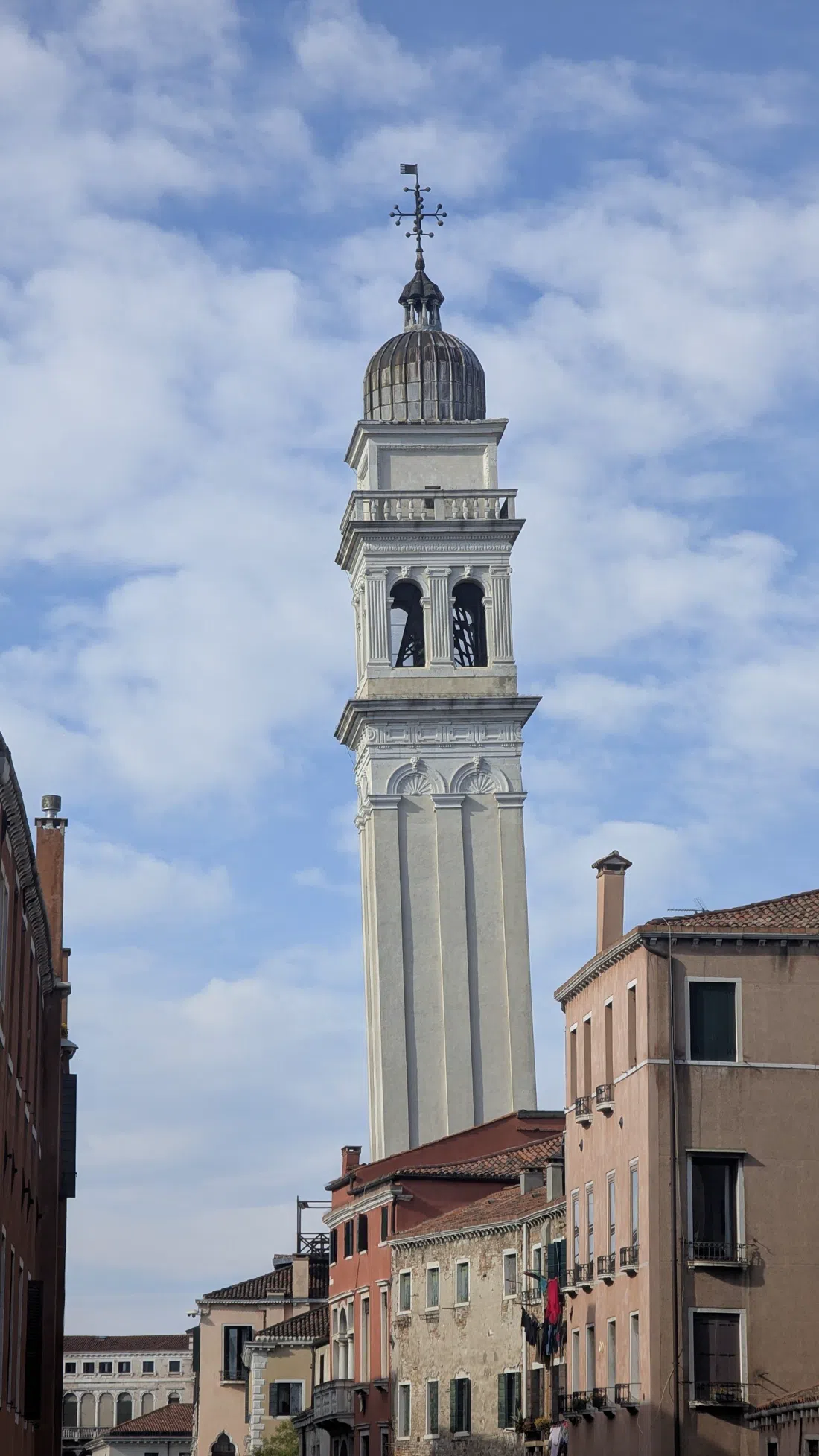
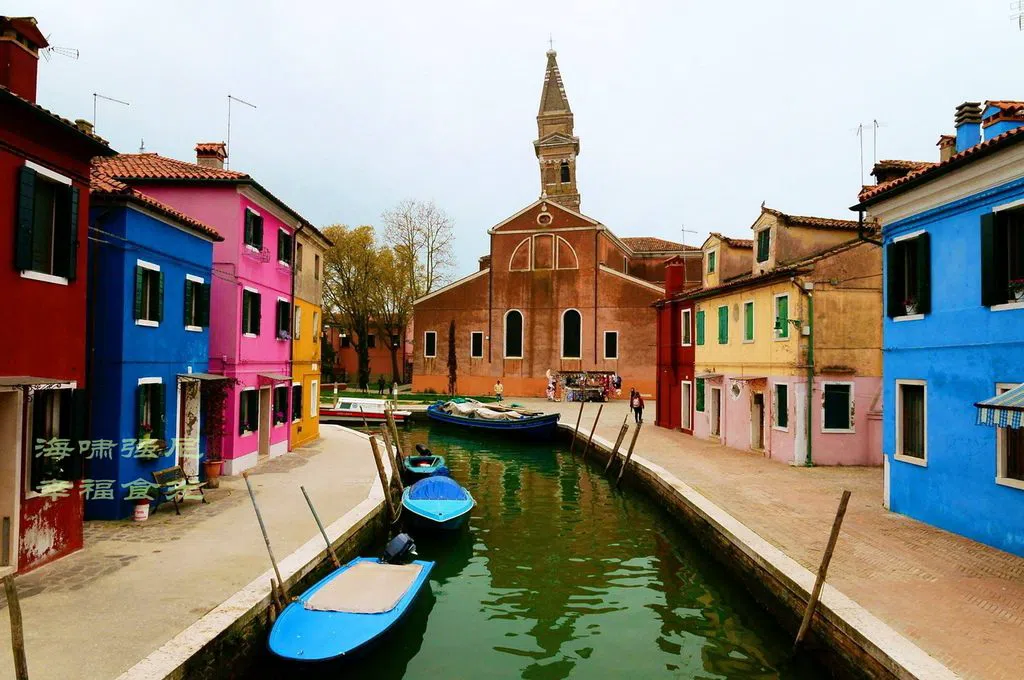
The tower most day-trippers photograph without knowing its name sits out on Burano, reachable by vaporetto line 12 from Fondamente Nove (about 45 minutes each way). Campanile di San Martino, Burano (Leaning Bell Tower, Burano) leans because the whole island has settled unevenly. Entry to the church is free, it takes groups easily as part of an island-hopping day, but the doors close between 12:00 and 15:00 daily, so plan the visit either side of lunch.
The quiet racers most visitors walk past
Away from the square, four towers keep running the race with almost nobody watching, and this is where a repeat visit to Venice earns its keep.
Campanile di San Pietro di Castello (Castello) sits at the far eastern edge of the city, about fifteen minutes' walk past the Arsenale gates, worth the distance precisely because almost no one makes it. It marks the site of Venice's original cathedral, sidelined once San Marco became the Republic's seat of power; call it the tower that lost the race politically rather than physically. The church is open 365 days a year, entry is free or a small donation, and it suits small groups looking for an uncrowded stop rather than another queue.
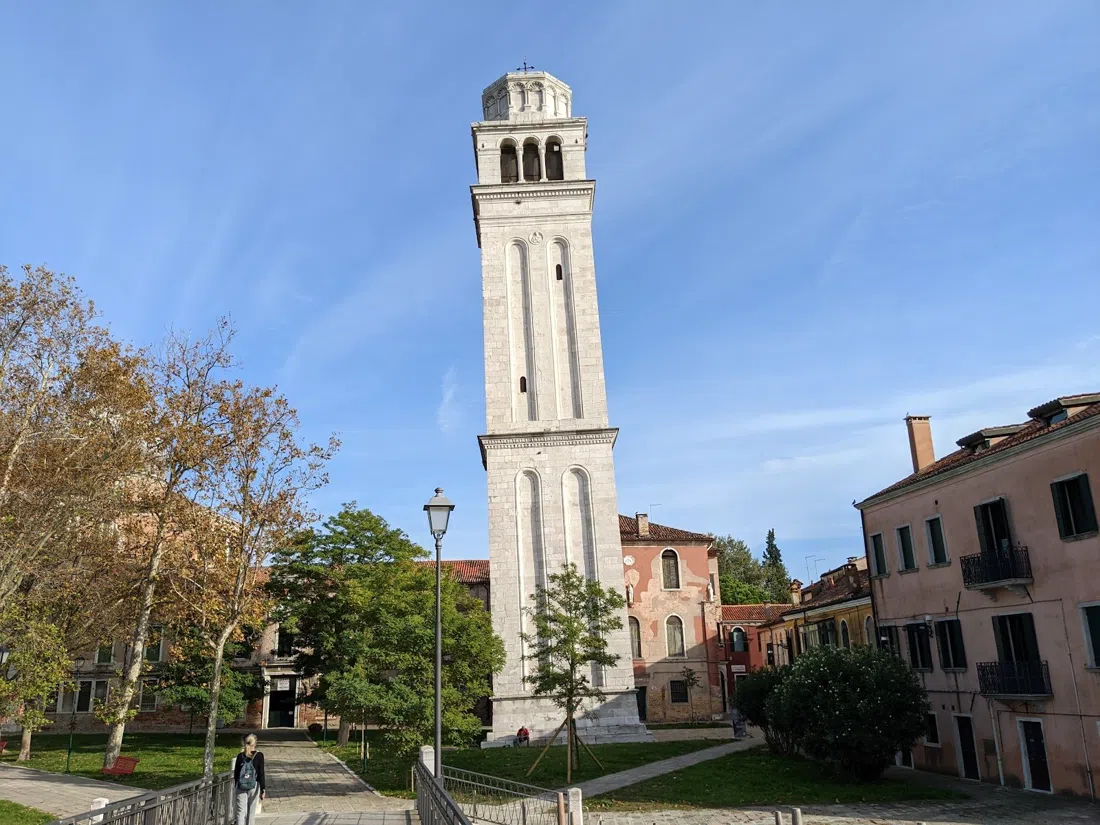
About fifteen minutes back toward the centre, Campanile di Santa Maria Formosa (Castello) carries a detail worth a detour on its own: a carved gargoyle face set into the stonework, the kind of thing a footnote turns into the best part of an afternoon. The tower is exterior-view only, but the church interior is open to small groups for €3, or on the Chorus Pass.
Across the city in Cannaregio, reachable by vaporetto lines 4.2 or 5.2 to the Madonna dell'Orto stop, Campanile della Madonna dell'Orto (Cannaregio) is the quiet alternative to the Rialto crowds for an afternoon. Tintoretto is buried inside, so pair the tower with the paintings rather than treating it as a photo stop. Entry to the church is €3, and it's an easy, uncrowded 30-40 minutes.
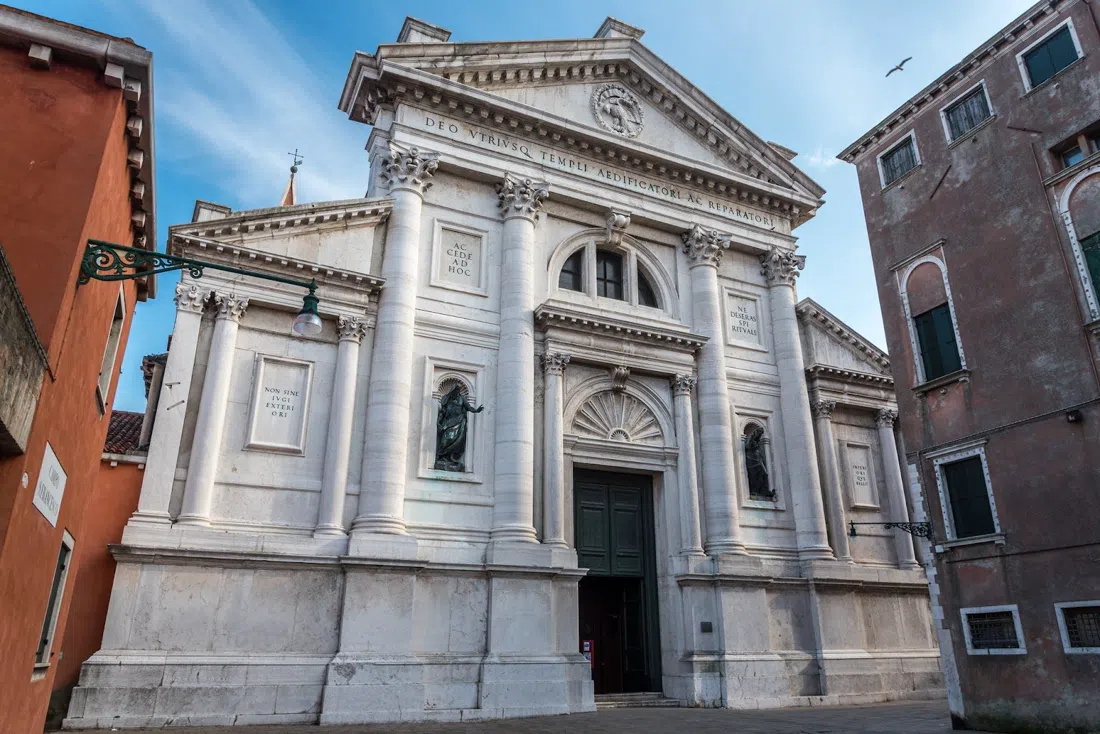
Back in Castello, near the Celestia vaporetto stop and roughly ten minutes from San Pietro di Castello, Campanile di San Francesco della Vigna (Castello) was built in 1571 explicitly as St Mark's understudy, the Republic's backup bell tower in effect, though the tower itself isn't currently open to climb. Come for the cloister and the exterior rather than the view; entry is free, and both the church and cloister are relaxed for groups.
The oldest tower in the lagoon isn't even in Venice proper
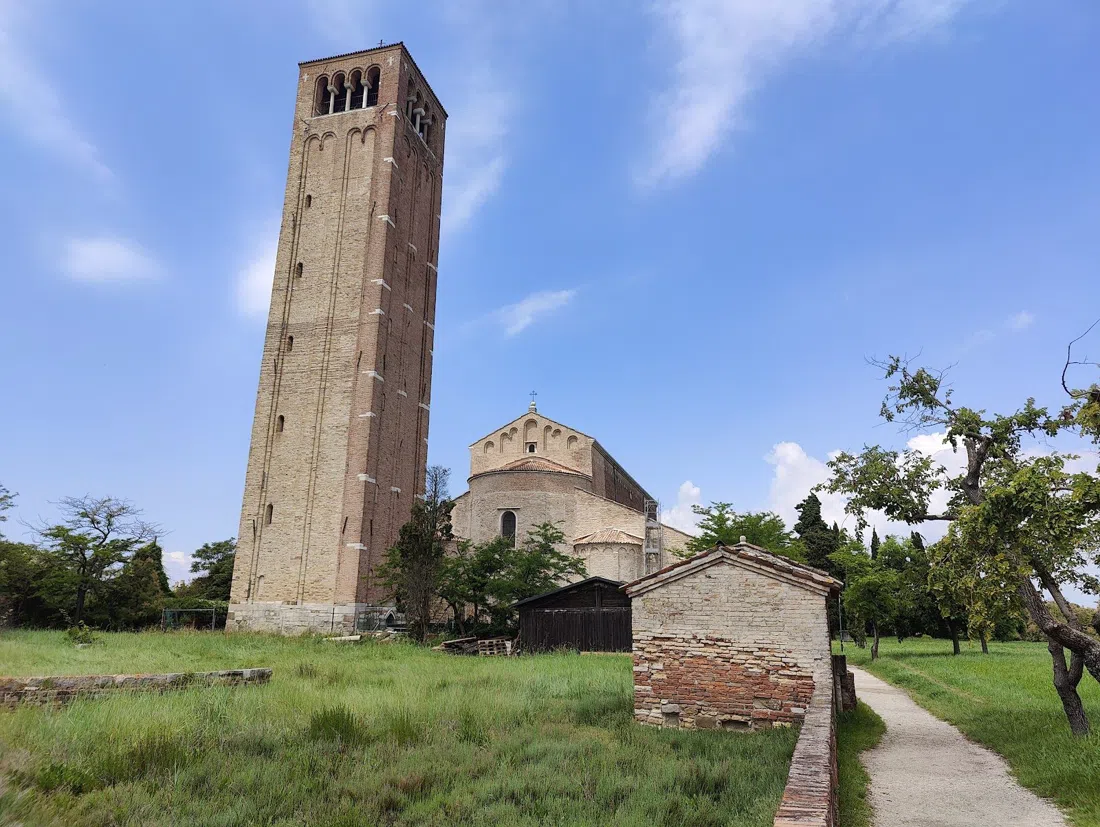
The last entrant sits an hour or so from the city centre on Torcello, and it earns the trip because it predates every other tower in this race by a wide margin. Campanile di Torcello (Santa Maria Assunta, Torcello) is the oldest surviving bell tower in the lagoon, the counterpoint to St Mark's civic ambition, built when Torcello, not Venice, was the region's centre of power. Reach it by vaporetto line 12 from Fondamente Nove, usually folded into a Burano-and-Murano lagoon day, since Torcello is a short further hop from Burano. Tower-only entry is €5, or €9 combined with the basilica, and it takes groups easily since most people arrive already organised into a boat tour. Climb it for the lagoon empty of the city, the quiet alternative if St Mark's has left you wanting the water without the crowd.
Planning the climb
Base yourself somewhere central. Venice hotel search covers the range, but for a trip built around this route, San Marco or Castello cuts the most walking, since seven of the eleven towers sit within twenty minutes of each other on that side of the Grand Canal.
Transport. The lagoon islands need vaporetto line 12 from Fondamente Nove. Buy a 24-hour or 72-hour ACTV pass rather than single tickets if combining more than two islands or towers by boat in a day. Everything in San Marco, Castello and Cannaregio is walkable, though the quieter towers add up: expect 3-4km if the backstreet route is strung together in one day.
Cash and cards. Most tower and church entries take cards, but the smaller parish churches (San Pietro di Castello, Madonna dell'Orto) sometimes only take cash for the donation box, so carry small notes.
Timing. Book the Campanile di San Marco and the Torre dell'Orologio ahead, always. Both sell out same-day slots by mid-morning from spring through autumn. The backstreet towers need no booking and are quietest first thing, before 10:00. With one full day, split it: mornings in St Mark's Square for the two headline towers, afternoon in Castello and Cannaregio for the quiet ones.
Budget. A full run of the climbable towers, San Marco, the clock tower, Bovolo and Torcello, runs to roughly €45-55 per person before the vaporetto pass; the leaning towers and backstreet stops add only a few euros more, since most are €3 or free. For where to stay and what else fills the days between towers, the Venice guide covers the rest of the city.