By November, waiters in Piazza San Marco stack tables and hand out plastic overshoes as casually as menus. Acqua alta — the exceptional high water that pushes the Adriatic back into Venice's lowest streets — has shaped how this city builds, prays, works and rows for over a thousand years, and in 2026 it still arrives on its own schedule, sirens included. This is a walk through Venice's working relationship with that water: the science behind it, the barrier built to hold most of it back, and the cafés, museums and workshops that carry on regardless.
Reading the Tide Before You Walk It
Start at the science, not the postcard. Venice's tide sirens are city infrastructure, not tourist theatre — a rising tone means water is expected to exceed the level that floods the lowest campi within a few hours, and a falling tone means it's dropping. Most visitors hear the siren and have no idea what it means; a licensed guide fixes that in under two hours.
[deTour]ist — Venice Nature & Interpretive Guide Tours (meeting point confirmed on booking, usually near Piazza San Marco) runs small-group walking tours built specifically around the acqua alta and lagoon story — tide science, the MOSE mobile barriers at the three inlets that seal the lagoon from the Adriatic during exceptional tides, and how the city reads the numbers before deciding whether to lay out raised walkways. Groups run to roughly 8 people, private bookings are available, and the price sits around €60-90 per person for a walk of two to three hours. Book this first, ideally on day one — everything else on this list makes more sense once you've had the tide explained by someone who reads it for a living.
![[deTour]ist — Venice Nature & Interpretive Guide Tours, Venice](/media/articles/venice/acqua-alta-living-with-the-rising-water/detour-ist-venice-nature-interpretive-guide-tours.jpg)
Then walk it, rather than just hear about it. Row Venice (based near Sant'Alvise, Cannaregio, a 20-minute walk or one vaporetto stop from the station) teaches the standing, forward-facing row that Venetian boatmen have used for centuries — the same technique that lets a gondolier work a boat through skinny, flooded canals where a conventional rowing stroke would foul the walls. Lessons take 4-5 people per boat, cost from roughly €120 per boat (split across the group, so €25-30 a head for a full boat), and need booking two months or more ahead for weekend and summer dates. It's an hour of unglamorous, genuinely useful effort rather than a photo op — book it for the morning, before the crowds and before any afternoon heat.
St Mark's Square, Where the Water Arrives First
Piazza San Marco sits on some of the lowest ground in the city, so it's the first place to flood and the last to fully clear — walk here with that in mind rather than as a surprise.
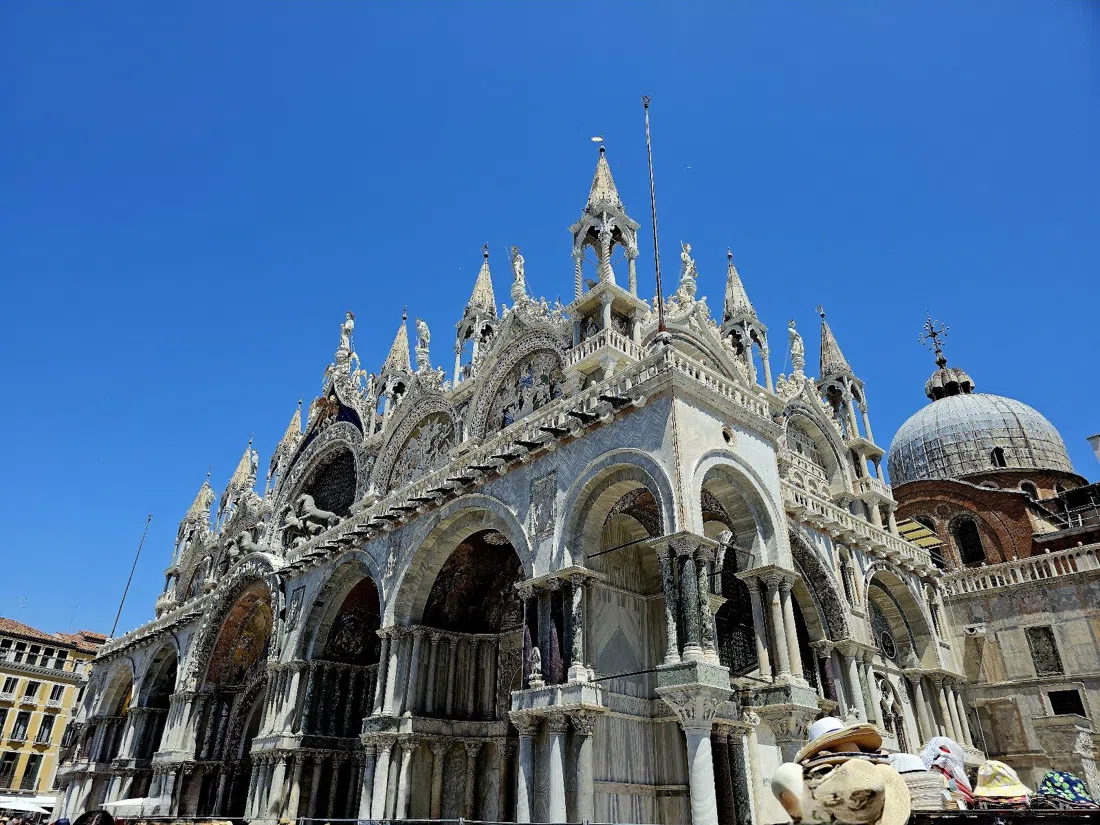
St. Mark's Basilica (San Marco, at the eastern end of the square) installed a glass barrier around the base of its walls specifically to keep acqua alta off the mosaic floor, and it's still doing that job in 2026 — worth a slow look even for visitors with no particular interest in the building's religious history, because it's the clearest piece of visible flood engineering anywhere in the city. Entry to the basilica itself is free; the Pala d'Oro, Treasury and Museum tickets each run a few euros. Timed-entry group bookings are available online, and licensed guides are required for guided groups — book at least a week ahead in shoulder season, longer in summer. Expect a 20-30 minute queue outside even with a timed slot; budget an hour inside.
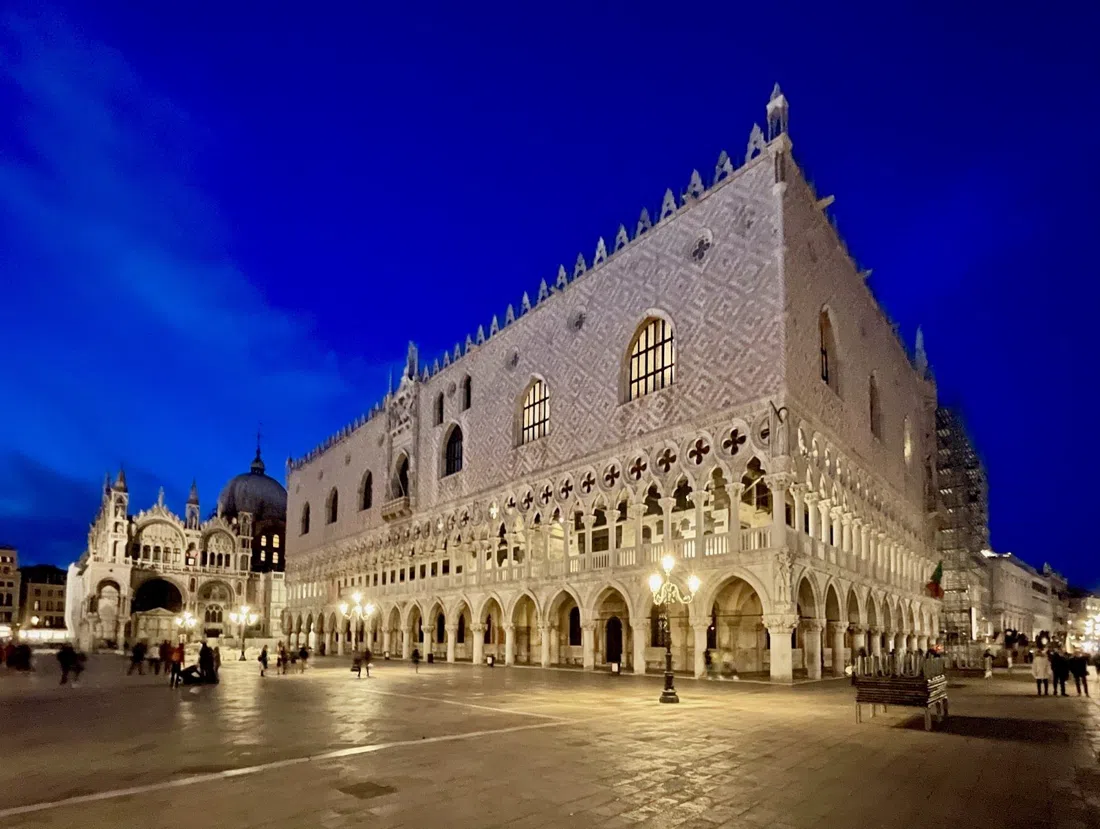
Doge's Palace (Palazzo Ducale) (San Marco, adjoining the basilica, two minutes on foot) is the seat of the old Republic that spent centuries fighting the same lagoon it was built on, and its own courtyard is still one of the first paved spaces in the city to flood. It has a dedicated group-booking desk and pre-booked group tickets; the St Mark's Square Museums combined ticket runs roughly €30 and covers the palace plus several of the square's smaller museums. Give it 90 minutes to two hours if the courtyard and prison cells interest you, less if you're moving on quickly.
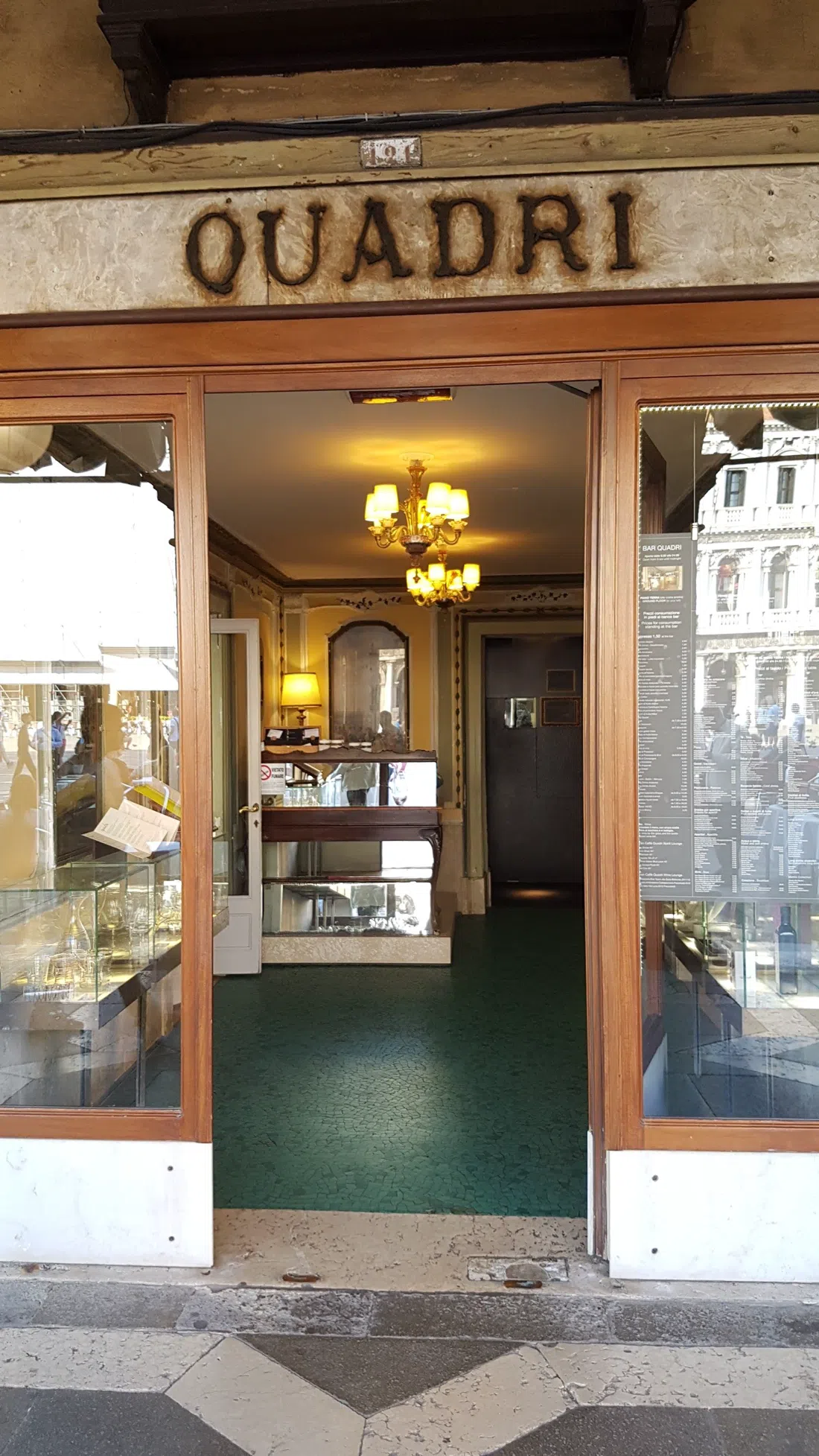
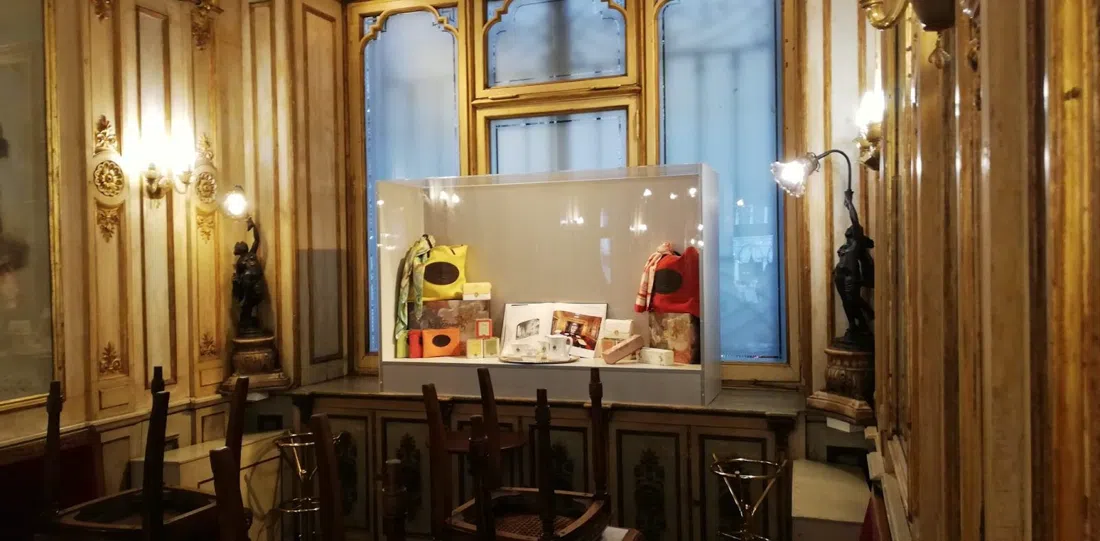
For coffee afterwards, the square gives you two rival views of the same flooding, from two historic terraces. Caffè Florian (San Marco, north side of the square) has been open continuously since 1720, through plague, war and every acqua alta the city has produced — it's less a café than a working case study in how Venice treats routine flooding as an inconvenience rather than a crisis. It's €€€€: coffee with table service and the orchestra surcharge runs from roughly €12. Parties over 10 should email [email protected] ahead rather than turn up expecting a table. Across the square, Gran Caffè Quadri (San Marco, south side) opened in 1775 specifically to compete with Florian, and sitting at either gives you a natural before-and-after vantage point if the square is flooding while you're there. It's similarly priced, and the restaurant upstairs takes private group bookings for events. Fifteen minutes at either is enough to watch the square's drainage do its work; longer if you want the orchestra.
Quiet alternative: if the square itself is crowded — which it usually is between 10am and 4pm regardless of the tide — the quieter version of this same flood story is a 10-minute walk south to Santa Maria della Salute (below), which floods just as readily but draws a fraction of the foot traffic.
The Bookshop Built Around the Flood
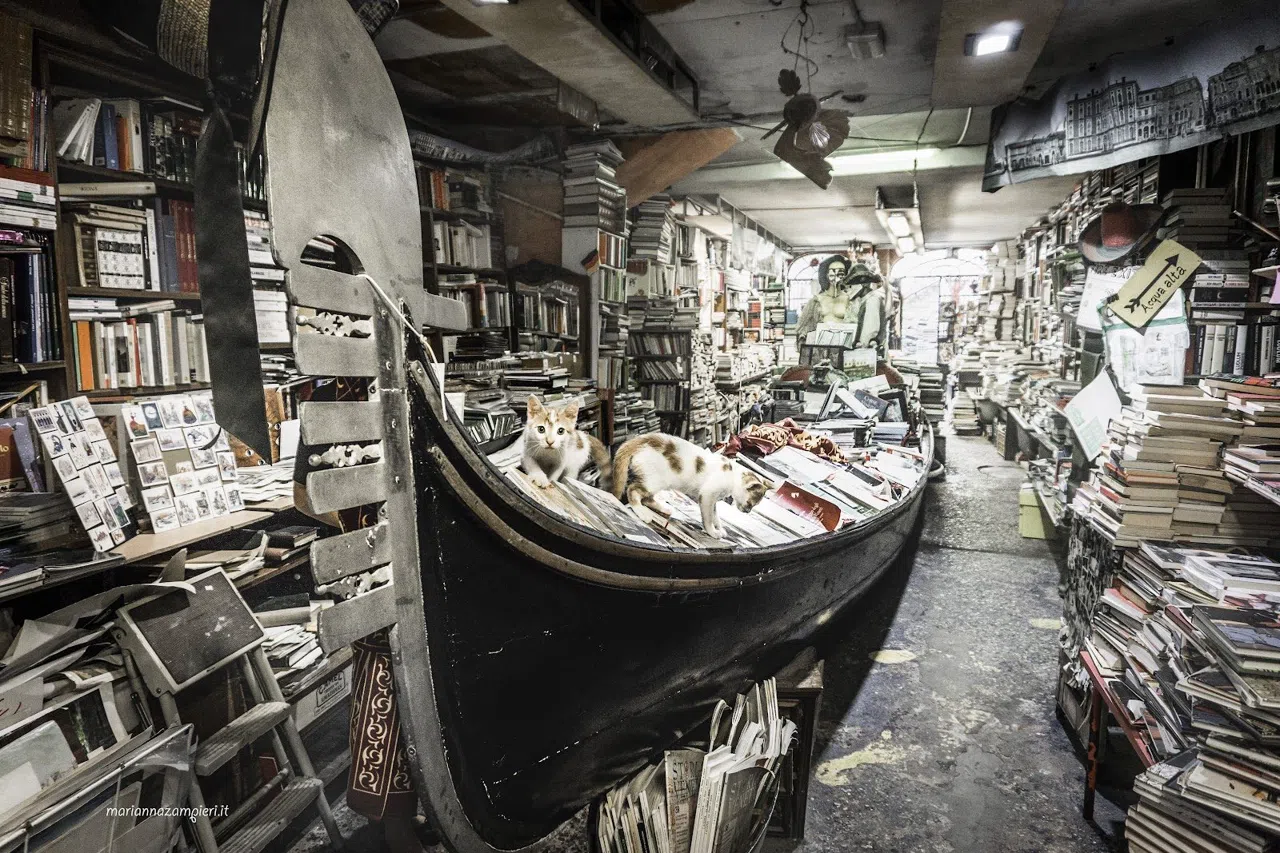
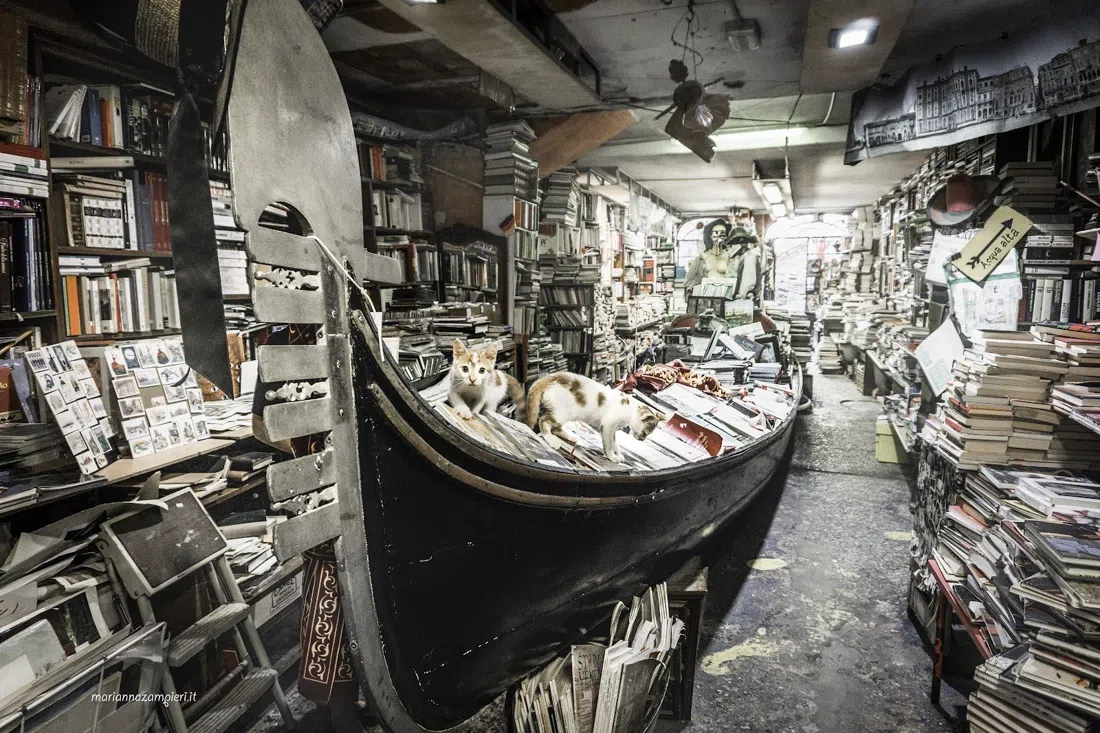
A five-minute walk northeast of the basilica, tucked down Calle Lunga Santa Maria Formosa, Libreria Acqua Alta (Castello) is the single most on-theme stop on this list — a bookshop that took its name from the flood and then built its entire layout to survive one. Books are stacked in bathtubs, a full-size gondola and a fire-escape ladder rather than on ground-level shelves, specifically so a flood tide can rise through the shop without ruining the stock. It's free to browse and books start from a few euros. The aisles are genuinely tight, so keep groups to 6-8 people moving through at a time — no reservation is needed, but larger parties should split up rather than block the narrow paths for other browsers. Give it 20-30 minutes; longer if you want to climb the book staircase out to the small canal-side terrace at the back for the view.
Two Museums Where Flood Response Is Routine, Not Folklore
Not every water story in Venice is about defense — some of it is about daily operational routine, and two museums make that visible.
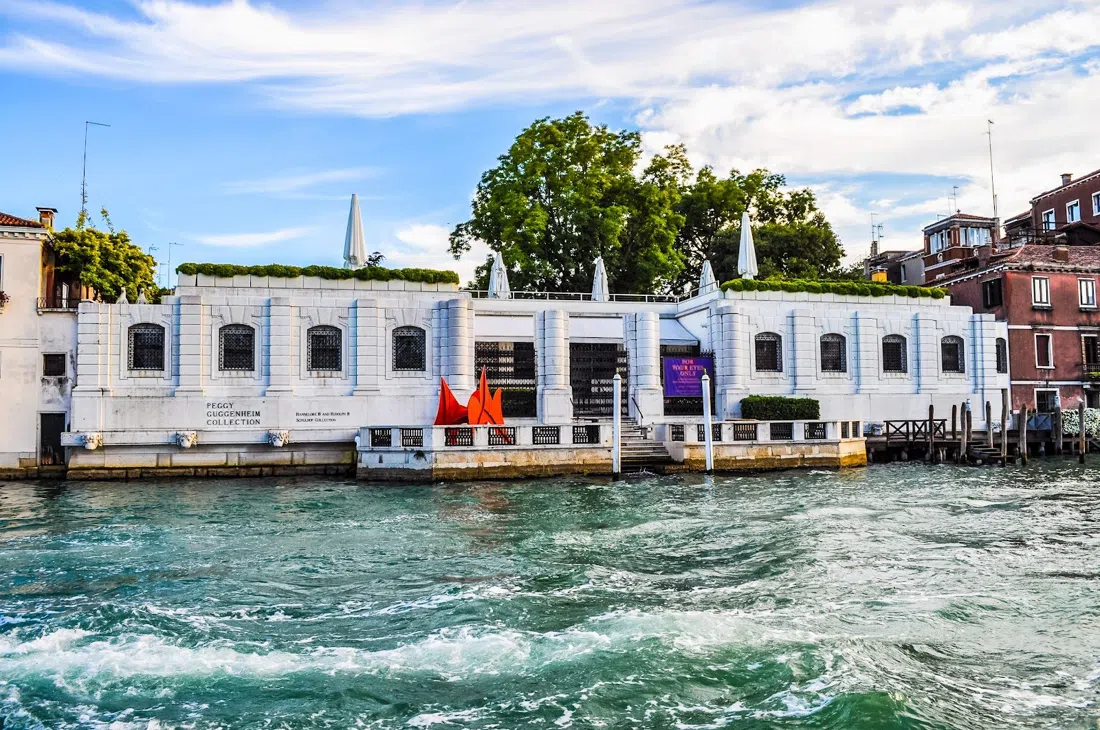
Peggy Guggenheim Collection (Dorsoduro, on the Grand Canal, roughly a 20-minute walk south of Libreria Acqua Alta via the Accademia bridge) sits low enough on the Grand Canal that flood response — barriers at the door, sandbags, occasional short closures — is simply part of how the building operates, not a story staff tell visitors after the fact. Group tickets are bookable on the official site; standard entry is €16. Give it 90 minutes for the permanent collection, more if a temporary exhibition is running.
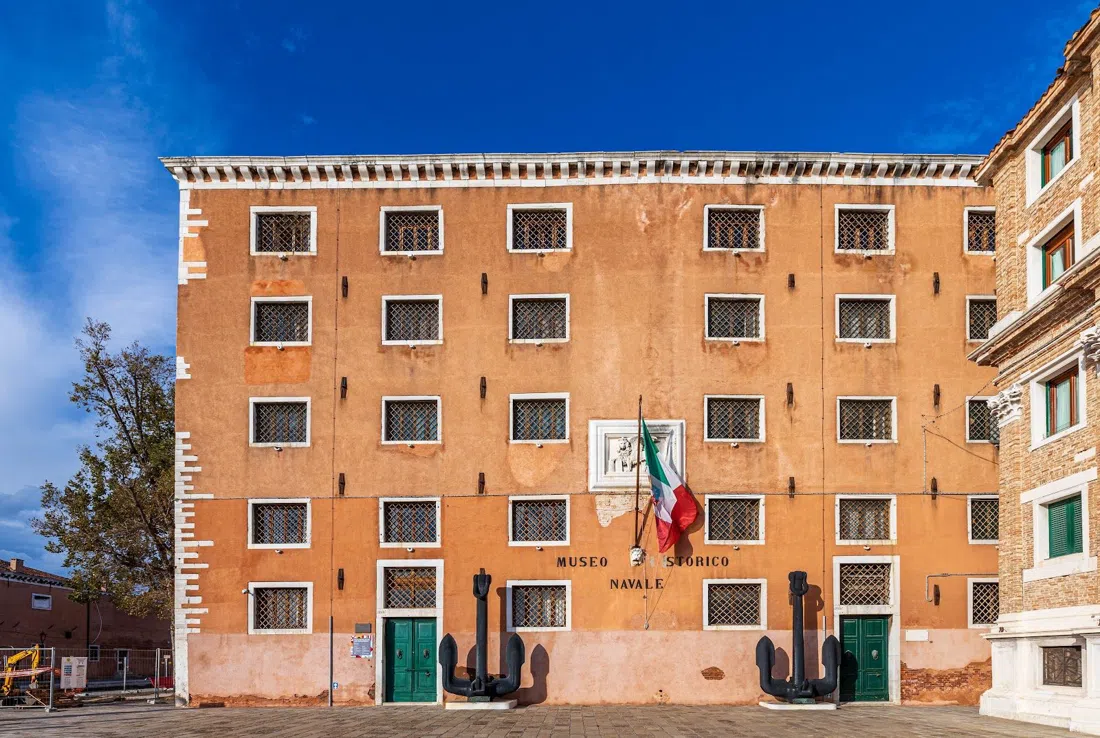
Further east, on the way toward the Arsenale, Museo Storico Navale (Castello, near the Arsenale, roughly a 25-minute walk or a vaporetto ride from the Guggenheim) is the Italian Navy's own museum and holds the clearest historical exhibits anywhere in the city on Venice's centuries-long relationship with the tide — ship models, lagoon charts and the practical maritime history behind the defenses built at St Mark's and elsewhere. It's closed Tuesdays, standard entry is €10, and it takes groups without the crowding you'll find on a Doge's Palace group slot. It's the quiet alternative if the palace queue looks too long: the same historical thread, a fraction of the visitors.
High Ground and an Old Ritual
Not every part of this story is about defense against the water — some of it is about why the city was built where it was in the first place, and how residents have marked surviving it for four centuries.
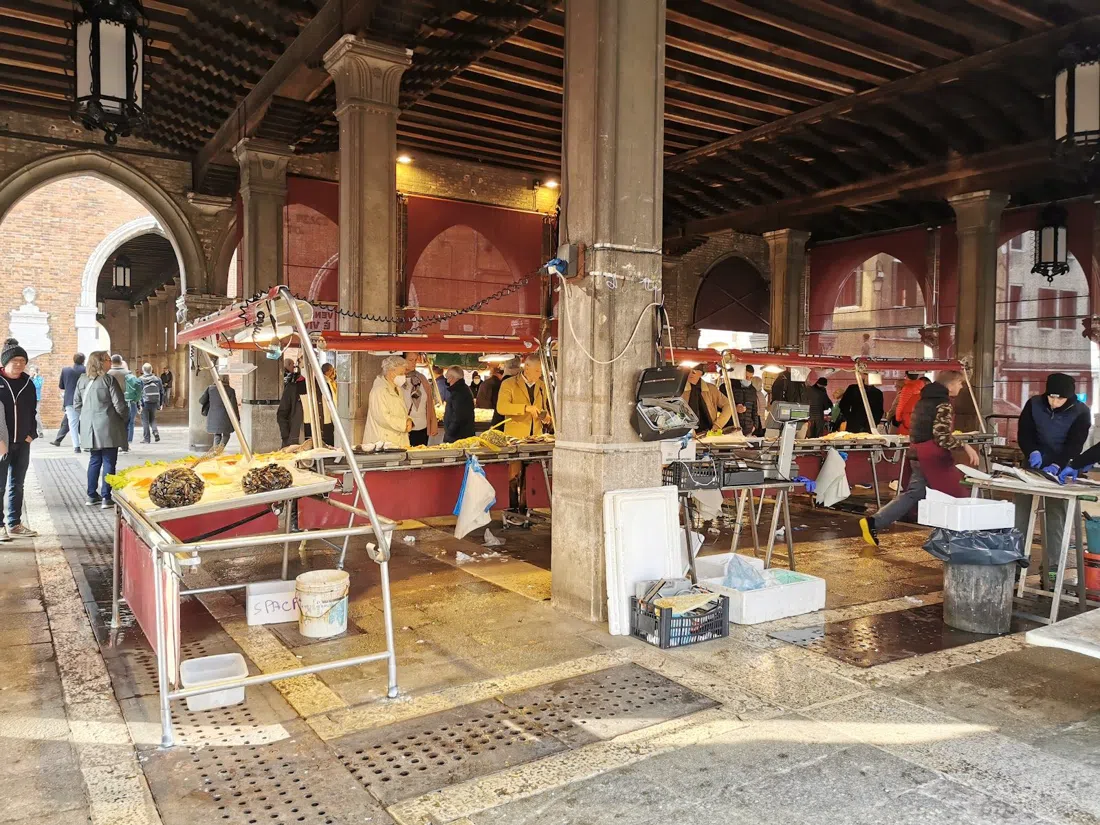
Rialto Market (Pescheria) (San Polo, by the Rialto bridge) sits on some of the highest ground in Venice, which is exactly why the earliest builders chose it — elevation over engineering, centuries before anyone thought about barriers. It's a working market rather than an attraction, best visited before 9am while the fish stalls are still setting up and before the day-trip crowds arrive; browsing is free and produce is priced per stall. Small informal group visits are fine; there's no booking system because it isn't a tourist venue, it's where Venetians shop.
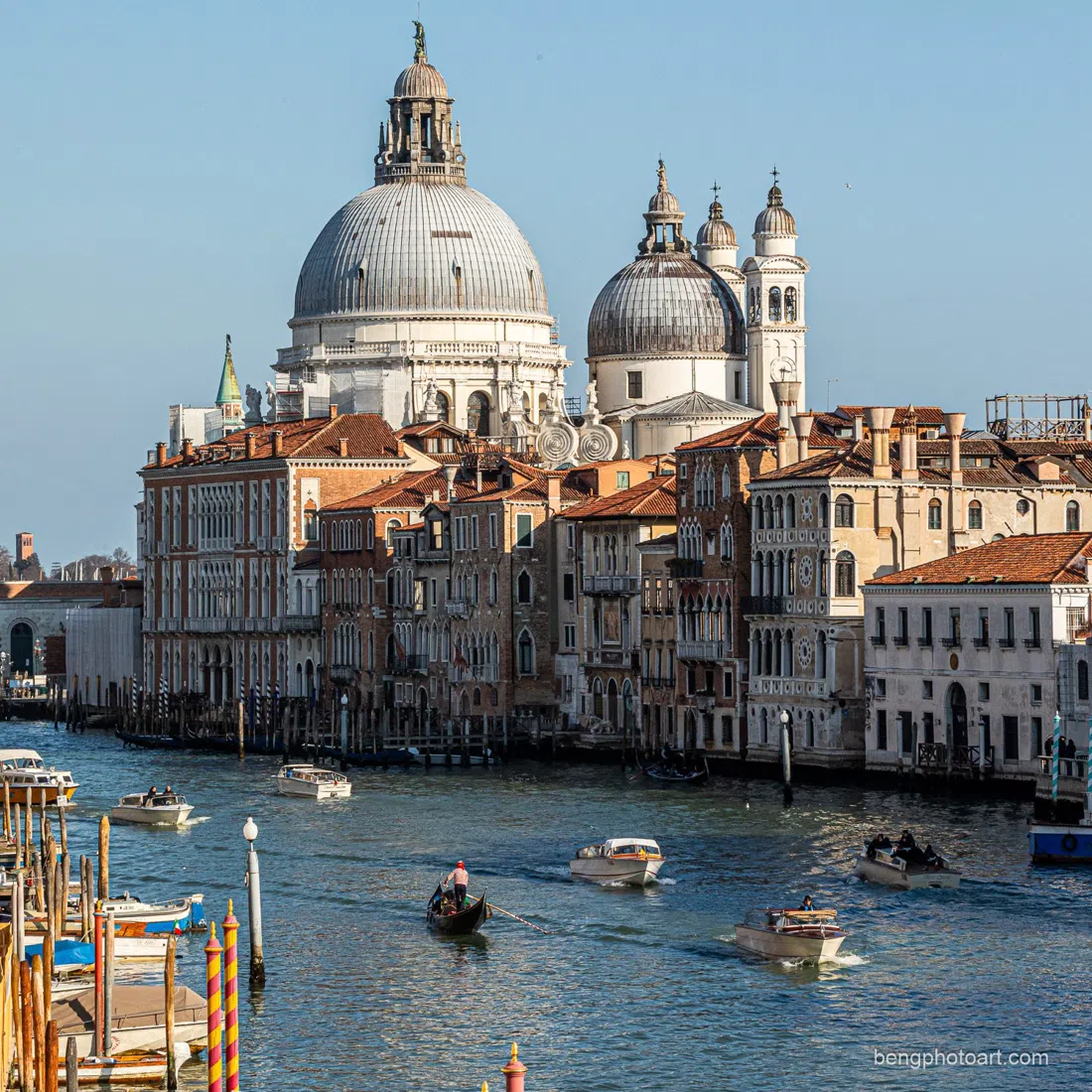
A 15-minute walk south across the Grand Canal, Santa Maria della Salute (Dorsoduro, at the mouth of the Grand Canal) is Venice's oldest civic response to a citywide threat — the basilica was built as a votive offering after a plague, and the city has walked a temporary pontoon bridge across the Grand Canal to it every November 21st since, for the Festa della Salute. It's the emotional counterweight to the MOSE barrier's engineering: a ritual instead of a machine, repeated every year regardless of what the tide is doing that week. Entry is free; the sacristy museum carries a small separate charge. It takes groups and draws far fewer visitors than St Mark's Basilica for a building of comparable weight — the quiet alternative for a reader who wants the same centuries-of-crisis feeling without the queue.
A Working Gondola Yard, Viewed Rather Than Visited
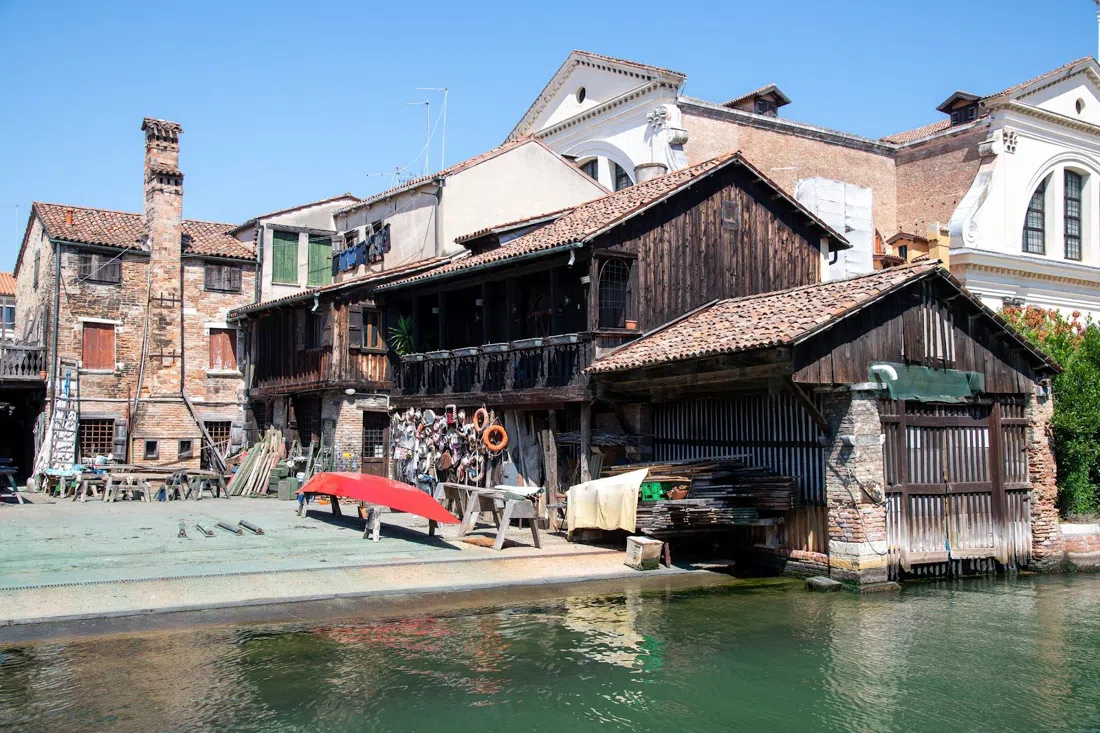
Ten minutes' walk from the Salute, Squero di San Trovaso (Dorsoduro, on the Rio di San Trovaso) is one of only four working gondola yards left in the city, and it's not set up for walk-in groups — it's a private working yard, not an attraction. The honest way to see it is from the small campo across the canal, for free, where you can usually watch boats under repair without disturbing anyone. If you want more than a look, email ahead for one of the rare arranged visits; don't expect same-day access, and don't turn up with a group hoping to be let in. Five minutes here is enough for most readers; it's a stop for the walk, not a booking.
An Insider Stop After the Museums Close
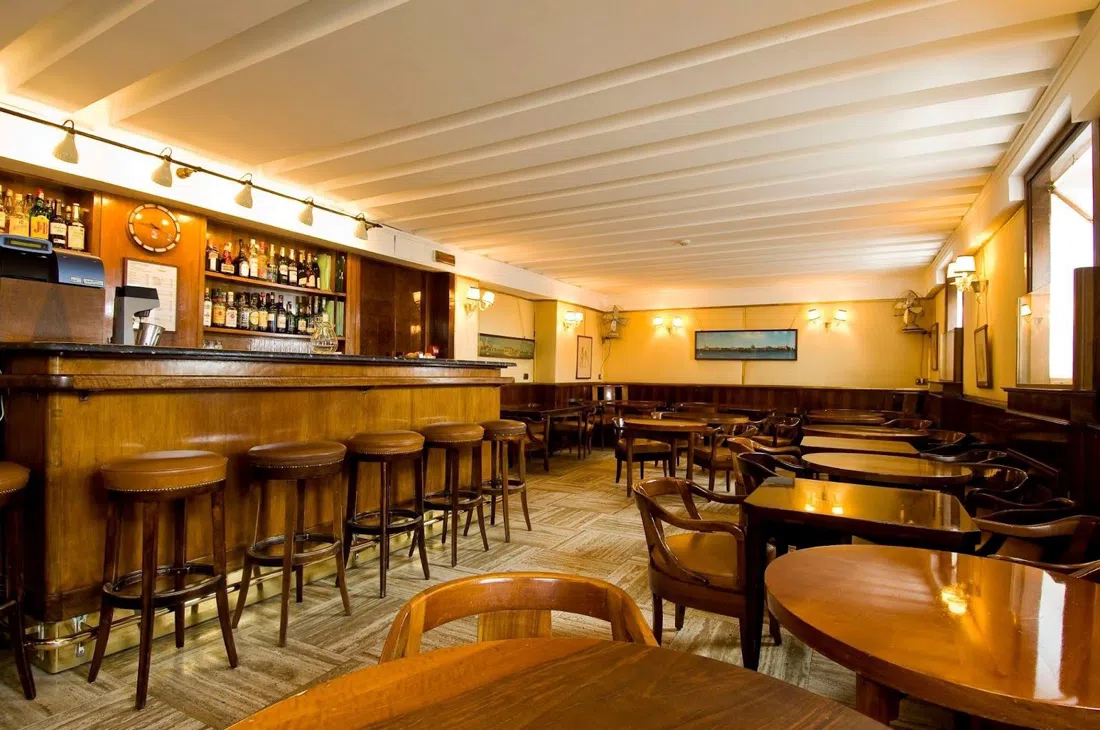
Harry's Bar (San Marco, by the San Marco Vallaresso vaporetto stop) has been a national landmark since 2001 and has stayed open through every major flood the city has had since 1931 — a useful stop precisely because it isn't performing its own history the way Florian and Quadri lean into theirs. It takes groups with advance reservation, but doesn't take walk-in groups at peak dinner service, so book ahead rather than arriving with a party of six hoping for a table. It's €€€€. This suits an evening close to the day rather than a lunchtime stop — a quieter, less self-consciously historic version of the café story told earlier in the square.
Practical notes
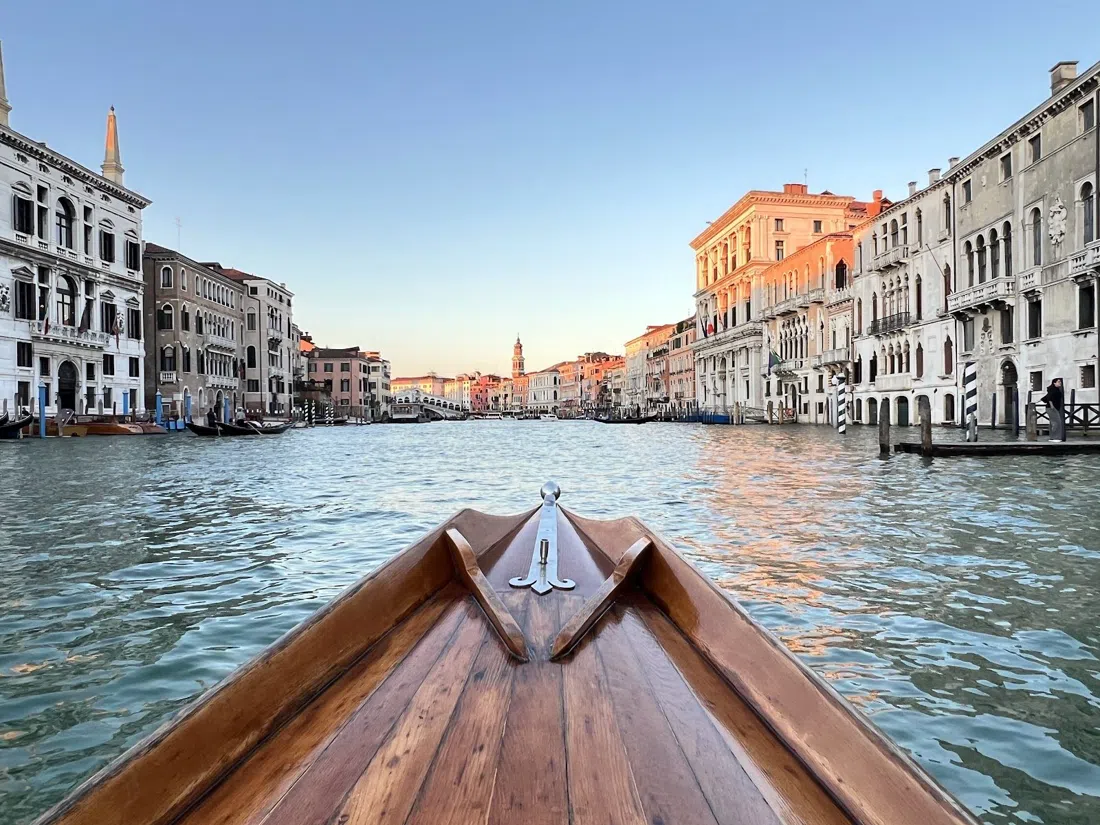
Getting around: Venice is walkable end to end in roughly 45 minutes on dry ground; add 15-20 minutes to any route during acqua alta, when raised walkways funnel foot traffic into single-file queues at the worst-flooded junctions. Vaporetto line 1 runs the length of the Grand Canal and is the easiest way to skip a flooded stretch rather than wade it. Full details on getting around and where to stay are in the Venice guide.
Cash and cards: Cards are accepted almost everywhere on this list, including the market stalls at Rialto for anything beyond a few euros. Keep some small cash for the cheaper secondhand stock at Libreria Acqua Alta and for tipping guides.
Timing: Acqua alta season runs roughly October through January, with the highest tides typically around new and full moons; check the city's official tide forecast the morning of, not the night before — forecasts firm up close to the event. Outside that window, most of this list works exactly the same, minus the flooding itself.
Budget: A full day covering the deTourist tour, entry to St Mark's Basilica and the Doge's Palace, coffee at one of the two historic cafés and a museum runs somewhere between €120-180 per person before meals — the rowing lesson and a Harry's Bar dinner push a couple's day well past that if both are added. If you're staying multiple nights to catch a tide event, book accommodation early: search options via Venice hotel search, since flood-season dates near the Rialto and San Marco sell out to photographers and tide-chasers well ahead of the water itself.